
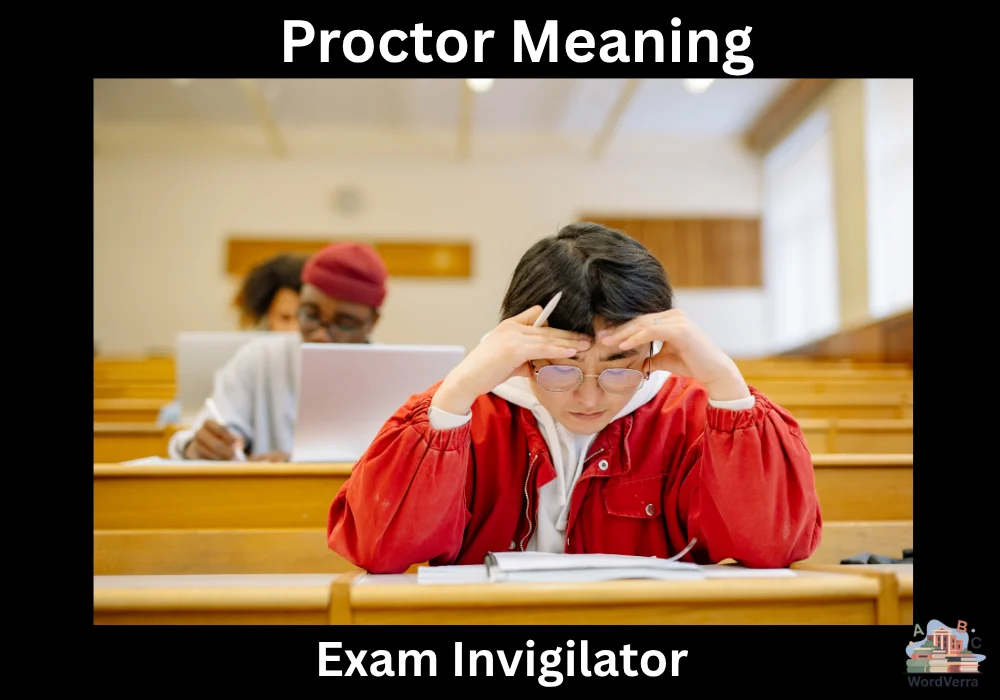
If you’ve ever seen the word “proctor” in an exam notice, online test screen, academic chat, or even a casual conversation and thought “what exactly does that mean?” — you’re not alone. The term proctor is widely used today, especially in education, online testing, and professional certification spaces, but many people still misunderstand its exact role and meaning.
Understanding proctor meaning is important because:
- You’ll know who’s monitoring your exam
- You’ll avoid confusion during online or in-person tests
- You’ll sound more informed in academic or professional discussions
This complete guide explains what a proctor is, where the word comes from, how it’s used in modern chat and exam culture, and how to understand it correctly in 2026.
What Does Proctor Mean? (Simple Definition)
In the simplest terms, a proctor is:
A person who supervises or monitors an exam, test, or assessment.
Their main job is to:
- Ensure fairness
- Prevent cheating
- Enforce rules
- Maintain a controlled testing environment
Whether the test is happening in a classroom or online, the proctor is responsible for making sure everything runs properly.
Proctor Meaning in Business

In a business context, “proctor” is not very commonly used, but it can still have a few meanings depending on the situation:
1. Supervisor or Monitor
👉 A proctor can refer to someone who oversees processes, employees, or activities to ensure everything is done correctly.
Example:
- A senior manager acted as a proctor during the company’s internal assessments.
2. Compliance or Audit Role
👉 In some cases, a proctor may act like a:
- Compliance officer
- Auditor or evaluator
They ensure rules, policies, or standards are being followed properly.
Proctor Meaning in Medical

In the medical field, “proctor” has a more specific and important meaning:
1. Medical Supervisor / Trainer
👉 A proctor is an experienced doctor who observes and guides another doctor during medical procedures.
- Often used in surgery training or new techniques
- Ensures the procedure is done safely and correctly
Example:
- An expert surgeon proctored the operation to train the junior doctor.
2. Certification and Evaluation
👉 Medical proctors may also:
- Evaluate doctors’ skills
- Approve them to perform certain procedures independently
Origin of the Word Proctor
The word proctor comes from Latin, derived from “procurator,” which means:
one who manages or takes care of something
Historically, the term was used in:
- Universities
- Courts
- Administrative roles
Over time, its meaning became more specific and is now mostly associated with exam supervision and academic oversight.
Proctor Meaning in Exams and Education
Traditional Exam Setting
In a classroom or exam hall, a proctor is the person who:
- Hands out exam papers
- Checks student IDs
- Watches for rule violations
- Collects answer sheets
Example:
“The proctor announced that no phones were allowed during the test.”
Online Exam Environment
In 2025, the role of a proctor has expanded due to remote learning and online testing.
Online proctors may:
- Watch students through webcams
- Monitor screens and browser activity
- Record audio and video
- Flag suspicious behavior
Example:
“My online exam was recorded by a remote proctor.”
Proctor Meaning in Text and Chat
In casual or academic chats, proctor usually refers to the authority figure during a test.
How It’s Used in Messages
- “The proctor paused my exam due to a connection issue.”
- “Ask the proctor if you can use scratch paper.”
- “The proctor warned everyone about time limits.”
In chats, the word often implies:
- Authority
- Rules
- Monitoring
- Seriousness
It’s not slang, but it is commonly used in digital communication related to exams.
What Does a Proctor Actually Do?
A proctor’s responsibilities can include:
- Verifying student identity
- Explaining exam instructions
- Enforcing exam policies
- Monitoring behavior
- Handling technical issues
- Reporting violations
In online settings, they may also:
- Lock your browser
- Track eye movement
- Disable screen switching
This is why many students feel nervous when they hear the word proctor — it represents strict supervision.
Examples of Proctor in Real-Life Situations
Academic Example
“The proctor checked everyone’s ID before allowing the exam to begin.”
Online Certification Example
“The proctor asked me to rotate my camera to show the room.”
Student Chat Example
“I almost got flagged because the proctor thought I was looking away.”
Common Misunderstandings About Proctors
Mistake 1: Thinking a Proctor Is the Teacher
A proctor is not always the instructor.
They may be:
- A hired supervisor
- A university staff member
- A third-party remote monitor
The teacher creates the exam; the proctor enforces the rules.
Mistake 2: Assuming Proctors Can Change Grades
Proctors do not grade exams.
Their role is limited to:
- Supervision
- Reporting issues
Grades are handled by instructors or testing systems.
Mistake 3: Believing Online Proctors Are AI Only
While some systems use automation, many online exams still involve real human proctors watching live or reviewing recordings.
Why Proctors Are More Important Than Ever in 2026
With the rise of:
- Online degrees
- Remote certifications
- Digital testing platforms
The need for secure testing environments has increased.
Proctors help:
- Maintain credibility
- Ensure equal opportunity
- Protect academic integrity
That’s why the word proctor appears more frequently today than ever before.
Different Types of Proctors
In-Person Proctor
- Present in exam room
- Direct supervision
- Traditional setup
Live Online Proctor
- Watches in real time
- Can communicate via chat or voice
- Common in university exams
Recorded Proctor
- Exam is recorded
- Reviewed later for violations
- Less interactive
Each type still serves the same core purpose: monitoring fairness.
How to Interact With a Proctor Properly
To avoid issues:
- Follow instructions carefully
- Ask permission before leaving your seat
- Speak calmly and respectfully
- Don’t assume flexibility
Example:
“I informed the proctor before taking a restroom break.”
Being polite and clear goes a long way.
Proctor vs Invigilator: Is There a Difference?
Both words mean nearly the same thing.
- Proctor – More common in the US
- Invigilator – More common in the UK
In everyday usage, they’re interchangeable depending on region.
Proctor Meaning Outside Exams
Although rare, proctor can also mean:
- An administrative officer
- Someone who oversees conduct
However, in modern usage, 99% of the time it refers to exam supervision.
How Students Feel About Proctors (Real Talk)
Many students associate proctors with:
- Stress
- Nervousness
- Strict rules
But in reality, proctors are there to:
- Protect honest students
- Ensure equal conditions
- Keep exams fair
They’re not there to intimidate — just to monitor.
Quick Summary: Proctor Meaning in 2026
- Definition: Exam supervisor
- Used in: Schools, universities, online tests
- Role: Monitoring, rule enforcement
- Not responsible for: Grading or exam creation
- Tone: Formal, authoritative
Final Thoughts
Understanding proctor meaning helps reduce anxiety and confusion — especially in today’s digital-first education system. Whether you’re taking an online certification or sitting in a classroom exam, knowing what a proctor does makes the process smoother.

Ghumman is a dedicated author at Wordverra, focused on delivering clear, accurate, and high-quality English grammar content for students and learners. With a strong commitment to language clarity and practical learning, Ghumman creates well-researched explanations and examples that make complex grammar rules easy to understand. The goal is to help readers build a solid foundation in English and use the language confidently in academic and everyday settings.