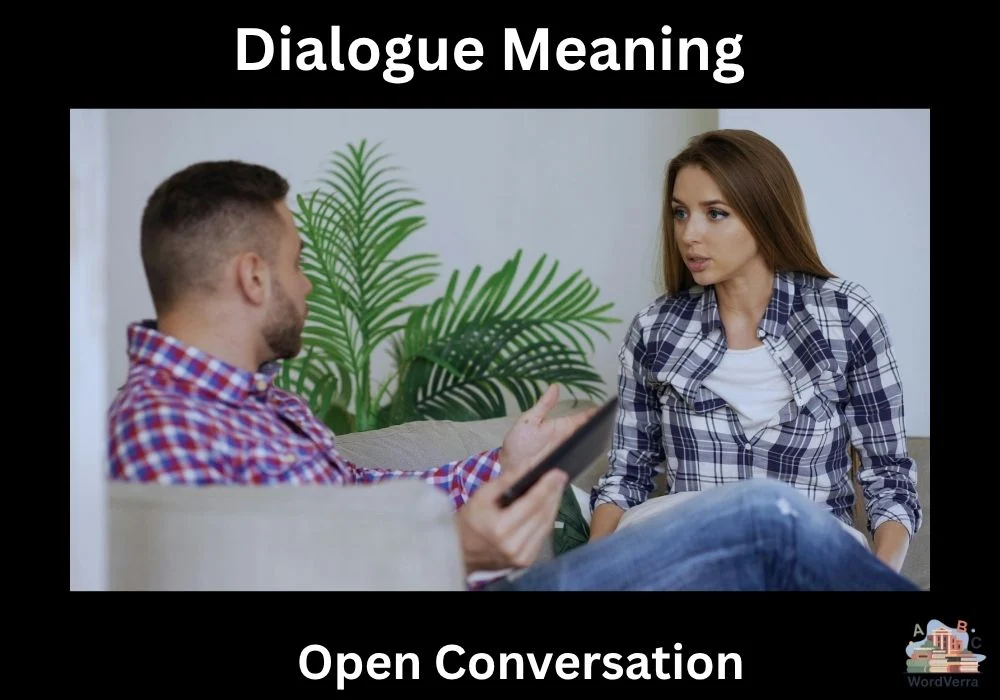
The word dialogue is widely used in everyday conversations, literature, films, and professional communication. Whether you’ve heard someone say, “Let’s have a dialogue about this” or “The dialogue in the movie was excellent,” understanding dialogue meaning is essential for clear communication.
Knowing what dialogue means helps you:
- Communicate effectively in personal and professional contexts
- Understand literature, movies, and scripts
- Improve interpersonal relationships
This article explores dialogue meaning, its origin, types, examples, and usage in 2026.
What Does Dialogue Mean? (Simple Definition)
In simple terms, dialogue means:
A conversation between two or more people, used to exchange ideas, thoughts, or information.
Key points:
- Dialogue is a two-way or multi-way conversation
- It can occur verbally or in writing
- It helps in sharing understanding or resolving issues
Example:
- “The dialogue between the manager and staff improved teamwork.”
Origin of the Word Dialogue
The term dialogue comes from Greek roots:
- “Dia” = through
- “Logos” = speech or word
Combined, it literally means “through words” — emphasizing communication between people.
The concept has been around for centuries in philosophy, literature, and education.
Dialogue Meaning in Everyday Life
In daily life, dialogue is used to exchange ideas, opinions, or resolve conflicts.
Examples:
- “We had a productive dialogue about our goals.”
- “Dialogue between neighbors helped solve the misunderstanding.”
Here, dialogue is not just talking; it involves active listening and meaningful exchange.
Dialogue Meaning in Writing and Literature

In literature, a dialogue refers to the written conversation between characters.
- Used in novels, plays, and short stories
- Develops plot, character, and conflict
- Makes stories engaging and realistic
Example:
- “The dialogue in the novel revealed the protagonist’s inner thoughts.”
Dialogue Meaning in Politics
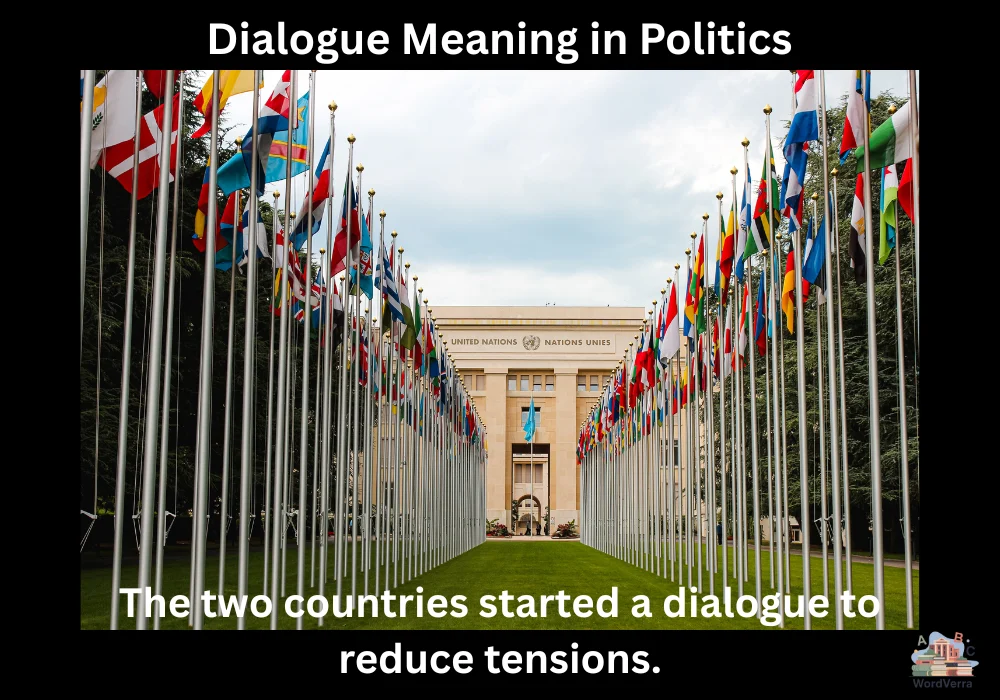
In politics, dialogue means:
👉 a formal discussion between people, groups, or governments to solve problems or reach agreements
Purpose:
- Peace talks 🤝
- Conflict resolution
- Negotiations between political parties or countries
Example:
- The two countries started a dialogue to reduce tensions.
👉 Simple Meaning:
Dialogue (politics) = discussion to solve political issues peacefully
Dialogue Meaning in Communication
In communication, dialogue means:
👉 a conversation between two or more people where ideas and opinions are shared
Key Features:
- Listening and speaking
- Exchange of thoughts
- Mutual understanding
Example:
- Good dialogue improves relationships and teamwork.
👉 Simple Meaning:
Dialogue (communication) = meaningful conversation between people
Dialogue Meaning in Chinese
The word “dialogue” in Chinese is:
👉 对话 (duìhuà)
Meaning:
- Conversation
- Discussion between people
Example:
- They had an open dialogue.
👉 他们进行了公开对话。
👉 Simple Meaning:
Dialogue in Chinese = 对话 (duìhuà)
Dialogue Writing
Dialogue writing is:
👉 writing conversations between characters or people
Used In:
- Stories 📖
- Plays 🎭
- Movies 🎬
- School writing exercises
Example:
- Ali: How are you?
- Sara: I’m fine, thank you!
Tips:
- Use quotation marks
- Make conversations sound natural
- Show emotions and personality
👉 Simple Meaning:
Dialogue writing = writing spoken conversations
Dialogue Meaning in Literature
In literature, dialogue means:
👉 the spoken conversation between characters in a story, novel, or play
Purpose in Literature:
- Develop characters
- Move the story forward
- Show emotions and relationships
Example:
- Conversations in novels or dramas are called dialogue
Dialogue in Films and Media
In films, TV, and games, dialogue is the spoken words of characters, often written as scripts.
- Helps tell the story
- Shows character development
- Enhances realism and emotional impact
Example:
- “The movie’s dialogue was witty and memorable.”
Dialogue vs Monologue: What’s the Difference?
- Dialogue: Conversation between two or more people
- Monologue: A speech by one person, often expressing thoughts aloud
Example:
- Dialogue: “Hi, how are you?” — “I’m good, thanks!”
- Monologue: “I can’t believe this happened to me…”
Dialogue Meaning in Professional Contexts
In workplaces and diplomacy, dialogue refers to structured communication aimed at understanding or negotiation.
Examples:
- “The dialogue between the companies led to a successful partnership.”
- “International dialogue is essential for peace and cooperation.”
Common Misunderstandings About Dialogue
Mistake 1: Thinking Dialogue Only Means Talking
- True dialogue involves listening, understanding, and responding.
Mistake 2: Confusing Dialogue With Debate
- Dialogue seeks mutual understanding
- Debate often seeks to win an argument
Mistake 3: Using Dialogue Only in Literature
- Dialogue is also common in real-life conversations and professional contexts.
How to Use Dialogue Correctly in Sentences
Everyday Conversation
- “Dialogue with your colleagues can improve collaboration.”
Writing
- “The author’s dialogue between characters felt natural.”
Professional or Academic Context
- “The conference encouraged dialogue between different departments.”
Dialogue Meaning in Simple Words (Quick Reminder)
Dialogue is a meaningful conversation between two or more people, aimed at sharing ideas, thoughts, or information.
Why Dialogue Is Important in 2026
In 2026, dialogue remains essential because:
- It fosters understanding and collaboration
- Plays a crucial role in global communication and teamwork
- Enhances storytelling in literature, media, and online content
In a world of rapid digital communication, effective dialogue bridges gaps and promotes clarity.
Final Summary
To summarize:
- Dialogue refers to conversation between two or more people
- It can occur in daily life, literature, media, or professional contexts
- Effective dialogue requires listening and meaningful exchange
- Understanding dialogue meaning improves communication, collaboration, and storytelling

Ghumman is a dedicated author at Wordverra, focused on delivering clear, accurate, and high-quality English grammar content for students and learners. With a strong commitment to language clarity and practical learning, Ghumman creates well-researched explanations and examples that make complex grammar rules easy to understand. The goal is to help readers build a solid foundation in English and use the language confidently in academic and everyday settings.