
Tyrant Meaning: Definition, History, and Modern Usage 2026

Tyrant Meaning

The word tyrant is frequently used in history, politics, and everyday conversations to describe leaders or people who exercise power in a harsh or oppressive manner. Understanding tyrant meaning helps you interpret texts, news, and historical accounts accurately.

This article explores the meaning of tyrant, its origin, historical examples, modern usage, and tips for proper use in context, updated for 2026.


What Does Tyrant Mean? (Simple Definition)

In simple terms, a tyrant is:

A ruler or person who uses power in a cruel, oppressive, or unjust way.

It can refer to:

  • Historical leaders known for authoritarian rule
  • People in workplaces or homes who exercise excessive control
  • Any figure or authority that imposes unfair dominance

Example:

“The school principal acted like a tyrant, punishing students for minor mistakes.”


Origin of the Word Tyrant

The word tyrant comes from the Greek “tyrannos,” which originally referred to a ruler who seized power unconstitutionally.

  • Ancient Greek context: Tyrants could sometimes be popular initially but often ruled harshly
  • Over time, tyrant acquired a strongly negative connotation, emphasizing cruelty, oppression, and injustice

Tyrant Meaning in History

Historically, tyrants are known for absolute power and oppression:

  • Ancient Greece: Figures like Pisistratus ruled as tyrants, sometimes bringing reforms but often using power for control
  • Medieval and modern history: Monarchs or dictators imposing harsh policies or suppressing freedoms

Example:

“Many historians consider King John of England a tyrant due to his oppressive rule.”


Tyrant Meaning in Modern Context

In 2025, tyrant is used in both literal and figurative ways:

  • Politics: Referring to authoritarian leaders or dictators
  • Workplaces: Describing bosses who micromanage or intimidate employees
  • Relationships: Individuals who dominate unfairly in personal interactions

Example:

“The manager was called a tyrant for constantly overriding team decisions.”


Synonyms of Tyrant

Other words that can be used instead of tyrant include:

  • Dictator
  • Despot
  • Oppressor
  • Autocrat
  • Authoritarian

Example:

“The dictator ruled the country like a tyrant / despot, leaving citizens powerless.”


Common Misunderstandings About Tyrant

  1. Tyrant ≠ all leaders: Not every leader or boss is a tyrant—tyrants specifically abuse power.
  2. Tyrant is not always political: It can describe behavior in families, workplaces, or social situations.
  3. Tyrant is not just strictness: Strict rules don’t automatically make someone a tyrant; oppression or cruelty is key.

How to Use Tyrant in Sentences

  • Political context:

“History remembers him as a tyrant who suppressed free speech.”

  • Workplace context:

“The tyrant manager refused to listen to employee feedback.”

  • Figurative/personal context:

“Her older sibling was a tyrant during childhood, controlling every decision.”


Tyrant Meaning in Simple Words (Quick Reminder)

A tyrant is a person in power who rules cruelly, oppressively, or unjustly, whether in politics, workplaces, or personal situations.


Conclusion

To summarize:

  • Tyrant refers to oppressive, cruel, or unjust authority figures
  • It can apply to historical rulers, modern political leaders, and everyday situations
  • Using the word appropriately emphasizes abuse of power and oppression
  • Understanding tyrant meaning helps you interpret texts, conversations, and historical accounts accurately

Procedure Meaning: Definition, Types, and Examples 2026

Procedure Meaning

The term procedure is commonly used in everyday life, workplaces, education, and healthcare. Understanding the procedure meaning is essential for clear communication, compliance with instructions, and proper execution of tasks.

This article provides a detailed explanation of procedure meaning, its types, examples, and modern context, updated for 2026.


What Does Procedure Mean?

In simple terms, a procedure is:

A series of steps or instructions followed to accomplish a specific task or achieve a particular result.

It emphasizes order, structure, and consistency.

Example:

“The laboratory has a strict procedure for handling chemicals safely.”


Origin of the Word Procedure

  • The word procedure comes from Latin procedere, which means to go forward or advance.
  • Over time, it evolved in English to signify an organized method or sequence of actions.

The historical origin highlights its connection to progress and systematic action.


Types of Procedures

1. Medical Procedures

  • In healthcare, a procedure refers to treatments or operations performed on patients.
    Example:

“The doctor explained the surgical procedure before the operation.”

2. Legal Procedures

  • Legal procedures are steps or protocols followed in courts or legal matters.
    Example:

“Filing a lawsuit involves following specific legal procedures.”

3. Workplace or Business Procedures

  • Standardized methods to complete tasks efficiently.
    Example:

“The HR department has a procedure for onboarding new employees.”

4. Scientific or Laboratory Procedures

  • Detailed instructions to conduct experiments.
    Example:

“The chemistry lab procedure ensures accurate results.”


Procedure in Everyday Life

Procedures are not limited to professional contexts; they exist in daily routines:

  • Cooking: Following a recipe is a procedure.
  • Driving: Traffic rules outline the procedure for safe driving.
  • Technology: Software installation often follows a step-by-step procedure.

This shows that procedures ensure efficiency, safety, and accuracy in various aspects of life.


Common Misunderstandings About Procedure

Mistake 1: Confusing Procedure With Policy

  • Procedure: Steps to execute a task
  • Policy: Guidelines or principles that inform actions

Mistake 2: Thinking Procedure Is Optional

  • Procedures are often mandatory in professional, medical, or legal contexts.

Mistake 3: Believing Procedure Guarantees Success

  • Procedures guide action, but results may still vary depending on execution and conditions.

How to Use Procedure in Sentences

  • “Follow the procedure carefully to avoid mistakes.”
  • “The onboarding procedure includes filling out forms and attending orientation.”
  • “Medical procedures require strict hygiene and attention to detail.”

Tips:

  • Pair with adjectives like standard, medical, legal, or official
  • Use in both formal and everyday contexts
  • Highlight step-by-step processes

Procedure Meaning in Modern Context (2026)

In 2026, procedure is widely relevant in:

  • Healthcare and medical innovations
  • Corporate training and workflow management
  • Legal and governmental documentation
  • Educational instructions and scientific research

Example:

“Following cybersecurity procedures is essential to protect company data.”

Procedures continue to ensure safety, consistency, and accountability.


Procedure Meaning in Simple Words

Procedure means a set of steps followed in a specific order to complete a task or achieve a goal.


Conclusion

To summarize:

  • Procedure refers to organized steps to achieve a specific outcome
  • It applies to medical, legal, business, scientific, and everyday contexts
  • Following procedures ensures accuracy, safety, and efficiency
  • Understanding procedure meaning is crucial for effective communication and proper task execution

Shipped Meaning: Definition, Usage, and Examples Explained 2026

Shipped Meaning

The term shipped has become popular in everyday conversation, social media, and fandom culture. Understanding shipped meaning helps you interpret messages, posts, and conversations accurately, especially in online communities.

This article explains shipped meaning, its origin, modern usage, and examples, updated for 2026.


What Does Shipped Mean?

The word shipped can have two main meanings depending on context:

  1. Literal Meaning (Delivery Context):
    • Refers to sending goods or packages from one location to another.
    • Example: “The books were shipped yesterday and will arrive in three days.”
  2. Fandom / Slang Meaning (Romantic Context):
    • Refers to supporting or imagining a romantic relationship between two characters or people, usually in TV shows, movies, or books.
    • Example: “Fans shipped Harry and Hermione for years before the final book was released.”

In online culture, the slang meaning of shipped is now more commonly encountered than the literal delivery sense.


Origin of the Term Shipped

  • The literal use of “ship” comes from the verb “to transport by ship”, later generalized to all forms of sending goods.
  • The fandom slang emerged in the 1990s online communities, derived from “relationship”.
    • Fans would say, “I ship these two characters,” meaning they want them to be in a romantic relationship.

Shipped Meaning in Social Media and Fandoms

In 2026, shipped is widely used across platforms like:

  • Twitter, Instagram, and TikTok
  • Fanfiction communities (Wattpad, Archive of Our Own)
  • Online forums and discussion boards

Example:

“Many fans shipped the new characters after the episode aired.”

The term is often playful, expressing support, imagination, or humor in discussions about relationships.


Common Situations Where Shipped Is Used

1. Literal / Delivery Context

  • Tracking packages: “My order has been shipped.”
  • E-commerce updates: Online stores notify customers that items are shipped.

2. Fandom / Romantic Context

  • TV shows and movies: “Fans shipped Ross and Rachel.”
  • Books and video games: “Readers shipped the protagonists.”
  • Real-life celebrity crushes: “Fans shipped the two stars after their interview.”

How to Use Shipped Correctly in Sentences

  • Literal: “The new laptop was shipped this morning.”
  • Fandom slang: “I totally ship these two characters from the show.”
  • Past tense emphasis: “They were shipped together in all fan discussions.”

Tips:

  • Context is key: delivery vs. romantic support
  • Use in casual or online conversations for fandom meaning
  • Use formally only for literal shipping

Common Misunderstandings About Shipped

Mistake 1: Confusing Shipped With Ship

  • “Ship” is the verb; “shipped” is the past tense.
    • Correct: “I shipped them last week.”
    • Incorrect: “I shipped them now” (unless referring to the past).

Mistake 2: Using Shipped Outside Context

  • Avoid using fandom slang in professional or delivery contexts incorrectly.
  • Avoid literal use when referring to relationships.

Mistake 3: Misinterpreting Tone

  • Fans may ship characters humorously, seriously, or ironically. Understanding the tone is important.

Shipped Meaning in Modern Context (2025)

  • The slang usage has grown in fan communities worldwide.
  • People often ship not only fictional characters but also real-life celebrities or friends playfully.
  • Brands even use the term in marketing campaigns to engage fans.

Example:

“The animated series’ new couple was heavily shipped online within hours of the episode release.”


Shipped Meaning in Simple Words (Quick Reminder)

Shipped can mean either goods being sent (literal) or supporting a romantic relationship between two characters or people (fandom slang).


Conclusion

To summarize:

  • Shipped has literal and slang meanings: delivery or romantic support
  • The fandom meaning is especially popular on social media and online communities
  • Understanding shipped meaning helps you communicate clearly and follow online discussions

Knack Meaning: Definition, Usage and Everyday Examples (2026)

Knack Meaning

The word knack is a versatile term often used in conversation, writing, and even professional settings. Understanding knack meaning helps you describe natural skills, talents, or abilities accurately.

This article provides a complete guide to knack meaning, its origin, examples in daily life, common mistakes, and tips for using it correctly, updated for 2026.


What Does Knack Mean? (Simple Definition)

In simple terms, knack means:

A natural skill, talent, or ability to do something easily and well.

People often use knack to describe abilities that feel effortless or come naturally.

Example:

“She has a knack for painting; her art looks amazing without much effort.”


Origin of the Word Knack

  • The word knack comes from the Dutch word “knak”, meaning a sharp blow or snap, which evolved to mean a clever trick or special skill.
  • First used in English in the 17th century, it originally referred to a clever action or trick.
  • Today, it focuses on natural aptitude or talent.

Knack Meaning in Everyday Life

In daily conversation, knack can refer to a wide range of natural skills:

  • Physical skills: “He has a knack for sports and always excels in games.”
  • Creative abilities: “She has a knack for writing stories that captivate readers.”
  • Problem-solving: “He has a knack for fixing computers quickly.”

It often implies ease and instinctive proficiency.


Knack Meaning in Professional Context

In work or professional settings, knack can describe abilities that improve performance:

  • Leadership skills: “She has a knack for motivating her team.”
  • Technical skills: “He has a knack for programming efficient code.”
  • Communication: “He has a knack for negotiating deals.”

Using knack in professional writing adds a positive tone and highlights natural talent.


Knack in Creative and Social Contexts

  • Creative talents: Art, writing, music, or design
  • Social skills: Conversation, persuasion, or humor
  • Practical skills: Cooking, gardening, or DIY projects

Example:

“He has a knack for making people feel comfortable in social situations.”


Common Misunderstandings About Knack

Mistake 1: Confusing Knack With Hard-Earned Skill

  • A knack is often innate, whereas skill can be learned.

Incorrect:

“He developed a knack for swimming after months of practice.” ❌

Correct:

“He has a natural knack for swimming; he picks it up quickly.” ✔️


Mistake 2: Using Knack for Formal Abilities Only

  • Knack can describe any natural talent, not just professional skills.

Mistake 3: Assuming Knack Means Perfection

  • A knack suggests ease and talent, but not necessarily mastery.

How to Use Knack in Sentences

  • “She has a knack for languages and can pick up accents easily.”
  • “He has a knack for solving difficult puzzles quickly.”
  • “If you have a knack for cooking, you might enjoy culinary classes.”

These examples show versatility in casual, professional, and creative contexts.


Knack Meaning in Simple Words

A knack is a natural talent or skill that makes a task seem easy or effortless.


Conclusion

To summarize:

  • Knack describes innate skill, talent, or natural ability
  • It can be applied in daily life, professional, creative, and social contexts
  • Understanding knack meaning allows you to express talent or aptitude effectively
  • Using the word correctly highlights effortless skill and instinctive proficiency

Bollards Meaning: Definition, Uses, Types, and Examples 2026

Bollards Meaning

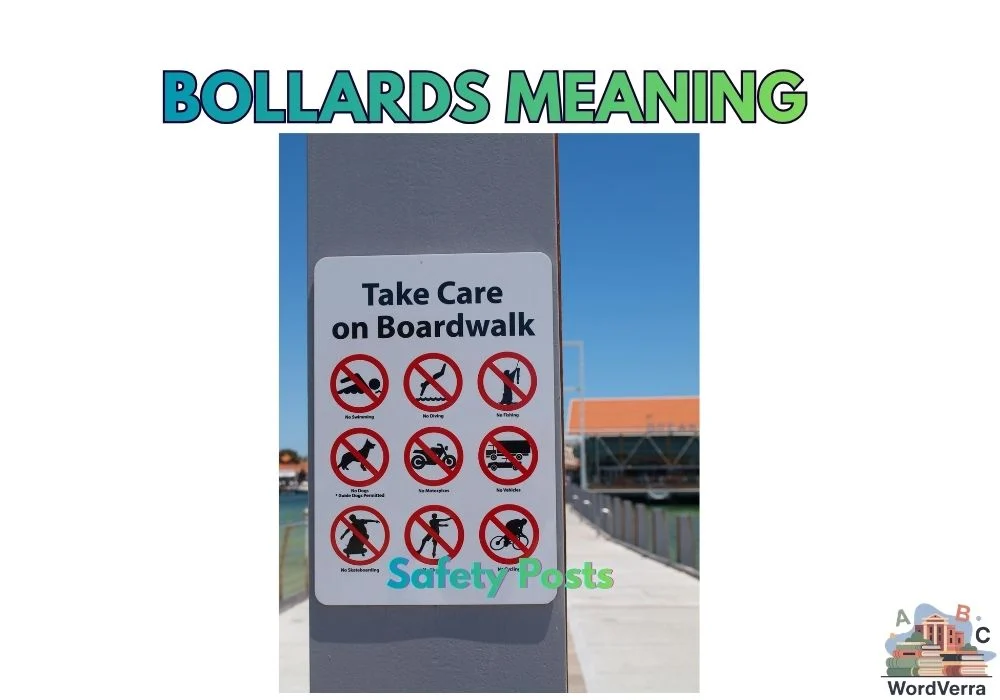
The term bollards is commonly seen in urban spaces, transportation planning, and architecture. Understanding bollards meaning helps homeowners, city planners, and safety-conscious individuals recognize their purpose and applications.

This article explains bollards meaning, types, uses, and practical examples, updated for 2026.


What Does Bollards Mean?

A bollard is:

A short, vertical post used to control or direct traffic, protect pedestrians, and secure property.

Bollards are often:

  • Placed on streets or sidewalks
  • Used to prevent vehicle intrusion
  • Installed around buildings, parks, or public spaces

Example:

“The new shopfront was protected by steel bollards to prevent accidental vehicle damage.”


Origin and Background of Bollards

The word bollard comes from the early 19th-century nautical term ‘bollard’, referring to posts on a ship used for mooring ropes. Over time, its use expanded to street safety and property protection on land.


Common Uses of Bollards

  1. Traffic Control
    • Direct vehicles along roads or pedestrian zones
    • Prevent vehicles from entering restricted areas
  2. Safety and Security
    • Protect pedestrians in crowded areas
    • Prevent vehicle ramming attacks in public spaces
  3. Property Protection
    • Shield buildings, utility boxes, and infrastructure from accidents
  4. Aesthetic and Decorative Purposes
    • Some bollards are designed for urban decoration while remaining functional

Example:

“Decorative bollards in the plaza add visual appeal while ensuring pedestrian safety.”


Types of Bollards

  • Fixed Bollards: Permanent and immovable; provide strong protection
  • Removable Bollards: Can be temporarily removed for vehicle access
  • Flexible Bollards: Bendable; absorb impact to prevent damage to vehicles
  • Automatic Bollards: Retractable and controlled electronically for security

Example:

“Automatic bollards were installed at the government building for high-security access control.”


Materials Used for Bollards

Bollards can be made from:

  • Steel or iron: Strong, durable, high-security
  • Concrete: Affordable and sturdy
  • Plastic or rubber: Flexible and often used for temporary or lightweight purposes
  • Wood: Decorative and aesthetic, commonly in parks or pedestrian areas

Bollards Meaning in Modern Context (2026)

In 2026, bollards are increasingly used in:

  • Urban planning and pedestrian safety
  • Event management to control crowds
  • Smart cities, where automatic or sensor-enabled bollards improve traffic control
  • Environmental design, where decorative bollards combine aesthetics with function

Example:

“Smart bollards lowered automatically to allow authorized vehicles through while keeping the pedestrian zone safe.”


Common Misunderstandings About Bollards

  • Mistake 1: Confusing Bollards With Barriers or Fences
    • Bollards are individual posts, not continuous barriers
  • Mistake 2: Assuming All Bollards Are Permanent
    • Many types are temporary, removable, or retractable
  • Mistake 3: Underestimating Safety Importance
    • Bollards play a critical role in preventing accidents and protecting lives

How to Use Bollards in Sentences

  • Urban planning: “The city installed bollards along the busy sidewalk to improve pedestrian safety.”
  • Security context: “Security bollards prevented vehicles from accessing the restricted area.”
  • Decorative use: “The park entrance featured wooden bollards as both decoration and guidance.”

Bollards Meaning in Simple Words (Quick Reminder)

Bollards are short posts used to protect people, property, and direct traffic. They can be decorative, temporary, or permanent, depending on the purpose.


Conclusion

To summarize:

  • Bollards are short posts that control traffic, protect pedestrians, and secure property
  • They come in various types, materials, and functions, from fixed security posts to decorative street furniture
  • Modern uses include smart city applications, pedestrian zones, and event management
  • Understanding bollards meaning helps improve safety, design, and urban planning decisions

Inuit Meaning: Definition, Origin, Culture, and Modern Context 2026

Inuit Meaning

The term Inuit refers to an indigenous people of the Arctic regions of Canada, Greenland, and Alaska. Understanding Inuit meaning is essential for appreciating their unique culture, language, and history.

This article explores the Inuit meaning, origin, cultural significance, language, lifestyle, and common misunderstandings, updated for 2026.


What Does Inuit Mean?

Inuit literally means:

“The people” in the Inuktitut language.

It refers to the indigenous communities inhabiting the Arctic regions of North America. The term emphasizes their identity, culture, and connection to their environment.

Example:

“The Inuit have a rich cultural heritage that includes traditional hunting, storytelling, and art.”


Origin of the Term Inuit

  • Inuktitut language: The word “Inuit” comes from inuk, meaning “person,” with the plural form Inuit meaning “people.”
  • Historical distinction: Previously, the term Eskimo was used, but it is now considered outdated and sometimes offensive in Canada and Greenland.

Using Inuit respects their self-identification and cultural heritage.


Inuit Culture and Lifestyle

The Inuit have developed a unique way of life adapted to the Arctic environment:

  1. Housing: Traditionally, igloos in winter and tents in summer
  2. Clothing: Fur and animal skin garments to withstand extreme cold
  3. Diet: Mainly fish, seal, whale, and caribou
  4. Transportation: Dogsleds, kayaks, and snowmobiles in modern times
  5. Art and Crafts: Carvings, sculptures, and traditional clothing designs

Example:

“Inuit artists are renowned for carving soapstone figures and creating intricate textiles.”


Inuit Language

The Inuit speak Inuktitut and related dialects, which are polysynthetic languages. This means words can contain multiple meanings and convey complex ideas in one term.

Example:

“Inuktitut words often describe activities, environments, and relationships in a detailed manner.”

The language is a key part of cultural preservation.


Inuit Meaning in Modern Context (2026)

Today, Inuit communities balance traditional lifestyles with modern influences:

  • Education: Schools teach Inuktitut and western curricula
  • Technology: Satellite communication, internet access, and modern transportation
  • Activism: Advocacy for climate change, indigenous rights, and cultural preservation
  • Tourism: Cultural experiences and eco-tourism initiatives

Example:

“Inuit leaders are at the forefront of Arctic environmental conservation efforts.”


Common Misunderstandings About Inuit

Mistake 1: Using “Eskimo” Instead of Inuit

  • Eskimo is outdated; “Inuit” is preferred in Canada and Greenland.

Mistake 2: Assuming All Arctic People Are Inuit

  • The Arctic is home to diverse indigenous groups; not all are Inuit.

Mistake 3: Thinking Inuit Culture Is Static

  • Inuit culture adapts and evolves while maintaining traditions.

Why Understanding Inuit Meaning Matters

  • Cultural Respect: Using the correct terminology honors their heritage
  • Awareness: Helps understand Arctic communities and their challenges
  • Education: Promotes knowledge about indigenous history, arts, and lifestyle

Example:

“Learning about Inuit culture enriches our understanding of human adaptation to extreme environments.”


Inuit Meaning in Simple Words (Quick Reminder)

Inuit refers to the indigenous people of the Arctic regions, meaning “the people” in Inuktitut, with a rich culture, language, and history.


Conclusion

To summarize:

  • Inuit are the indigenous people of Canada, Greenland, and Alaska
  • Their name means “the people” and represents identity and heritage
  • Inuit culture includes unique art, language, hunting traditions, and modern adaptation
  • Respecting Inuit terminology and learning about their history promotes cultural understanding

Number 7 Meaning in the Bible: Symbolism, Significance 2026

Number 7 Meaning in the Bible

The number 7 appears frequently in the Bible and carries deep symbolic meaning. Understanding the number 7 meaning in the Bible can provide spiritual insights, enhance biblical studies, and help interpret scripture more accurately.

This article explores the biblical significance of number 7, its symbolic interpretations, examples, and relevance in modern Christian thought, updated for 2026.


What Does the Number 7 Mean in the Bible?

In the Bible, the number 7 is often associated with:

Perfection, completeness, and divine order.

Key aspects of the number 7 in scripture:

  • Represents God’s creation and completeness
  • Symbolizes spiritual perfection and holiness
  • Appears in rituals, promises, and prophetic visions

Example:

“God created the world in six days and rested on the seventh, making it holy.”


Origin and Symbolism of Number 7 in the Bible

The number 7 holds symbolic significance due to its repeated use in both the Old and New Testaments:

  1. Creation Story (Genesis 1-2): God rested on the 7th day, instituting the Sabbath
  2. Seven Seals (Revelation 6-8): Represent divine judgment and completion
  3. Seven Churches (Revelation 1-3): Symbolizing the fullness of the Church

This pattern emphasizes spiritual completeness and divine intention throughout scripture.


Examples of Number 7 in the Bible

  • Seven Days of Creation: God completed creation in six days and rested on the seventh
  • Seven Noah’s Days of Waiting: Seven days before the floodwaters began (Genesis 7:4)
  • Seven Loaves of Bread: Jesus multiplied seven loaves to feed the multitude (Matthew 15:32)
  • Seven Trumpets: In the Book of Revelation, representing divine events and fulfillment

Each instance reinforces the idea of completeness, spiritual fulfillment, and divine order.


Number 7 Meaning in Spiritual and Religious Contexts

The number 7 is not just historical; it continues to carry spiritual meaning today:

  • Holiness and Sanctity: 7 often appears in rituals and sacred practices
  • Fulfillment of God’s Promises: 7 symbolizes that God’s plan is complete
  • Spiritual Reflection: Encourages believers to seek perfection and spiritual growth

Example:

“Many Christians view the seventh day as a time of rest, worship, and reflection on God’s creation.”


Number 7 in Modern Christian Practices

Even today, number 7 appears in:

  • Church rituals: Seven sacraments in Catholicism
  • Prayers and blessings: Often repeated in sevens for emphasis
  • Bible study and meditation: Recognizing 7 as a symbol of completeness and divine order

Example:

“Reciting prayers in sets of seven can help believers focus on spiritual perfection.”


Common Misunderstandings About Number 7 in the Bible

Mistake 1: Thinking 7 Is Just a Lucky Number

  • In the Bible, 7 is about divine completeness, not luck.

Mistake 2: Assuming 7 Appears Only in Numbers

  • The number 7 is symbolic and can appear in actions, events, and rituals, not just numerals.

Mistake 3: Believing Every Mention Is Literal

  • Many references are symbolic or spiritual, not historical counts.

How to Interpret Number 7 in Biblical Texts

When encountering the number 7:

  1. Look at the context of the verse
  2. Consider whether it represents completeness, perfection, or holiness
  3. Explore theological commentary for deeper understanding
  4. Reflect on spiritual lessons or moral insights

Number 7 Meaning in Simple Words

In the Bible, the number 7 symbolizes completeness, perfection, and God’s divine order. It is often used to convey spiritual fulfillment and holiness.


Conclusion

To summarize:

  • The number 7 is a powerful symbol in biblical texts
  • It signifies divine perfection, spiritual completeness, and God’s plan
  • Appears in creation, rituals, prophecies, and teachings
  • Understanding number 7 meaning in the Bible enriches scripture study and spiritual reflection

Chud Meaning: Definition, Usage, Context Explained 2026

Chud Meaning

The slang term chud has gained popularity on the internet, particularly in forums, social media, and pop culture. Understanding chud meaning helps you recognize its use in conversations, memes, and online debates, and avoid misunderstandings.

This article explores the meaning of chud, its origins, modern usage, examples, and cultural context, updated for 2026.


What Does Chud Mean?

Chud is a slang term that can carry negative or derogatory connotations, depending on context. It is often used to describe:

  • A foolish or ignorant person
  • Someone who is uncultured or socially awkward
  • An individual considered annoying, objectionable, or out of touch

Example:

“Stop acting like a chud; think before you speak.”

In online spaces, the term is frequently used in memes or discussions to criticize certain behaviors or attitudes.


Origin of the Term Chud

The term chud gained prominence in pop culture and internet slang, with several possible origins:

  1. Movie Reference: The 1984 horror film C.H.U.D. (Cannibalistic Humanoid Underground Dwellers) gave the word a reputation for describing undesirable or “subhuman” people.
  2. Internet Slang: On forums and social media, chud evolved into a shorthand insult for someone seen as ignorant or socially inept.

Over time, the term moved from pop culture into everyday online conversation.


Chud Meaning in Online Communities

On social media platforms and discussion forums:

  • Reddit & Twitter: Often used humorously or sarcastically to describe people with unpopular opinions.
  • Memes: Chud memes highlight stubborn, ridiculous, or outdated behavior.
  • Gaming Communities: Sometimes used to tease or criticize players with poor skills or toxic behavior.

Example:

“He posted a chud take about the game, and everyone roasted him in the comments.”


Common Misunderstandings About Chud

  1. Chud is always offensive:
  • While often negative, it can also be used jokingly or satirically in memes.
  1. Everyone understands it:
  • The term is mostly recognized in internet-savvy communities, not mainstream audiences.
  1. Chud refers to appearance:
  • The insult targets behavior or attitude, not physical traits.

How to Use Chud in Sentences

  • Casual online conversation:

“Ignore that chud, they clearly don’t understand the topic.”

  • Memes or humor:

“That moment when a chud thinks they’re right but everyone disagrees.”

  • Gaming or social critique:

“Stop playing like a chud and pay attention to the strategy.”


Chud Meaning in Simple Words

Chud is a slang term for a foolish, ignorant, or socially awkward person, often used online in jokes or criticisms.


Conclusion

To summarize:

  • Chud is a slang insult used to describe someone considered foolish, ignorant, or socially inept
  • It originated from pop culture (the movie C.H.U.D.) and gained traction as internet slang
  • Commonly used in online communities, memes, and casual conversations
  • Understanding chud meaning helps you navigate social media discussions and memes effectively

BSFS Meaning: Definition, Usage, Examples in Texting & Social Media 2026

BSFS Meaning

In the age of digital communication, abbreviations and slang are everywhere. One such acronym is BSFS. Understanding BSFS meaning is essential for interpreting texts, social media posts, and online conversations accurately.

This article explores BSFS meaning, its origin, usage, examples, and common misunderstandings, updated for 2026.


What Does BSFS Mean? (Simple Definition)

BSFS is an acronym that commonly stands for:

“Big Shoutout For Someone” or “Best Friend Forever, Seriously” depending on the context.

Its meaning varies depending on whether it’s used in casual texting, social media, or fandom communities.

Example:

“BSFS to my amazing study partner—you’re the best!”
Here, it is used to give a shoutout or appreciation.


Origin of BSFS

  • BSFS emerged in online forums, chatrooms, and early social media platforms.
  • Like many abbreviations, it evolved from informal texting culture to widespread online usage.
  • The meaning can slightly shift depending on the community or group.

BSFS Meaning in Texting

In texting, BSFS is used to:

  • Appreciate someone’s help or support
  • Express admiration or recognition
  • Strengthen friendships and social bonds

Example:

“Thanks for helping me move this weekend, BSFS!”
Here, the sender is expressing gratitude and friendship.


BSFS Meaning on Social Media

On platforms like Instagram, Twitter, and TikTok, BSFS can be used to:

  • Give shoutouts to friends, creators, or supporters
  • Celebrate personal milestones with friends
  • Acknowledge someone’s contribution publicly

Example:

“BSFS to all my followers for 10k likes!”
This usage is community-oriented and positive.


Common Misunderstandings About BSFS

Mistake 1: Assuming a Single Meaning

  • BSFS has multiple interpretations, so context matters.

Mistake 2: Confusing BSFS With Offensive Acronyms

  • Unlike some online acronyms, BSFS is friendly and positive.

Mistake 3: Using BSFS in Formal Communication

  • BSFS is informal slang and should be avoided in professional or formal texts.

How to Use BSFS in Sentences

  • Friendship context:

“BSFS to my best friend who’s always there for me.”

  • Social media context:

“BSFS to the amazing team that made this event possible!”

  • Appreciation context:

“BSFS to my mentor for guiding me through this project.”


BSFS Meaning in Modern Context (2026)

In 2026, BSFS continues to be popular among:

  • Teenagers and young adults in messaging apps
  • Social media influencers and communities
  • Online forums and fandoms

It is a friendly, community-oriented acronym that strengthens connections and acknowledges support.

Example:

“BSFS to everyone who supported my art challenge—it means a lot!”


BSFS Meaning in Simple Words (Quick Reminder)

BSFS is an informal acronym used to give a shoutout, show appreciation, or express friendship online.


Conclusion

To summarize:

  • BSFS is a positive, informal acronym for expressing admiration, friendship, or shoutouts
  • Commonly used in texting, social media, and online communities
  • Understanding BSFS meaning helps in interpreting messages and engaging with online culture
  • Always consider context to determine the intended meaning

Modalities Meaning: Definition, Types, and Usage Explained 2026

Modalities Meaning

The word modalities is widely used in education, healthcare, linguistics, and business contexts. Understanding modalities meaning helps professionals, students, and everyday learners communicate clearly and apply concepts effectively across disciplines.

This article provides a comprehensive explanation of modalities, their types, examples, and practical applications, updated for 2026.


What Does Modalities Mean? (Simple Definition)

In simple terms, modalities refers to:

Methods, forms, or modes of doing something, communicating, or experiencing information.

It is used to describe different ways in which something can occur or be expressed.

Example:

“There are various learning modalities that cater to different student needs.”


Origin of the Word Modalities

The word modalities comes from the Latin root “modalis”, meaning manner, mode, or measure.

  • It evolved in English to describe methods, approaches, or channels of expression.
  • Over time, it became widely used in science, education, healthcare, and communication.

Modalities Meaning in Different Contexts

1. Education and Learning

In education, modalities refer to the different learning styles or methods:

  • Visual modality: Learning through images, diagrams, and charts
  • Auditory modality: Learning through listening and discussions
  • Kinesthetic modality: Learning through movement and hands-on activities

Example:

“Teachers must adapt their lessons to multiple modalities to engage all students.”


2. Healthcare and Therapy

In healthcare, modalities describe treatment methods or therapeutic approaches:

  • Physical therapy modalities: Ultrasound, heat therapy, or electrical stimulation
  • Alternative modalities: Acupuncture, massage, or aromatherapy

Example:

“The patient responded well to multiple modalities of physiotherapy.”


3. Linguistics and Communication

In linguistics, modalities indicate ways language conveys meaning, such as:

  • Mood modality: Expressing possibility, necessity, or obligation (e.g., can, must, should)
  • Sensory modality: Relating to senses (sight, hearing, touch, taste, smell)

Example:

“Different modalities in language help express certainty or doubt.”


4. Business and Professional Contexts

In business, modalities can refer to methods, processes, or operational approaches:

  • Delivery modalities in logistics (air, sea, land)
  • Training modalities for employees (online, in-person, hybrid)

Example:

“Our company uses multiple modalities for employee training to enhance efficiency.”


Common Misunderstandings About Modalities

  • Mistake 1: Modalities Equals Methods Only
    • While often referring to methods, modalities also cover forms, channels, and sensory experiences.
  • Mistake 2: Modalities Are Fixed
    • Modalities can be adapted or combined depending on needs and context.
  • Mistake 3: Modalities Are Exclusive to One Field
    • Modalities apply across education, healthcare, linguistics, and business.

How to Use Modalities in Sentences

  • Education:

“Incorporating multiple modalities ensures inclusive learning.”

  • Healthcare:

“Physical therapy modalities must be tailored to each patient.”

  • Linguistics:

“Modalities in language allow speakers to express different moods.”

  • Business:

“Our training program offers various modalities to suit remote and on-site employees.”


Modalities Meaning in Modern Context (2026)

In 2026, modalities is increasingly relevant due to:

  • Remote and hybrid learning systems
  • Telehealth and digital therapy platforms
  • Cross-cultural communication and global business operations
  • Innovative sensory and experiential technologies

Example:

“Educational technologies now support multiple modalities to enhance student engagement.”


Modalities Meaning in Simple Words (Quick Reminder)

Modalities are the different ways or methods in which something is done, communicated, or experienced.


Conclusion

To summarize:

  • Modalities refers to methods, forms, or channels in education, healthcare, linguistics, and business
  • They help tailor experiences, treatments, learning, and communication to specific needs
  • Understanding modalities meaning allows for more effective teaching, therapy, and professional practices
  • Adapting modalities ensures accessibility, engagement, and improved outcomes in modern life