
The Meaning of Marriage: Definition, Significance 2026

The Meaning of Marriage

Marriage is one of the most significant social institutions in human society. Understanding the meaning of marriage helps individuals appreciate its legal, emotional, and cultural importance. In 2026, the concept of marriage continues to evolve, balancing tradition with modern values.

This article explores the meaning of marriage, its origins, purposes, types, modern interpretations, and how it shapes personal and societal life.


What Is Marriage? (Simple Definition)

Marriage is defined as:

A legally and socially recognized union between two individuals, establishing rights and responsibilities between them, often formalized by a ceremony.

Traditionally, marriage is viewed as a bond that:

  • Provides companionship and emotional support
  • Establishes a family unit
  • Creates legal and financial responsibilities
  • Serves social, cultural, or religious purposes

Example:

“Their marriage brought together two families and strengthened social ties.”


Origin of Marriage

Marriage has been practiced for thousands of years across cultures. Its origins include:

  • Ancient Civilizations: Early societies used marriage to form alliances, manage property, and regulate reproduction.
  • Religious Traditions: Many religions provide formal rituals and moral guidelines for marriage.
  • Legal Recognition: Governments introduced legal frameworks to protect spouses’ rights and obligations.

The evolution of marriage reflects changes in society, gender roles, and cultural values.


The Meaning of Marriage in Modern Society

Today, marriage is more than a legal contract or social expectation. Modern marriage often emphasizes:

  • Love and partnership: Emotional connection and mutual support
  • Equality: Shared responsibilities and decision-making
  • Personal growth: Supporting each other’s ambitions and well-being
  • Commitment: Loyalty and long-term dedication to a partner

Example:

“For them, marriage was not just a ceremony; it was a lifelong partnership built on trust and respect.”


Types of Marriage

Marriage can take several forms, including:

  1. Monogamy: Union between two individuals
  2. Polygamy: Union involving multiple spouses
  3. Civil Marriage: Legally recognized marriage without religious rituals
  4. Religious Marriage: Marriage conducted under the rules of a faith
  5. Same-Sex Marriage: Legally recognized union between two individuals of the same gender

Each type reflects cultural norms, legal frameworks, and personal choices.


Common Misunderstandings About Marriage

Mistake 1: Marriage Equals Perfection

  • Marriage requires effort, communication, and compromise, not just love or attraction.

Mistake 2: Marriage is Only for Procreation

  • While raising a family is a purpose for some, marriage can exist for companionship, emotional support, and legal benefits.

Mistake 3: One-Size-Fits-All Approach

  • Marriage varies across cultures, countries, and personal beliefs. Modern society recognizes diverse forms and expectations.

Benefits of Marriage

Marriage offers multiple benefits, including:

  • Emotional stability and companionship
  • Legal protection for spouses and children
  • Financial advantages like tax benefits and shared property
  • Social recognition and cultural acceptance

Example:

“Couples in strong marriages often report higher life satisfaction and better mental health.”


Challenges in Marriage

Even with its benefits, marriage comes with challenges:

  • Communication issues
  • Conflicting priorities or values
  • Financial disagreements
  • Adapting to life changes together

Understanding these challenges helps couples build resilient and meaningful marriages.


The Meaning of Marriage in Simple Words

Marriage is a committed relationship between two people that involves love, support, legal responsibilities, and shared life goals.


Conclusion

To summarize:

  • Marriage is both a legal and social institution with emotional, cultural, and legal significance
  • Modern marriage emphasizes love, partnership, equality, and personal growth
  • Understanding the meaning of marriage helps individuals navigate relationships, commitments, and family life in a balanced and meaningful way

YWA Meaning: Definition, Usage, and Examples 2026

YWA Meaning

In the world of texting, social media, and online chats, abbreviations like YWA are increasingly common. Understanding YWA meaning is essential for anyone who wants to communicate clearly in digital conversations.

This article explains what YWA means, how it’s used, its origin, common misunderstandings, and modern applications, updated for 2026.


What Does YWA Mean? (Simple Definition)

YWA is an abbreviation that stands for:

“You’re Welcome Again” or “You’re Welcome Anytime”, depending on context.

It is typically used as a casual, friendly response in digital conversations after someone says thank you.

Example:

“Thanks for helping me with my homework!”
“YWA! Happy to help.”


Origin of YWA

The abbreviation YWA emerged with the rise of text messaging and internet slang in the 2000s.

  • Like many chat abbreviations, it was created to save time and typing effort
  • It combines the first letters of the phrase “You’re Welcome Again” or “You’re Welcome Anytime”

Its meaning is usually context-dependent, based on the conversation and tone.


YWA Meaning in Everyday Texting

In daily digital communication, YWA is used to:

  • Respond to thanks in a friendly or casual way
  • Indicate that the favor or help is not a problem
  • Maintain a casual tone in chats or social media comments

Example:

“Thanks for picking up my package!”
“YWA, no worries!”


YWA Meaning in Social Media and Online Chats

YWA is popular on platforms like:

  • WhatsApp
  • Instagram DMs
  • TikTok comments
  • Gaming chat platforms

It’s often used among friends, peers, or online communities where casual, quick responses are common.

Example:

“Thanks for the tips on the game strategy!”
“YWA! Enjoy winning!”


Common Misunderstandings About YWA

Mistake 1: Confusing YWA With Other Abbreviations

  • YWA is not “You Will Achieve” or “Yes, We Agree,” which are sometimes mistaken in certain contexts.

Mistake 2: Thinking YWA Is Formal

  • It is informal and casual, suitable for friends or online chats, not professional emails.

Mistake 3: Ignoring Context

  • The meaning may slightly change depending on whether the conversation is casual, humorous, or supportive.

Synonyms of YWA in Digital Communication

Other common ways to say the same thing include:

  • “No problem”
  • “Anytime”
  • “You’re welcome”
  • “No worries”

Example:

“Thanks for helping me move!”
“YWA / No problem / Anytime!”


How to Use YWA Correctly in Sentences

  • After receiving thanks:

“Thanks for sending me the notes.”
“YWA! Glad it helped.”

  • In social media or gaming:

“Thanks for the strategy guide!”
“YWA! Good luck in the match.”

  • Among friends:

“Thanks for the invite!”
“YWA, always happy to hang out.”


YWA Meaning in Modern Context (2026)

In 2025, YWA remains relevant in:

  • Text messages and instant messaging apps
  • Social media interactions
  • Gaming communities and forums
  • Casual online communication

The abbreviation is favored for its brevity and friendliness, allowing quick, positive responses without typing full sentences.


YWA Meaning in Simple Words (Quick Reminder)

YWA means “You’re Welcome Again” or “You’re Welcome Anytime” and is used to respond casually after someone thanks you.


Conclusion

To summarize:

  • YWA is an informal abbreviation used in texting and social media
  • It generally means “You’re Welcome Again” or “You’re Welcome Anytime”
  • Synonyms include “No problem,” “Anytime,” and “No worries”
  • Understanding YWA meaning helps you communicate naturally in modern digital conversations

In Utero Meaning: Definition, Usage, Medical Context 2026

In Utero Meaning

The phrase in utero is commonly used in medical, biological, and academic contexts. Understanding in utero meaning is essential for interpreting scientific texts, prenatal discussions, and health-related articles accurately.

This article explains in utero meaning, its origin, examples of use, common misconceptions, and relevance in modern medical and everyday contexts, fully updated for 2026.


What Does In Utero Mean? (Simple Definition)

In utero is a Latin phrase that means:

“In the womb” or “while inside the uterus.”

It is used to describe conditions, development, or processes occurring before birth, while the fetus is still in the mother’s uterus.

Example:

“The baby was exposed to certain nutrients in utero, which influenced early development.”


Origin of the Phrase In Utero

The term in utero comes from Latin:

  • In – “inside” or “within”
  • Utero – “womb” or “uterus”

It has been adopted in English, particularly in medical, biological, and research contexts, to describe prenatal phenomena.


In Utero Meaning in Medical Context

In modern medicine and prenatal care, in utero is used to describe:

  • Fetal development: Growth and organ formation while in the womb
  • Exposure to substances: How medications, nutrition, or environmental factors affect the fetus
  • Medical procedures: Surgeries or treatments performed before birth

Example:

“In utero surgery can correct certain congenital conditions before the baby is born.”


In Utero Meaning in Scientific Research

Researchers use in utero to describe studies related to:

  • Prenatal growth and genetics
  • Effects of maternal lifestyle on fetal development
  • Epidemiology of prenatal exposure to chemicals or viruses

Example:

“Researchers observed in utero exposure to stress hormones may affect childhood behavior.”


Common Misunderstandings About In Utero

Mistake 1: Thinking In Utero Refers to Post-Birth

  • In utero strictly refers to before birth, inside the womb.

Mistake 2: Confusing In Utero With Pregnancy

  • Pregnancy refers to the condition of the mother, whereas in utero specifically describes the fetus.

Mistake 3: Misusing in Casual Conversation

  • While medically accurate, using in utero casually may confuse non-medical audiences. Use phrases like “in the womb” for general communication.

How to Use In Utero Correctly in Sentences

  • Medical context:

“The fetus developed normally in utero.”

  • Research context:

“In utero exposure to high glucose levels can affect metabolism later in life.”

  • Casual context (simplified):

“The baby was safe and healthy while in utero.”


In Utero in Modern Context (2026)

In 2026, in utero is commonly used in:

  • Medical journals and research papers
  • Prenatal care and obstetrics discussions
  • Genetic studies and developmental biology
  • Health education and awareness materials

Example:

“Prenatal nutrition plays a vital role in in utero brain development.”

It reflects a scientific and precise way to describe fetal growth and conditions before birth.


In Utero Meaning in Simple Words (Quick Reminder)

In utero means “inside the womb” and refers to all development and conditions occurring before birth.


Conclusion

To summarize:

  • In utero describes anything happening inside the uterus before birth
  • Widely used in medical, research, and prenatal contexts
  • Understanding in utero meaning helps interpret scientific texts, medical discussions, and prenatal advice accurately
  • Using it correctly ensures clarity in communication, particularly in health or educational settings

Coryza Meaning: Definition, Causes, Symptoms &Treatment 2026

Coryza meaning

The term coryza is commonly used in medical contexts, particularly in describing respiratory infections. Understanding coryza meaning helps individuals recognize symptoms, communicate effectively with healthcare providers, and manage mild illnesses.

This article explains the coryza meaning, its causes, symptoms, treatment, and relevant information, fully updated for 2026.


What Does Coryza Mean? (Simple Definition)

In medical terms, coryza refers to:

Inflammation of the mucous membranes in the nose, leading to a runny nose, sneezing, and nasal congestion.

It is most commonly associated with common colds or viral upper respiratory infections.

Example:

“The patient presented with coryza, including a runny nose and mild sneezing.”


Origin of the Word Coryza

The word coryza comes from Greek “koryza”, meaning catarrh or nasal cold.

  • Historically used to describe any upper respiratory inflammation with nasal discharge
  • Entered English medical terminology in the 17th century

Causes of Coryza

Coryza can be triggered by several factors:

  1. Viral Infections: Most commonly caused by rhinoviruses, coronaviruses, or adenoviruses
  2. Allergic Reactions: Seasonal allergies can lead to allergic coryza
  3. Environmental Irritants: Dust, smoke, or strong odors can cause nasal inflammation
  4. Bacterial Infections: Less common, may occur secondary to viral infections

Example:

“Coryza often occurs during cold seasons when viral infections are more prevalent.”


Symptoms of Coryza

Common symptoms of coryza include:

  • Runny or stuffy nose
  • Sneezing
  • Watery eyes
  • Mild sore throat
  • Fatigue (in some cases)

Unlike more severe respiratory infections, coryza symptoms are usually mild and self-limiting.


Coryza Meaning in Medical Context

In medical documentation and communication, coryza is used to describe the typical cold-like nasal symptoms.

Example:

“The patient showed signs of mild coryza without fever or systemic infection.”

Healthcare providers may use coryza in clinical notes, reports, or prescriptions to describe upper respiratory inflammation.


Treatment and Management of Coryza

Treatment usually focuses on symptom relief, as most coryza cases are viral:

  • Rest and hydration: Allow the immune system to recover
  • Over-the-counter medications: Decongestants or antihistamines for nasal relief
  • Humidifiers or saline sprays: Help soothe nasal passages
  • Avoid irritants: Smoke and dust can worsen symptoms

Note: Antibiotics are generally not recommended, unless there is a confirmed bacterial infection.


Common Misunderstandings About Coryza

Mistake 1: Confusing Coryza With Flu

  • Coryza refers specifically to nasal inflammation; flu usually includes fever, body aches, and systemic symptoms.

Mistake 2: Assuming Coryza Requires Medication

  • Most cases are self-limiting and resolve in a few days with home care.

Mistake 3: Using Coryza for Any Nasal Issue

  • Coryza specifically refers to runny or inflamed nasal mucosa, not all nasal problems.

Coryza Meaning in Simple Words (Quick Reminder)

Coryza is a medical term for the common cold affecting the nose, causing sneezing, runny nose, and congestion.


Conclusion

To summarize:

  • Coryza meaning refers to inflammation of the nasal mucosa, often due to viral infections
  • Symptoms include runny nose, sneezing, and mild congestion
  • Treatment is mostly supportive, focusing on symptom relief
  • Understanding coryza meaning helps in recognizing cold symptoms and communicating effectively with healthcare providers

Calamitous Meaning: Definition, Usage, and Examples 2026

The word calamitous is a powerful adjective often used in literature, journalism, and formal speech to describe disastrous events or situations. Understanding calamitous meaning can help you enhance your vocabulary and convey the severity of situations effectively.

This article provides a complete guide to calamitous meaning, its origin, usage examples, common misunderstandings, and modern relevance, fully updated for 2026.


What Does Calamitous Mean? (Simple Definition)

In simple terms, calamitous means:

Extremely harmful, disastrous, or causing great misfortune.

It is used to describe events, decisions, or situations that result in severe negative consequences.

Example:

“The calamitous storm destroyed homes and roads across the region.”

Here, calamitous emphasizes the seriousness and devastation of the storm.


Origin of the Word Calamitous

The word calamitous comes from the Latin “calamitosus”, derived from “calamitas”, meaning damage, loss, or disaster.

  • First used in English in the 16th century
  • Historically associated with misfortune, disasters, or significant hardship

Understanding the origin helps explain why the word conveys severe and impactful consequences.


Calamitous Meaning in Everyday Context

While formal, calamitous can also be applied in everyday language to describe events or actions with disastrous effects:

Examples:

  • “His calamitous decision led to the failure of the project.”
  • “The calamitous traffic jam made everyone late for the meeting.”

Even minor disasters or unfortunate situations can sometimes be described as calamitous for emphasis.


Calamitous in Literature and Media

Authors and journalists frequently use calamitous to add drama and intensity:

  • Literature: “The calamitous fate of the hero shocked readers.”
  • News: “The earthquake had calamitous effects on local communities.”
  • Movies/TV: “The calamitous battle changed the course of the story.”

Using calamitous in writing highlights the seriousness and impact of events.


Synonyms of Calamitous

Other words similar in meaning include:

  • Disastrous
  • Catastrophic
  • Devastating
  • Tragic
  • Ruinous

Example:

“The calamitous decision / disastrous decision led to severe consequences.”

These synonyms can be used interchangeably depending on tone and context.


Common Misunderstandings About Calamitous

Mistake 1: Overusing Calamitous for Minor Issues

  • The word implies serious harm or misfortune; avoid using it for trivial problems.

Mistake 2: Confusing Calamitous With Unfortunate

  • While related, calamitous emphasizes severity, not just bad luck.

Mistake 3: Using Calamitous Only for Natural Disasters

  • It applies to events, decisions, or situations causing significant damage, not just natural phenomena.

How to Use Calamitous Correctly in Sentences

  • Describing disasters:

“The calamitous flood affected thousands of families.”

  • In professional writing:

“The company’s calamitous strategy led to financial losses.”

  • In casual storytelling:

“It was a calamitous day when everything went wrong.”


Calamitous Meaning in Modern Context 2026

In 2026, calamitous continues to appear in:

  • News articles and media reports
  • Academic writing and analysis
  • Literature and creative writing
  • Social media when describing major events

Example:

“The calamitous cyberattack disrupted the operations of multiple companies worldwide.”

The word is valuable for expressing gravity, severity, and impact in both written and spoken communication.


Calamitous Meaning in Simple Words (Quick Reminder)

Calamitous means extremely disastrous or causing severe misfortune.


Conclusion

To summarize:

  • Calamitous describes events, decisions, or situations that are highly disastrous or harmful
  • It has roots in Latin and has been used in English for centuries
  • Synonyms include disastrous, catastrophic, and devastating
  • Using calamitous meaning correctly adds emphasis and clarity to writing and speech

Orchid Flower Meaning: Symbolism &Modern Significance 2026

Orchids are among the most elegant and exotic flowers in the world. Understanding the orchid flower meaning helps you appreciate their beauty, symbolism, and cultural significance. Whether given as a gift, used in decoration, or admired in nature, orchids carry messages beyond their delicate petals.

This article explores the meaning of orchid flowers, their symbolism, popular types, cultural significance, and modern uses, updated for 2026.


What Does Orchid Flower Mean? (Simple Definition)

In general, orchid flowers symbolize beauty, love, and strength. The specific meaning can vary depending on color, species, or cultural context, but in most traditions, orchids represent:

  • Elegance and refinement
  • Luxury and sophistication
  • Love, fertility, and virility
  • Rare beauty and delicate charm

Example:

“Giving an orchid flower to someone is a gesture that conveys admiration and deep respect.”


Origin and History of Orchids

Orchids have been revered for centuries:

  • Ancient Greece: Associated with fertility and virility; the name “orchid” comes from the Greek word orchis, meaning testicle, due to the shape of the root tubers.
  • China: Symbolized refinement, purity, and friendship.
  • Victorian England: Considered a symbol of luxury and rare beauty, often collected by aristocrats.

Orchids’ history emphasizes their association with beauty, rarity, and symbolic meaning.


Orchid Flower Meaning by Color

Different orchid colors carry different symbolic meanings:

  • White Orchids: Purity, innocence, and elegance
  • Pink Orchids: Grace, femininity, and joy
  • Purple Orchids: Royalty, admiration, and respect
  • Yellow Orchids: Friendship, new beginnings, and happiness
  • Red Orchids: Passion, desire, and strength

Example:

“A purple orchid gifted to a mentor symbolizes admiration and respect for their achievements.”


Popular Types of Orchids

Orchids are diverse, with thousands of species. Some popular types include:

  • Phalaenopsis (Moth Orchid): Popular for homes and gifts; symbolizes beauty and elegance
  • Cattleya: Often used in corsages; represents refinement and luxury
  • Dendrobium: Represents strength and longevity
  • Vanda: Exotic and rare; symbolizes rarity and uniqueness

Knowing the type of orchid helps enhance the meaning behind your gift or decoration.


Orchid Flower Meaning in Different Cultures

  • Western Culture: Orchids represent luxury, beauty, and sophisticated taste.
  • Eastern Culture: Symbolizes refinement, fertility, and friendship.
  • Ancient Traditions: Associated with virility, spiritual growth, and delicate beauty.

Orchids are universally admired for their unique shapes, colors, and symbolic depth.


Modern Uses and Significance of Orchids (2026)

Today, orchids are used in:

  • Home decor and floral arrangements
  • Weddings and special occasions
  • Gifts expressing love, admiration, or friendship
  • Botanical and ornamental collections

Example:

“In modern weddings, white orchids symbolize pure love and elegance, often used in bouquets and centerpieces.”

Orchids continue to convey meaningful messages through their beauty and symbolism in modern life.


Common Misunderstandings About Orchid Flowers

Mistake 1: Assuming All Orchids Mean the Same

  • While all orchids symbolize beauty, color and species affect their specific meaning.

Mistake 2: Using Orchids for Negative Contexts

  • Orchids are positive symbols; avoid gifting them in contexts that may suggest sorrow or negativity.

Mistake 3: Ignoring Cultural Differences

  • In some cultures, certain orchid colors carry specific meanings, so context matters.

How to Use Orchid Flower Meaning in Daily Life

  • Gift Giving: Choose the color based on the message you want to convey
  • Home Decoration: Use orchids to symbolize elegance and refined taste
  • Celebrations: Orchids enhance the symbolic beauty of weddings, birthdays, and special events
  • Gardening: Cultivating orchids reflects an appreciation for delicate and rare beauty

Example:

“Planting orchids in a living space adds a touch of elegance and calm, reflecting natural beauty.”


Orchid Flower Meaning in Simple Words (Quick Reminder)

Orchid flowers represent beauty, elegance, love, and strength. Their meaning can vary by color and type, making them versatile symbols in gifts and décor.


Conclusion

To summarize:

  • Orchid flower meaning revolves around beauty, love, elegance, and admiration
  • Different colours and species carry additional symbolic meanings
  • Orchids are appreciated in cultures worldwide for their rarity, sophistication, and delicate charm
  • Understanding orchids’ symbolism helps you choose meaningful gifts and decor in modern life.

Vegvisir Meaning: Definition, History, and Symbolism 2026

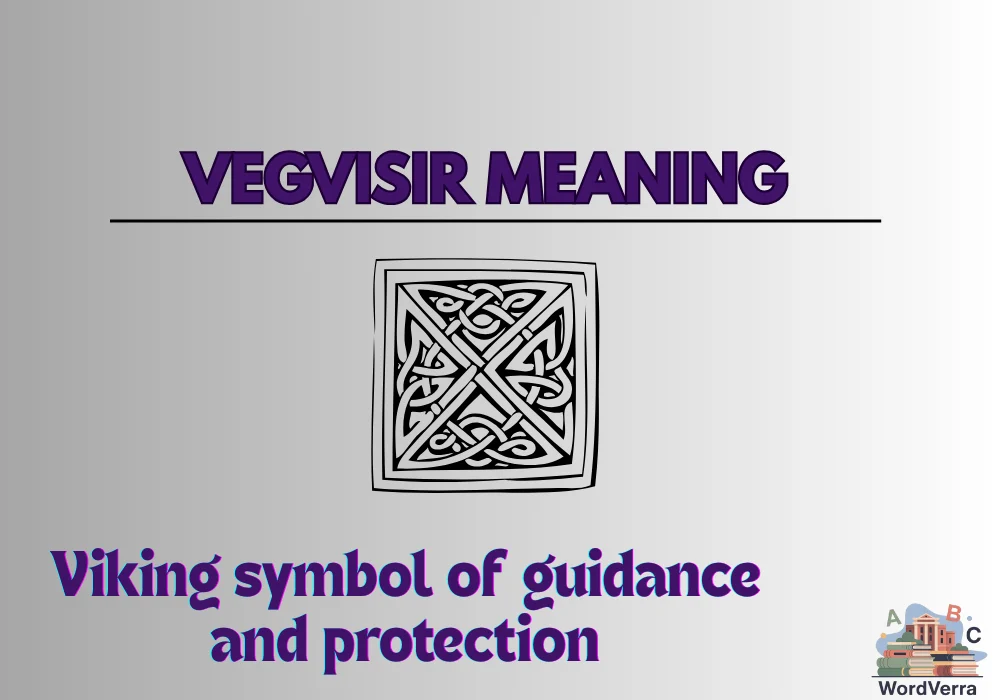
The Vegvisir is an ancient symbol that has gained popularity in modern culture, appearing in jewelry, tattoos, and spiritual contexts. Understanding Vegvisir meaning provides insight into its historical roots, symbolism, and modern usage.

This article explores the meaning of Vegvisir, its origin, significance, and practical applications, fully updated for 2026.


What Does Vegvisir Mean? (Simple Definition)

The word Vegvisir comes from Icelandic and literally translates to:

“Sign post” or “Wayfinder”

It is a symbol intended to guide travelers, helping them find their way even through storms or difficult paths. It is often associated with protection and direction in both physical and spiritual journeys.

Example:

“Many people wear a Vegvisir pendant as a symbol of guidance through life’s challenges.”


Origin of Vegvisir

The Vegvisir has roots in Icelandic magical staves, known as Galdrastafir.

  • First recorded in the Huld Manuscript (19th century)
  • Traditionally believed to protect travelers and ensure they don’t lose their way
  • Although associated with Norse culture, its documented history is relatively recent compared to ancient runes

Symbolism and Meaning of Vegvisir

Vegvisir represents:

  • Guidance: Helps one find the right path in life
  • Protection: Provides safety during journeys, both literal and metaphorical
  • Resilience: Encourages perseverance through difficulties
  • Spirituality: Often used in modern spiritual practices as a talisman

Example:

“The sailor carried a Vegvisir tattoo to symbolize safe navigation at sea.”


Vegvisir Meaning in Modern Context

In 2026, Vegvisir has become popular beyond its Icelandic origins:

  • Tattoos: Symbol of guidance, strength, and personal journey
  • Jewelry and Art: Represents protection and spiritual navigation
  • Meditation and Spirituality: Used as a focus symbol for clarity and decision-making
  • Fashion and Lifestyle: Adopted in modern designs for aesthetic and symbolic reasons

Example:

“She chose a Vegvisir tattoo to remind herself to stay on her life path during uncertain times.”


Common Misunderstandings About Vegvisir

Mistake 1: Confusing Vegvisir With Other Norse Symbols

  • Vegvisir is often mistaken for Aegishjalmur (Helm of Awe), which symbolizes protection and power.
  • Vegvisir focuses more on guidance and direction than dominance or fear.

Mistake 2: Assuming It Has Magical Powers

  • Historically, it was believed to offer protection, but in modern usage, it serves symbolic and inspirational purposes.

Mistake 3: Mispronunciation

  • Correct pronunciation: VEG-vee-seer (Icelandic: /ˈvɛɡvɪsir/)

How to Use Vegvisir Symbolically

  • Personal motivation: As a tattoo or artwork for guidance
  • Spiritual practices: Used in meditation or visualization for clarity
  • Decorative purposes: Jewelry, clothing, or accessories to honor Norse heritage
  • Gift giving: Symbolic gifts for loved ones embarking on new journeys

Example sentences:

“He drew a small Vegvisir on his notebook to remind himself to stay focused.”
“The pendant featuring a Vegvisir became a meaningful gift for her travels abroad.”


Vegvisir Meaning in Simple Words (Quick Reminder)

Vegvisir is a symbol that represents guidance, direction, protection, and resilience, helping one navigate challenges in life or journeys.


Conclusion

To summarize:

  • Vegvisir meaning centers around guidance, protection, and finding the right path
  • It has historical roots in Icelandic magical staves but has modern symbolic significance
  • Widely used in tattoos, jewelry, and spiritual practices
  • Understanding Vegvisir meaning allows for appreciation of its cultural, historical, and personal significance

Merit Based Meaning: Definition, Examples & Modern Usage 2026

Meaning:

The term merit based is commonly used in education, employment, and organizational contexts. Understanding merit based meaning is essential for interpreting policies, awards, promotions, and admissions accurately.

This article provides a complete guide to merit based meaning, its origin, examples of use, common misunderstandings, and relevance in modern society.


What Does Merit Based Mean? (Simple Definition)

Merit based refers to a system, decision, or reward that is:

Determined by an individual’s abilities, achievements, or performance rather than factors like seniority, favoritism, or wealth.

Example:

“The scholarship is merit based, awarded to students with the highest academic performance.”

In this context, merit based emphasizes fairness, achievement, and excellence.


Origin of the Term Merit Based

The word merit comes from the Latin “meritum”, meaning “reward, worth, or service”.

  • The concept of meritocracy (a system where advancement is based on ability) influenced the use of merit based.
  • Over time, organizations, governments, and educational institutions adopted merit based systems to promote fairness and encourage achievement.

Merit Based Meaning in Education

In education, merit based is used for:

  • Scholarships
  • Admissions
  • Awards and recognition

Example:

“Admission to the prestigious program is merit based, considering exam scores and academic achievements.”

This system rewards students for talent and hard work rather than financial status or connections.


Merit Based Meaning in Employment and Promotion

In professional settings, merit based applies to:

  • Promotions
  • Salary increases
  • Recognition programs

Example:

“The company follows a merit based promotion system, ensuring employees are rewarded for performance rather than tenure.”

A merit based approach motivates employees and encourages productivity.


Merit Based Meaning in Government and Policy

Governments and organizations use merit based systems to ensure:

  • Transparent recruitment
  • Fair distribution of awards or benefits
  • Selection of capable candidates

Example:

“The civil service exam is merit based, selecting candidates solely on knowledge and performance.”

This helps maintain integrity and equality in public services.


Common Misunderstandings About Merit Based

Mistake 1: Thinking Merit Based Ignores Other Factors

  • Merit based decisions often focus on ability and achievement, but practical constraints like resources may still play a role.

Mistake 2: Confusing Merit Based With Random Selection

  • Merit based is systematic, not arbitrary or random. Selection is based on measurable performance.

Mistake 3: Assuming Merit Based Is Always Perfect

  • While designed for fairness, biases in evaluation criteria or processes can affect outcomes.

How to Use Merit Based in Sentences

  • Education context:

“The scholarship program is merit based, rewarding top performers.”

  • Workplace context:

“Our company has a merit based bonus structure.”

  • Government context:

“The grant was allocated on a merit based system.”


Merit Based Meaning in Modern Context 2026

In 2026, merit based systems are widely adopted in:

  • Universities and educational institutions
  • Corporations and startups
  • Government recruitment and awards
  • International scholarship programs

Example:

“Most global scholarships today are merit based to ensure deserving students get opportunities.”

The term emphasizes achievement, fairness, and performance-driven rewards.


Merit Based Meaning in Simple Words (Quick Reminder)

Merit based means decisions, rewards, or selections are made according to ability, performance, or achievements rather than favoritism or other external factors.


Conclusion

To summarize:

  • Merit based refers to systems or decisions based on performance, talent, or achievement
  • It is widely used in education, employment, and government
  • Understanding merit based meaning helps you navigate scholarships, promotions, awards, and admissions effectively
  • Applying merit based principles promotes fairness, motivation, and excellence

Motive Meaning: Definition, Usage, and Examples 2026

Motive Meaning: Definition, Usage, and Examples 2026

The word motive is commonly used in everyday conversation, literature, criminal investigations, and psychology. Understanding motive meaning is essential for analyzing actions, intentions, and behavior clearly.

This article explains the meaning of motive, its origin, examples of use, common misunderstandings, and practical applications, fully updated for 2026.


What Does Motive Mean? (Simple Definition)

In simple terms, motive refers to:

The reason behind a person’s action or behavior; the driving force that prompts someone to act.

It can be conscious or subconscious and is often used to understand why someone does something.

Example:

“The police were investigating the motive behind the robbery.”

Here, motive highlights the reason or intent behind the action.


Origin of the Word Motive

The word motive comes from the Latin “motivus”, meaning moving, causing motion, or prompting action.

  • Over time, it entered English in the late 16th century
  • Originally associated with physical movement, it later evolved to describe psychological or emotional drives

Motive Meaning in Everyday Life

In daily conversation, motive can describe:

  • Intentions behind actions:

“Her motive for helping was pure kindness.”

  • Reasons for decisions:

“His motive for switching jobs was higher pay.”

  • Behavioral explanations:

“The motive behind her sudden anger was stress from work.”

Understanding motive helps you interpret actions and anticipate outcomes.


Motive Meaning in Criminal and Legal Context

In law and crime investigations, motive is a critical element:

  • Criminal cases: Investigators look for the motive to understand why a crime was committed
  • Legal proceedings: Motive can support evidence but is not always required to prove guilt

Example:

“The suspect’s motive for the theft appeared to be financial trouble.”

Here, motive provides insight into the reasoning behind illegal actions.


Synonyms of Motive

Other words with similar meaning include:

  • Reason
  • Purpose
  • Intent
  • Drive
  • Incentive

Example:

“Her motive / reason / purpose for volunteering was to help the community.”

Selecting the right synonym depends on context and formality.


Common Misunderstandings About Motive

Mistake 1: Confusing Motive with Action

  • Motive is the reason for doing something, not the act itself.
  • Example: “His motive was fear, not the action of running away.”

Mistake 2: Assuming Motive Is Always Obvious

  • Motives can be hidden or complex; they are not always visible.

Mistake 3: Using Motive Only for Negative Contexts

  • While often associated with crime, motive can be positive, such as kindness or ambition.

How to Use Motive Correctly in Sentences

  • Everyday life:

“Her motive for learning a new language was to travel.”

  • Legal/criminal context:

“Detectives are trying to uncover the motive behind the arson.”

  • Literature and storytelling:

“The villain’s motive was revenge for past wrongs.”


Motive Meaning in Modern Context (2026)

In 2026, motive is widely used in:

  • Workplace and professional communication
  • Criminal investigations and forensic studies
  • Literature, storytelling, and character analysis
  • Social media discussions about behavior or decisions

Example:

“The CEO’s motive for restructuring the company was to improve efficiency.”

The word emphasizes intentions and reasons, which remain relevant in professional and personal contexts.


Motive Meaning in Simple Words (Quick Reminder)

Motive is the reason or driving force behind someone’s action or behavior.


Conclusion

To summarize:

  • Motive describes the reason or intent behind actions
  • It is used in everyday life, law, literature, and professional contexts
  • Synonyms include reason, purpose, and intent
  • Understanding motive meaning helps interpret behavior, actions, and decisions accurately

5280 Denver Meaning & Mile-High City Connection 2026

5280 Denver Meaning

If you’ve seen the number 5280 associated with Denver, Colorado, and wondered what it means, you’re not alone. 5280 Denver often appears in media, local publications, and casual conversations, and understanding its significance helps both visitors and locals appreciate the city’s unique identity.

This article explains the 5280 Denver meaning, its origin, cultural significance, and modern usage, fully updated for 2026.


What Does 5280 Mean in Denver?

In the context of Denver, 5280 refers to the elevation of the city in feet above sea level.

Denver is known as the Mile-High City, because it sits exactly one mile (5,280 feet) above sea level.

Example:

“5280 Denver is a proud reference to the city’s nickname as the Mile-High City.”

The number is often used symbolically to represent Denver pride, identity, and culture.


Origin of 5280 in Denver

The origin is simple and literal:

  • 1 mile = 5,280 feet
  • Denver’s elevation is exactly 5,280 feet above sea level, making it a natural nickname
  • The term 5280 began appearing in local businesses, magazines, and signage to celebrate this fact

Today, it’s not just a measurement—it’s a cultural symbol of Denver.


5280 Denver in Local Culture

The number 5280 is widely used in Denver to signify local pride and identity:

  • 5280 Magazine: A popular lifestyle magazine featuring Denver news, events, and culture
  • Business Names: Restaurants, gyms, and shops use “5280” to emphasize their local roots
  • Merchandise: Clothing and souvenirs often feature “5280” as a nod to Denver
  • Events: Community events may include 5280 in the title to highlight local significance

Example:

“The new café ‘5280 Coffee’ pays homage to Denver’s Mile-High City nickname.”


Fun Facts About 5280 Denver

  1. Denver’s official elevation marker at the State Capitol is exactly 5,280 feet above sea level.
  2. The number 5280 is commonly used in sports, like local races, to denote the Mile-High City challenge.
  3. It has become an iconic number for tourism branding, making Denver instantly recognizable.

5280 Denver in Modern Usage (2026)

In 2025, 5280 continues to appear in:

  • Social media hashtags like #5280Denver
  • Local business branding and marketing
  • Travel guides and tourism websites
  • Merchandise and apparel
  • Community pride campaigns

Example:

“Follow #5280Denver to discover the best local spots and hidden gems in the Mile-High City.”

Using 5280 emphasizes a connection to the city’s unique geographic and cultural identity.


Common Misunderstandings About 5280

Mistake 1: Thinking 5280 Is a Zip Code

  • Some newcomers assume 5280 is a postal code, but it strictly refers to elevation in feet.

Mistake 2: Assuming All Mile-High Cities Use 5280

  • While other cities may be near one mile in elevation, Denver is the iconic Mile-High City that uses 5280 as a cultural marker.

Mistake 3: Misreading It as a Random Number

  • 5280 is meaningful only because 1 mile = 5,280 feet, symbolizing Denver’s exact elevation.

How to Use 5280 in Conversation or Writing

  • Highlighting Denver pride:

“I just moved to 5280 Denver, love the view from here!”

  • Referring to local businesses or media:

“5280 Magazine always has the latest on Denver nightlife.”

  • Tourism and travel:

“Don’t forget to take a photo at the 5280 marker at the State Capitol.”


5280 Denver Meaning in Simple Words (Quick Reminder)

5280 in Denver refers to the city’s elevation of 5,280 feet above sea level, earning it the nickname Mile-High City and symbolizing local pride.


Conclusion

To summarize:

  • 5280 Denver refers to the elevation of 5,280 feet above sea level
  • The number is a symbol of local identity, used in media, businesses, and cultural branding
  • Understanding 5280 Denver meaning helps visitors and residents appreciate the Mile-High City’s unique heritage
  • It continues to be a popular reference in tourism, social media, and local pride campaigns