
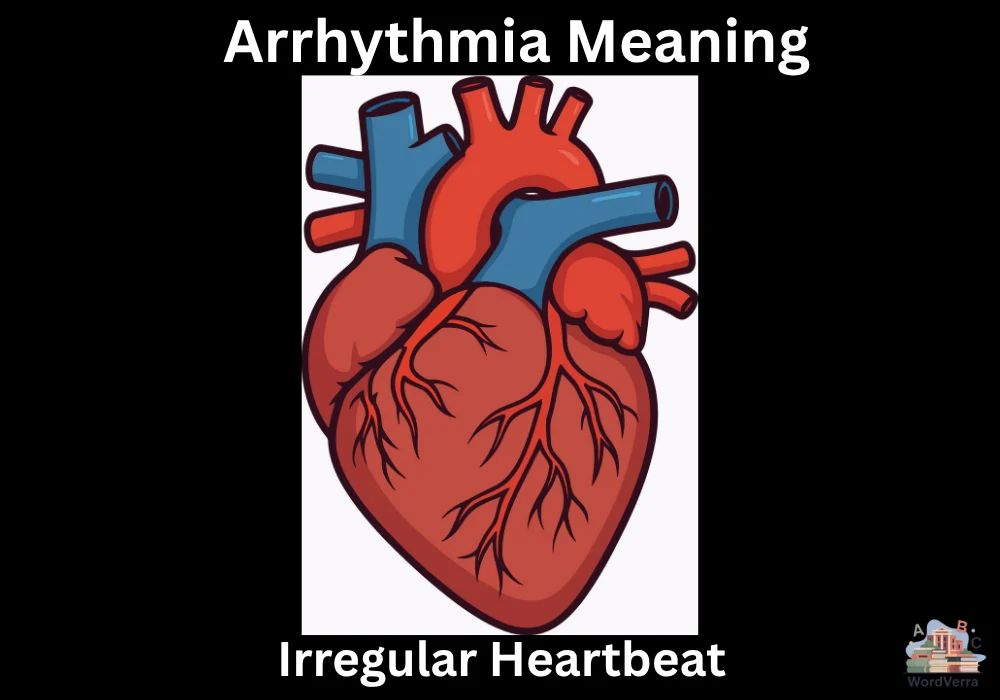
If you’ve ever heard a doctor mention arrhythmia or seen the word in a medical report and felt confused or worried, you’re not alone. The term can sound intimidating, especially because it’s connected to the heart — something most of us associate with serious health concerns.
Understanding arrhythmia meaning is important because:
- It helps you better understand medical advice
- It reduces fear caused by unfamiliar medical terms
- It allows you to recognize when a heart rhythm issue may need attention
This article explains what arrhythmia means in simple language, how it affects the body, common symptoms, possible causes, and how people talk about it in everyday life — all in a clear, human-friendly way.
What Is Arrhythmia? (Simple Definition)
In simple terms, arrhythmia means:
An irregular heartbeat — when the heart beats too fast, too slow, or in an uneven pattern.
Normally, the heart beats in a steady, regular rhythm. When that rhythm changes or becomes abnormal, it’s called an arrhythmia.
This does not always mean a serious condition, but it does mean the heart’s electrical system is not working in its usual way.
Types of Arrhythmia
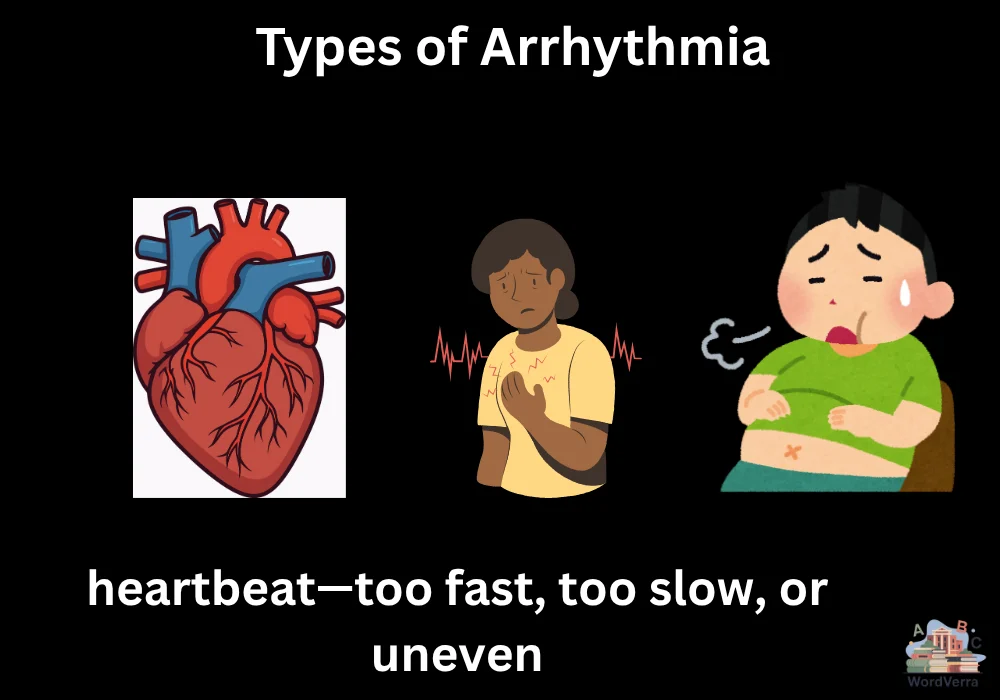
Arrhythmia refers to an irregular heartbeat—too fast, too slow, or uneven. There are several main types:
1. Tachycardia (Fast Heart Rate)
👉 Heart beats too fast (over 100 beats per minute)
- Examples:
- Atrial tachycardia
- Ventricular tachycardia
2. Bradycardia (Slow Heart Rate)
👉 Heart beats too slow (below 60 beats per minute)
- Can cause dizziness or fatigue
3. Atrial Fibrillation (AFib)
👉 The most common type
- Irregular and rapid heartbeat
- Increases risk of stroke
4. Atrial Flutter
👉 Similar to AFib but more organized rhythm
- Still faster than normal heartbeat
5. Ventricular Fibrillation
👉 A serious and life-threatening condition
- Heart quivers instead of pumping blood
- Requires emergency treatment
6. Premature Heartbeats
👉 Extra beats that happen earlier than normal
- Usually harmless but may feel like skipped beats
Arrhythmia Causes
Arrhythmia can be caused by different factors affecting the heart’s electrical system:
1. Heart-Related Causes
- Coronary artery disease
- Previous heart attack
- Heart muscle problems
2. Lifestyle Factors
- Smoking 🚬
- Excess caffeine or alcohol
- Stress or anxiety
3. Medical Conditions
- High blood pressure
- Thyroid problems
- Electrolyte imbalance (like low potassium)
4. Medications
- Some drugs can affect heart rhythm
- Especially certain cold medicines or stimulants
5. Other Causes
- Lack of oxygen
- Dehydration
- Genetic conditions
Simple Summary
👉 Types: fast, slow, irregular, or extra heartbeats
👉 Causes: heart disease, lifestyle habits, medical conditions, or medications
Understanding How the Heart’s Rhythm Works
The heart has its own electrical signals that tell it when to beat. These signals:
- Start in a natural pacemaker
- Travel through the heart
- Create a steady rhythm
When these signals are disrupted, the heartbeat may:
- Skip
- Speed up
- Slow down
- Feel irregular
That disruption is what doctors refer to as arrhythmia.
Arrhythmia Meaning in Everyday Language
Outside of medical settings, people often describe arrhythmia as:
- “Heart fluttering”
- “Heart racing”
- “Irregular heartbeat”
- “Skipped beats”
For example:
“The doctor said my heart rhythm was irregular, something called arrhythmia.”
In daily conversation, the term is usually used when discussing heart health, symptoms, or medical checkups.
Common Types of Arrhythmia (Explained Simply)
Arrhythmia is not just one condition — it’s a group of rhythm problems.
Fast Heart Rhythm
When the heart beats faster than normal, people may feel:
- Racing heartbeat
- Anxiety-like sensations
- Shortness of breath
This type is often noticed suddenly.
Slow Heart Rhythm
A slower-than-normal heartbeat may cause:
- Fatigue
- Dizziness
- Feeling faint
Some people don’t notice symptoms at all.
Irregular or Skipping Rhythm
This type feels like:
- Fluttering in the chest
- Missed beats
- Uneven pounding
This is one of the most commonly reported experiences.
Symptoms People Commonly Experience

Not everyone with arrhythmia feels symptoms, but common signs include:
- Heart palpitations
- Chest discomfort
- Lightheaded feeling
- Shortness of breath
- Fatigue or weakness
- Feeling faint
Example:
“I felt sudden palpitations, and the doctor mentioned arrhythmia.”
Symptoms can vary depending on the type and severity.
Possible Causes of Arrhythmia
Arrhythmia can be caused by many factors, including:
- Heart disease
- High blood pressure
- Stress or anxiety
- Excess caffeine
- Smoking
- Certain medications
- Electrolyte imbalance
In some cases, the cause is temporary and harmless, while in others it may need medical attention.
Arrhythmia Meaning in Medical Reports
When arrhythmia appears in reports, it usually refers to:
- An observed rhythm abnormality
- A pattern seen on an ECG
- A condition that may need monitoring
It doesn’t automatically mean danger, but it does mean further evaluation may be needed.
How Arrhythmia Is Diagnosed
Doctors may identify arrhythmia using:
- Heart monitoring tests
- Physical examinations
- Symptom descriptions
Sometimes arrhythmia appears briefly and disappears, making it harder to detect without monitoring tools.
Arrhythmia in Daily Life: Should You Be Worried?
Many people live normal lives with mild arrhythmia. In fact:
- Some types are harmless
- Some occur due to stress or lifestyle habits
- Some need only observation
However, persistent or severe symptoms should never be ignored.
A doctor can determine:
- Whether it’s harmless
- Whether treatment is needed
- How to manage it safely
Lifestyle Factors That Can Affect Heart Rhythm
Daily habits can influence heart rhythm, such as:
- Sleep quality
- Stress levels
- Caffeine intake
- Physical activity
Example:
“Reducing caffeine helped improve my heart rhythm.”
Small changes can sometimes make a noticeable difference.
Common Misunderstandings About Arrhythmia
Mistake 1: Thinking Arrhythmia Always Means Heart Attack
Arrhythmia and heart attack are not the same.
Arrhythmia relates to rhythm, not blocked arteries.
Mistake 2: Assuming All Arrhythmias Are Dangerous
Some arrhythmias are mild and don’t require treatment.
Mistake 3: Ignoring Symptoms Completely
Even mild symptoms should be discussed with a healthcare professional.
Arrhythmia Meaning in Simple Terms (One-Line Explanation)
If you remember just one thing:
Arrhythmia means the heart is not beating in its normal rhythm.
Why Arrhythmia Awareness Matters in 2026
With rising stress levels, digital lifestyles, and health awareness, more people are:
- Monitoring heart health
- Talking openly about symptoms
- Seeking early medical advice
Understanding arrhythmia helps people act early and reduce unnecessary fear.
How People Talk About Arrhythmia Online
On forums and social platforms, people often say:
- “I was diagnosed with arrhythmia”
- “Anyone else experience heart palpitations?”
- “My ECG showed an irregular rhythm”
These conversations usually focus on shared experiences and reassurance.
When to Seek Medical Advice
You should consult a doctor if you experience:
- Frequent palpitations
- Chest pain
- Fainting spells
- Severe dizziness
Early evaluation is always safer.
Quick Summary: Arrhythmia Meaning in 2026
- Refers to irregular heart rhythm
- Can be fast, slow, or uneven
- Symptoms vary from mild to noticeable
- Some types are harmless
- Medical guidance is important
Final Thoughts
Understanding arrhythmia meaning helps remove fear and confusion around a common medical term. While it involves the heart, not all arrhythmias are dangerous — and many are manageable with proper care and awareness.

Ghumman is a dedicated author at Wordverra, focused on delivering clear, accurate, and high-quality English grammar content for students and learners. With a strong commitment to language clarity and practical learning, Ghumman creates well-researched explanations and examples that make complex grammar rules easy to understand. The goal is to help readers build a solid foundation in English and use the language confidently in academic and everyday settings.