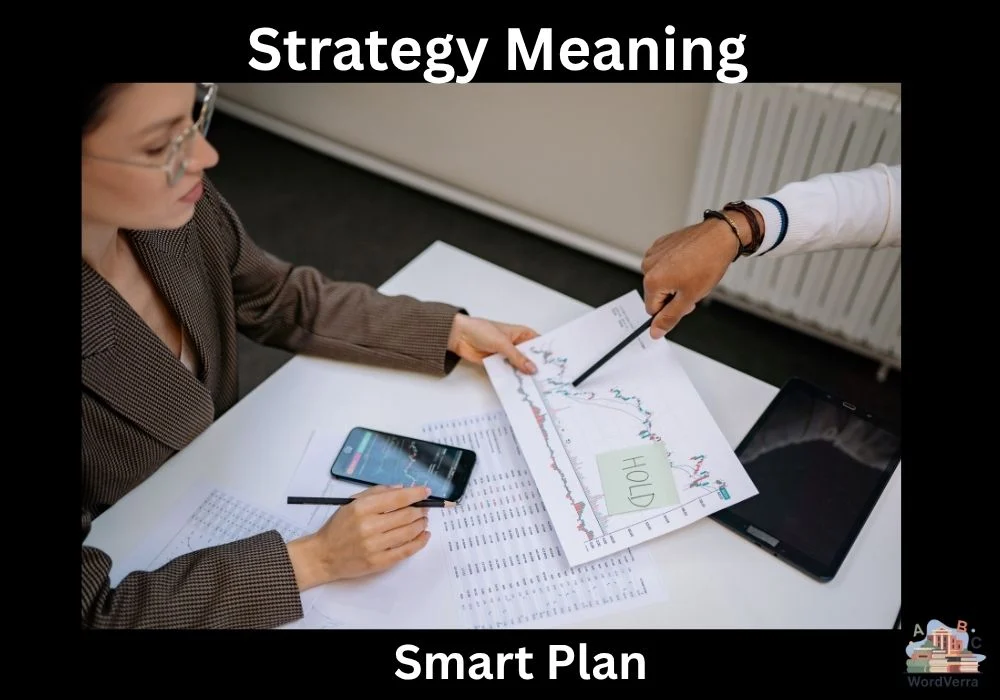
The word strategy is widely used in business, sports, military, personal development, and everyday life. Whether you hear it in a corporate meeting, a sports commentary, or self-improvement content, understanding strategy meaning is crucial to make sense of decisions, planning, and goal achievement.
Knowing the meaning of strategy helps you:
- Understand how plans are formulated
- Apply effective problem-solving in various contexts
- Communicate ideas clearly in professional and personal settings
This article explores strategy meaning, its origin, types, examples, and practical applications, updated for 2026.
What Does Strategy Mean?
At its core, strategy refers to:
A plan of action designed to achieve a long-term or overall goal.
It involves:
- Identifying objectives
- Allocating resources effectively
- Anticipating challenges
- Taking deliberate actions to reach desired outcomes
Example:
“The company implemented a new marketing strategy to attract younger customers.”
Here, the strategy is a carefully planned approach to achieve a business goal.
Origin of the Word Strategy
The word strategy comes from the Greek term strategia, meaning generalship or the art of a general. Historically, it referred to military planning and leadership.
Over time, the term evolved to include:
- Business planning
- Sports tactics
- Personal and professional development
Its military origins highlight that strategy involves careful foresight and planning.
Strategy Meaning in Business

In business, strategy means:
👉 a long-term plan made to achieve business goals and success
Key Idea:
- Focus on future goals 🎯
- Helps company compete in the market
- Guides decisions like marketing, sales, and growth
Example:
- A company may use a strategy to increase online sales or enter new markets
👉 Simple Meaning:
Strategy (business) = planned way to achieve business success
Strategy Meaning Synonyms
Here are common synonyms of “strategy”:
👉 Plan – organized way to do something
👉 Tactic – method used to win or succeed
👉 Approach – way of handling something
👉 Method – systematic process
👉 Game plan – informal plan for success
👉 Blueprint – detailed plan
Example:
- The company changed its strategy.
👉 The company changed its plan.
Strategy Meaning in Management
In management, strategy means:
👉 a structured plan used by managers to achieve organizational goals
Focus Areas:
- Resource planning
- Team direction 👥
- Business growth
- Problem solving
Types:
- Corporate strategy
- Marketing strategy
- Operational strategy
Example:
- Managers create a strategy to improve productivity and profit
Types of Strategy
Strategy is a versatile concept and can take many forms depending on context.
1. Business Strategy
In business, strategy focuses on long-term objectives and competitive advantage.
Example:
“The company’s growth strategy included expanding into international markets.”
Key elements include market analysis, resource management, and innovation.
2. Military Strategy
Traditionally, strategy involved planning battles and campaigns.
Example:
“The general devised a strategy to outflank the enemy.”
It emphasizes planning, resource allocation, and anticipating opponents’ moves.
3. Sports Strategy
In sports, strategy means tactics used to win games or improve performance.
Example:
“The coach’s defensive strategy helped the team win the championship.”
Sports strategy focuses on strengths, weaknesses, and adapting to the opponent.
4. Personal or Life Strategy
Strategy also applies to individual goals and self-improvement.
Example:
“She created a financial strategy to save for her first home.”
It involves planning actions, setting priorities, and measuring progress.
Strategy Meaning in Everyday Life

Even outside formal settings, people use strategy to describe thoughtful planning and decision-making.
Examples:
- “I need a study strategy to prepare for the exams.”
- “His strategy for networking at events proved effective.”
This demonstrates that strategy is about achieving goals efficiently.
Common Misunderstandings About Strategy
Mistake 1: Confusing Strategy with Tactics
- Strategy = long-term plan
- Tactics = specific actions used to implement the plan
Example:
“Choosing social media ads is a tactic; the overall marketing strategy is the plan behind it.”
Mistake 2: Assuming Strategy Guarantees Success
- A strategy increases the likelihood of success but does not ensure it
- It is flexible and adaptable to changing circumstances
Mistake 3: Using Strategy Only in Business
- Strategy applies in military, sports, personal development, and everyday decision-making.
How to Use Strategy in Sentences
- “Our strategy for reducing costs involved renegotiating supplier contracts.”
- “The chess player’s strategy focused on controlling the center of the board.”
- “A career strategy can help you achieve your long-term professional goals.”
Each example highlights planning to achieve objectives.
Why Understanding Strategy Is Important in 2026
In 2026, understanding strategy remains critical because:
- Businesses compete in complex global markets
- Sports and esports require tactical planning
- Personal development and productivity rely on long-term planning
- Technology and AI create new opportunities and challenges
A solid grasp of strategy meaning helps people make informed decisions and stay ahead.
Strategy Meaning in Simple Words (Quick Reminder)
Strategy is a plan designed to achieve a long-term goal, considering challenges, resources, and actions.
It’s the foundation of success in business, life, sports, and beyond.
Conclusion
To summarize:
- Strategy means a long-term plan to achieve goals
- It can be applied in business, military, sports, and personal life
- Understanding strategy helps you plan effectively, allocate resources, and anticipate challenges
- Distinguishing strategy from tactics ensures better planning and execution
Understanding strategy meaning empowers you to make smarter decisions, achieve goals efficiently, and communicate plans clearly in any context.

Ghumman is a dedicated author at Wordverra, focused on delivering clear, accurate, and high-quality English grammar content for students and learners. With a strong commitment to language clarity and practical learning, Ghumman creates well-researched explanations and examples that make complex grammar rules easy to understand. The goal is to help readers build a solid foundation in English and use the language confidently in academic and everyday settings.