
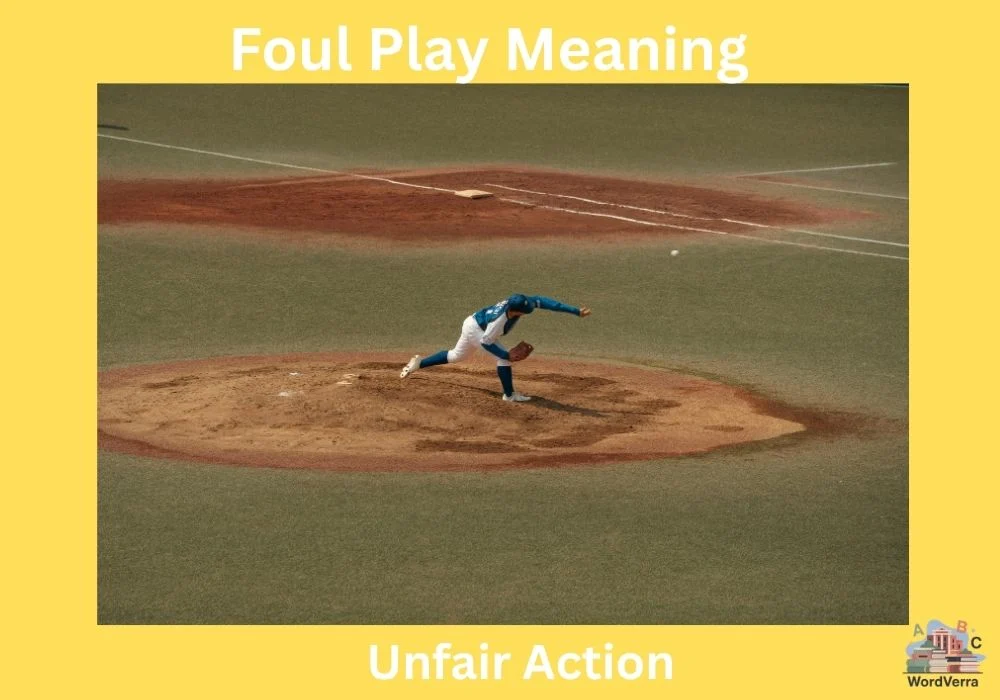
The term foul play is commonly used in sports, law, crime reports, and everyday conversations. People often hear it on the news or in discussions about suspicious circumstances but may not fully understand its meaning.
Understanding foul play meaning is important because it helps you:
- Interpret news or legal reports accurately
- Understand idiomatic expressions in English
- Communicate clearly in social, professional, or educational contexts
This article explains foul play meaning, its origin, various contexts, and practical examples in 2026.
What Does Foul Play Mean? (Simple Definition)
Foul play refers to:
Dishonest, unfair, or illegal behavior, especially one that involves deception or harm.
It can apply to:
- Sports: Breaking the rules or cheating
- Crime: Suspicious or criminal behavior
- Everyday situations: Unfair or unethical actions
Example in conversation:
- “The detective suspected foul play in the disappearance of the money.”
Here, it implies something dishonest or suspicious happened.
Origin of the Term Foul Play
The phrase comes from the late 16th or early 17th century, combining:
- Foul: Unfair, dishonest, or morally wrong
- Play: Action or behavior
Originally used in sports, it gradually extended to crime and social misconduct, making it a versatile term in English.
Foul Play Meaning in Sports
In sports, foul play refers to actions that violate the rules of the game.
Examples:
- Football: Tripping or tackling illegally
- Tennis: Deliberately distracting an opponent
- Cricket: Using unfair tactics
Sentence example:
“The referee warned the player for foul play after the rough tackle.”
Here, it is about breaking the rules in a competitive environment.
Foul Play Meaning in Crime and Law
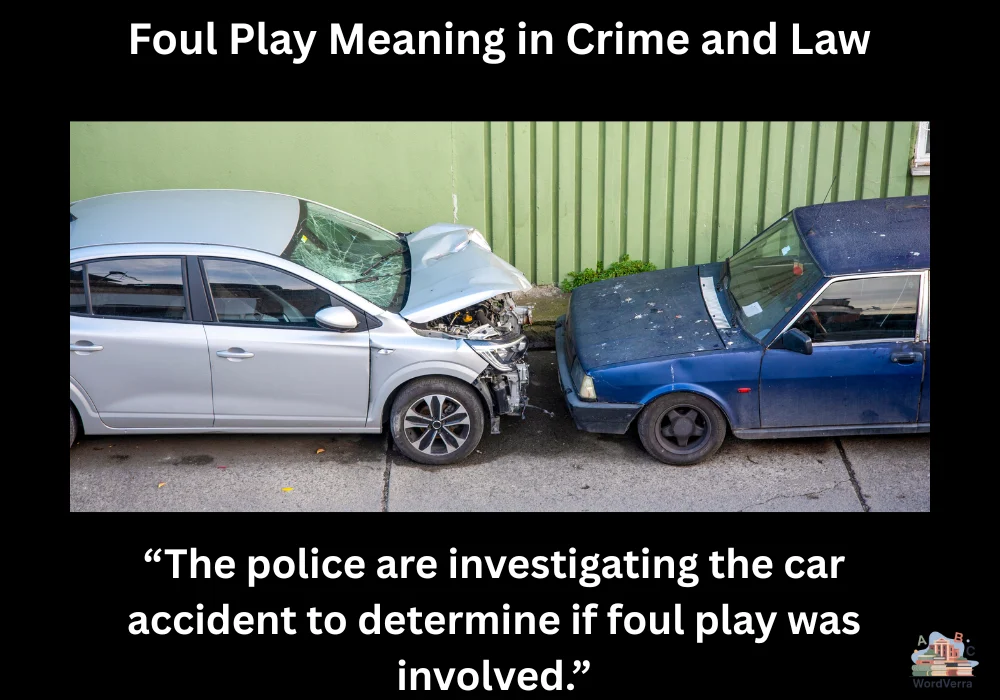
In legal and criminal contexts, foul play refers to suspicious, illegal, or violent acts.
- Often used when investigating accidents, deaths, or thefts
- Suggests intentional wrongdoing
- Frequently appears in news reports
Example:
“The police are investigating the car accident to determine if foul play was involved.”
This implies the incident may not have been accidental.
Foul Play Meaning in Football
In football (soccer), “foul play” means:
👉 breaking the rules unfairly during a match
Examples:
- Kicking another player
- Pushing or tripping
- Dangerous tackles ⚽
Result:
- Free kick
- Yellow or red card 🟨🟥
👉 Simple Meaning:
Foul play (football) = unfair or illegal actions in the game
Foul Play Meaning in Chinese
The phrase “foul play” in Chinese can be translated as:
👉 犯规行为 (fànguī xíngwéi) → rule-breaking behavior
or
👉 不正当行为 (bù zhèngdàng xíngwéi) → unfair/wrongful act
In crime context:
👉 谋害 (móuhài) → suspicious criminal action or murder
👉 Meaning changes based on context.
Suspected Foul Play Meaning
“Suspected foul play” means:
👉 people believe a crime, dishonest action, or harmful act may have happened
Common Usage:
- Police investigations 🚔
- Suspicious deaths
- Accidents that may not be accidental
Example:
- Police suspect foul play in the case.
👉 Simple Meaning:
Suspected foul play = possible criminal or dishonest activity
Foul Play Meaning in Police Context
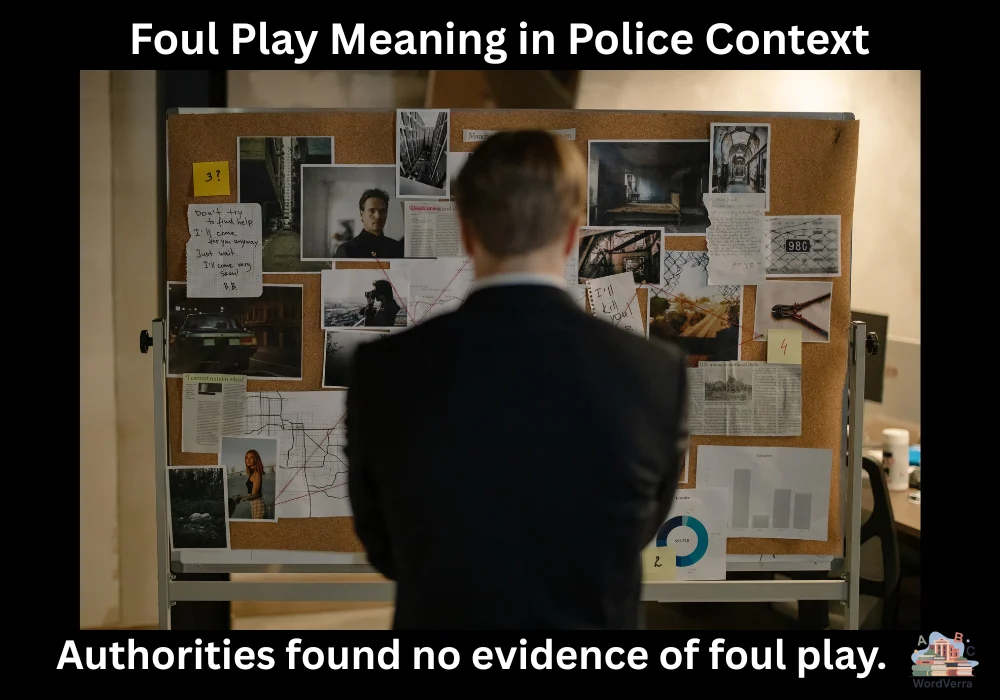
In police language, “foul play” refers to:
👉 illegal, criminal, or suspicious actions causing harm or death
Common Situations:
- Murder investigations
- Suspicious disappearances
- Unexplained injuries
Example:
- Authorities found no evidence of foul play.
👉 Simple Meaning:
Foul play (police) = criminal or suspicious wrongdoing
Foul Play Meaning Synonyms
Here are common synonyms of “foul play”:
👉 Cheating – unfair behavior
👉 Misconduct – improper action
👉 Wrongdoing – illegal or bad act
👉 Fraud – dishonest activity
👉 Crime – unlawful act
👉 Dirty play – unfair behavior in sports
Foul Play in Everyday Conversation
People also use foul play metaphorically to describe unfair or unethical behavior outside sports or crime.
Examples:
- “There’s some foul play in how the promotions were decided.”
- “He suspected foul play when the deal seemed too good to be true.”
In these contexts, it conveys dishonesty or unfairness.
Common Misunderstandings About Foul Play Meaning
Mistake 1: Thinking Foul Play Only Relates to Sports
- While common in sports, it also applies to crime, business, and general behavior.
Mistake 2: Assuming Foul Play Means Violence Only
- Foul play can involve deception, cheating, or unfairness without physical harm.
Mistake 3: Using It Literally
- Foul play is usually figurative outside sports or legal cases.
How to Use Foul Play Correctly in Sentences
Sports Context
- “The player was suspended for foul play during the championship.”
Crime/Investigation Context
- “Authorities suspect foul play in the sudden disappearance of the documents.”
Everyday Use
- “There was some foul play in the way the tasks were assigned.”
Incorrect example:
- “I played a foul play.” ❌
(“Foul play” refers to an act, not something you “play.”)
Foul Play Meaning in Modern Context (2026)
In 2026, the term is widely used in:
- News reporting: Crime investigations and suspicious events
- Sports coverage: Emphasizing rule violations or cheating
- Business and social media: Discussing unethical behavior
Example in 2026 context:
“Foul play was suspected in the sudden drop of stock prices, prompting an audit.”
The phrase remains relevant in both formal and informal English.
Foul Play Meaning in Simple Words (Quick Reminder)
Foul play means dishonest, unfair, or illegal behavior, often involving deception or breaking rules.
Conclusion
To summarize:
- Foul play can refer to sports violations, criminal acts, or unethical behavior
- It originated from combining “foul” (dishonest) and “play” (action)
- Using the term correctly adds clarity to conversations about rules, fairness, or investigations
Understanding foul play meaning helps you interpret news, sports commentary, and everyday situations accurately.

Ghumman is a dedicated author at Wordverra, focused on delivering clear, accurate, and high-quality English grammar content for students and learners. With a strong commitment to language clarity and practical learning, Ghumman creates well-researched explanations and examples that make complex grammar rules easy to understand. The goal is to help readers build a solid foundation in English and use the language confidently in academic and everyday settings.