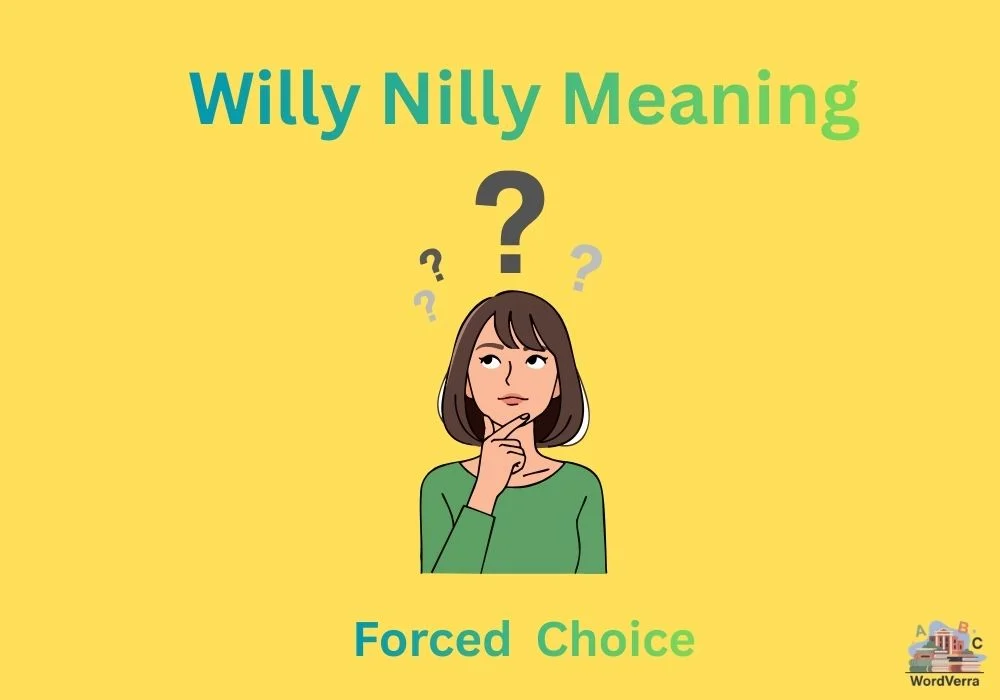
The phrase willy nilly is commonly used in everyday English, literature, and media to describe actions that happen without planning or control. Understanding the willy nilly meaning can help you interpret conversations, writing, and idiomatic expressions correctly.
This article explains willy nilly meaning, its origin, how it’s used, common examples, and tips for using it accurately in modern English.
What Does Willy Nilly Mean?
In simple terms, willy nilly means:
Happening in a disorganized, haphazard, or unplanned way, often without choice or control.
It can describe actions, events, or decisions that are random, chaotic, or involuntary.
Example sentence:
“People ended up buying things willy nilly during the sale, without checking prices.”
Origin of the Phrase Willy Nilly
The phrase willy nilly originates from the Old English expression will he, nill he, which literally meant “whether one wants to or not”. Over time, it evolved into the idiomatic expression willy nilly, now used to describe random or unplanned actions.
- “Will he” → willing or voluntary
- “Nill he” → unwilling or involuntary
Common Uses of Willy Nilly
1. Describing Unplanned Actions
- “The children ran willy nilly around the park.”
- Meaning: The children were running in a chaotic, uncontrolled manner.
2. Referring to Uncontrolled Events
- “Decisions were made willy nilly without consulting the team.”
- Meaning: Decisions were made haphazardly and without organization.
3. Expressing Lack of Choice
- “He was dragged into the argument willy nilly.”
- Meaning: He became involved whether he wanted to or not.
Willy Nilly in Modern Context (2026)
In 2026, willy nilly is still widely used in:
- Everyday conversations
- Media and journalism
- Literature and storytelling
- Online discussions, especially to describe chaotic events or impulsive actions
Example:
“During the flash sale, customers grabbed items willy nilly, causing long lines and confusion.”
It continues to convey disorder, randomness, and lack of control effectively.
Common Misunderstandings About Willy Nilly
Mistake 1: Thinking It Means “Careless” Only
- Willy nilly is not exactly careless; it can be involuntary, random, or chaotic, not just negligent.
Mistake 2: Confusing It With “Randomly”
- While similar, willy nilly implies a lack of planning with potential consequences, not just randomness.
Mistake 3: Misusing Formally
- The phrase is more informal or idiomatic and works best in casual or narrative writing.
How to Use Willy Nilly in Sentences
- Casual conversation: “Don’t just accept things willy nilly; think before you agree.”
- Storytelling: “The leaves fell willy nilly across the street, carried by the wind.”
- Workplace context: “Projects shouldn’t be assigned willy nilly without proper review.”
These examples show its versatility in describing uncontrolled actions or events.
Willy Nilly Meaning in Simple Words (Quick Reminder)
Willy nilly means happening in a random, unplanned, or uncontrolled way, whether voluntary or not.
Conclusion
To summarize:
- Willy nilly describes actions or events that are chaotic, haphazard, or involuntary
- It is often informal but widely used in conversation, storytelling, and media
- Understanding willy nilly meaning helps you interpret idioms and describe situations accurately
- Using it correctly adds color and nuance to your language

Ghumman is a dedicated author at Wordverra, focused on delivering clear, accurate, and high-quality English grammar content for students and learners. With a strong commitment to language clarity and practical learning, Ghumman creates well-researched explanations and examples that make complex grammar rules easy to understand. The goal is to help readers build a solid foundation in English and use the language confidently in academic and everyday settings.