
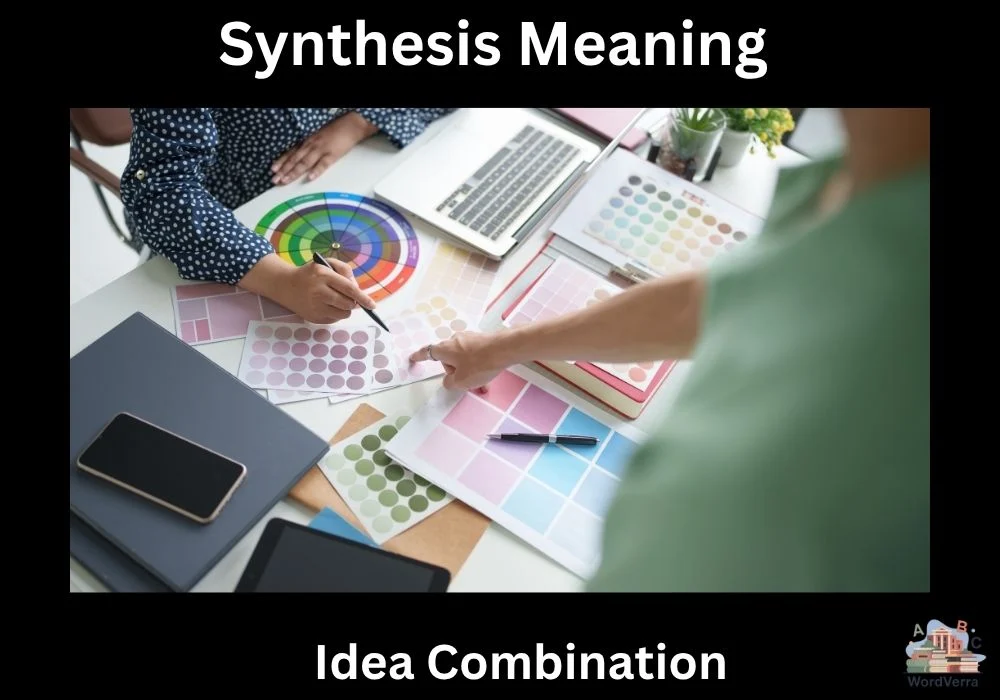
The word synthesis is widely used in science, academics, and everyday language. Whether in writing, chemistry, or problem-solving, understanding synthesis meaning helps you communicate clearly and grasp complex concepts.
This article explains synthesis meaning, its origin, types, examples, and practical applications updated for 2026.
What Does Synthesis Mean?
Synthesis refers to:
The process of combining multiple elements or ideas to form a coherent whole.
It involves bringing together different components—whether facts, ideas, or substances—to create something new.
Example:
“The researcher provided a synthesis of all recent studies on climate change.”
Here, synthesis means combining information to produce a comprehensive understanding.
Synthesis Meaning in Simple Words
In everyday terms, synthesis means:
- Combining parts to make a whole
- Connecting ideas or information
- Creating something new from existing elements
Example:
“Her essay is a synthesis of ideas from various authors.”
Origin of the Word Synthesis
- Comes from the Greek word synthesis, meaning composition or putting together
- Entered English in the 16th century
- Initially used in philosophical and scientific contexts, later expanded to writing, research, and problem-solving
Types of Synthesis
1. Academic Synthesis
- Combining ideas from multiple sources to create a cohesive argument
- Common in essays, research papers, and reports
Example:
“The student’s paper is a synthesis of historical and contemporary viewpoints.”
2. Scientific or Chemical Synthesis
- Combining chemical substances to create new compounds
- Example: “The laboratory successfully achieved the synthesis of a new polymer.”
3. Creative Synthesis
- Combining ideas, styles, or techniques to produce artistic or innovative outcomes
- Example: “The musician’s work is a synthesis of jazz, classical, and electronic music.”
Synthesis Meaning in Everyday Life
Even outside academics and science, synthesis is useful in daily situations:
- Problem-Solving: “The team’s solution was a synthesis of everyone’s suggestions.”
- Decision-Making: “Making a choice often requires a synthesis of pros and cons.”
- Learning and Understanding: “Effective learning involves synthesizing new knowledge with what you already know.”
Synthesis vs Analysis
While related, synthesis and analysis are different:
- Analysis: Breaking down complex material into parts
- Synthesis: Combining parts to form a new whole
Example:
- Analysis: “Breaking the article into separate arguments”
- Synthesis: “Creating a cohesive summary from all arguments”
Common Misunderstandings About Synthesis
Mistake 1: Confusing It With Summary
- A summary condenses information, but synthesis creates connections and insights.
Mistake 2: Thinking It’s Only for Science
- Synthesis applies to writing, problem-solving, and everyday decision-making too.
Mistake 3: Ignoring the “Combination” Aspect
- True synthesis requires merging elements, not just listing them.
How to Use Synthesis in Sentences
- “The report is a synthesis of global market trends and local data.”
- “Her approach to cooking is a synthesis of traditional and modern techniques.”
- “Effective presentations require synthesis of research findings and practical examples.”
Synthesis Meaning in Modern Context (2026)
In 2026, synthesis is relevant in:
- Academics: Integrating research and literature for comprehensive arguments
- Business: Creating strategies by synthesizing market data
- Technology and AI: Combining multiple algorithms or datasets to develop smarter solutions
Example:
“The AI system achieved better results through the synthesis of multiple machine learning models.”
Synthesis Meaning: Quick Recap
Synthesis means combining elements or ideas to form a coherent whole.
It applies to science, academics, problem-solving, creativity, and decision-making. Understanding synthesis helps you analyze, create, and communicate effectively.
Conclusion
To summarize:
- Synthesis is the act of combining parts to make a whole
- It is different from analysis and summary
- Synthesis is used in writing, science, problem-solving, creativity, and modern technology

Ghumman is a dedicated author at Wordverra, focused on delivering clear, accurate, and high-quality English grammar content for students and learners. With a strong commitment to language clarity and practical learning, Ghumman creates well-researched explanations and examples that make complex grammar rules easy to understand. The goal is to help readers build a solid foundation in English and use the language confidently in academic and everyday settings.