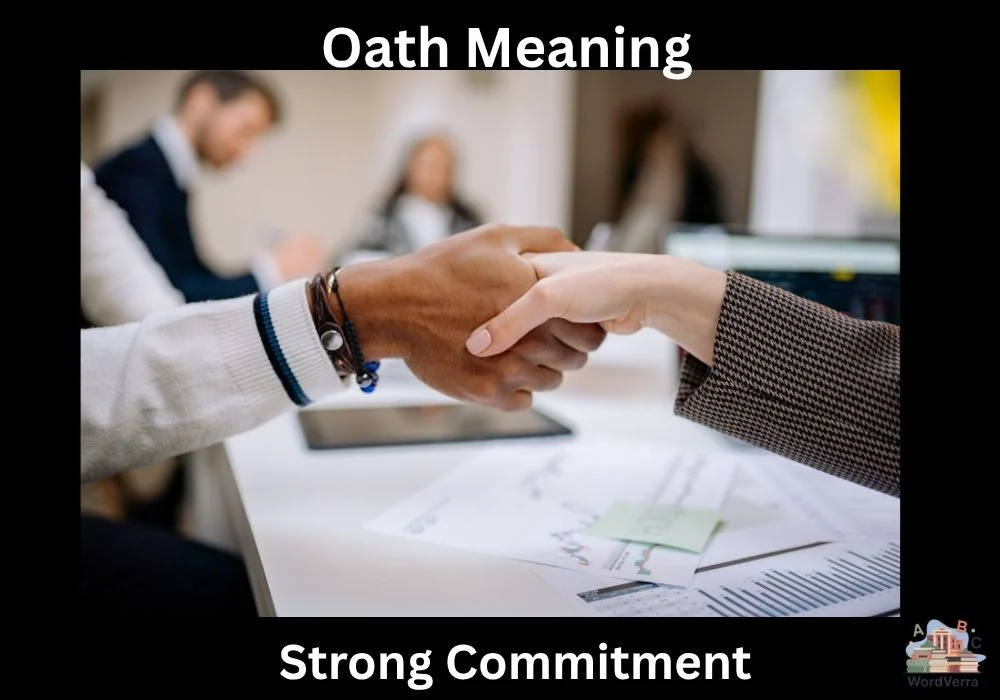
The word oath is often heard in courts, ceremonies, politics, and even everyday promises. It carries a sense of seriousness and responsibility that goes beyond casual words. Understanding oath meaning is important because it helps you grasp legal language, cultural traditions, and formal commitments used around the world.
In this article, you’ll learn the true oath meaning, how it is used in different contexts, real-life examples, common misunderstandings, and why the term still matters in 2026.
What Does Oath Mean?
An oath is:
A solemn promise or declaration, often made formally and sometimes invoking a higher authority or moral obligation.
An oath is not a casual promise—it implies honesty, duty, and accountability.
Example:
“The witness took an oath to tell the truth before testifying.”
Oath Meaning in Simple Words
In simple language, an oath means:
- A serious promise
- A formal declaration
- A commitment to truth or duty
Example:
“She took an oath to protect the constitution.”
This shows that an oath usually involves responsibility and trust.
Oath Meaning in Legal Settings
In legal contexts, an oath is a formal pledge to speak the truth or perform duties honestly.
Common situations include:
- Court testimony
- Government appointments
- Official investigations
Example:
“Giving false statements after taking an oath can lead to legal consequences.”
Here, the oath serves as a legal and moral guarantee.
Oath Meaning in Government and Public Service
Public officials often take an oath when assuming office. This symbolizes:
- Loyalty to the law
- Commitment to public duty
- Ethical responsibility
Example:
“The president took an oath of office during the inauguration.”
This highlights trust between leaders and citizens.
Oath Meaning in Religion and Tradition
In religious and cultural contexts, an oath may involve:
- Sacred texts
- Moral or spiritual commitments
- Long-standing traditions
Example:
“In many traditions, breaking a sacred oath is considered a serious moral failure.”
Such oaths emphasize honor and integrity.
Oath Meaning in Everyday Language
In everyday speech, the word oath can also be used more loosely:
- To emphasize honesty
- To express strong commitment
Example:
“I swear on my oath that I didn’t touch your phone.”
Although less formal, it still suggests truthfulness.
How Oath Is Used in Sentences
Formal Use
“The judge reminded the witness of the oath taken.”
Ceremonial Use
“The doctor recited a professional oath before beginning practice.”
Informal Emphasis
“On my oath, I’m telling the truth.”
Common Types of Oaths
Across different contexts, oaths may include:
- Professional commitments
- Legal declarations
- Ethical promises
Example:
“Doctors follow a professional oath focused on patient care.”
Each type reflects a sense of duty and moral obligation.
Common Misunderstandings About Oath Meaning
Mistake 1: Treating an Oath Like a Casual Promise
An oath is more serious than a regular promise.
Mistake 2: Thinking Oaths Are Only Religious
Oaths can be legal, professional, or civic, not just religious.
Mistake 3: Assuming an Oath Has No Consequences
Breaking an oath can result in:
- Legal penalties
- Loss of trust
- Ethical consequences
Oath Meaning in Modern Society (2026)
In 2026, the concept of an oath remains relevant in:
- Legal systems
- Public leadership
- Professional ethics
- Institutional trust
Example:
“Maintaining public trust depends on leaders honoring their oath.”
Even in a digital age, oaths symbolize credibility and accountability.
Why the Word Oath Still Matters
The importance of an oath lies in its ability to:
- Establish trust
- Reinforce honesty
- Define responsibility
Example:
“An oath binds individuals to ethical standards beyond personal interest.”
This makes the term powerful in both formal and symbolic contexts.
Oath Meaning: Quick Summary
To summarize:
- An oath is a solemn and formal promise
- It is commonly used in legal, governmental, and ethical settings
- The word implies truth, duty, and accountability
- Breaking an oath can have serious consequences

Ghumman is a dedicated author at Wordverra, focused on delivering clear, accurate, and high-quality English grammar content for students and learners. With a strong commitment to language clarity and practical learning, Ghumman creates well-researched explanations and examples that make complex grammar rules easy to understand. The goal is to help readers build a solid foundation in English and use the language confidently in academic and everyday settings.