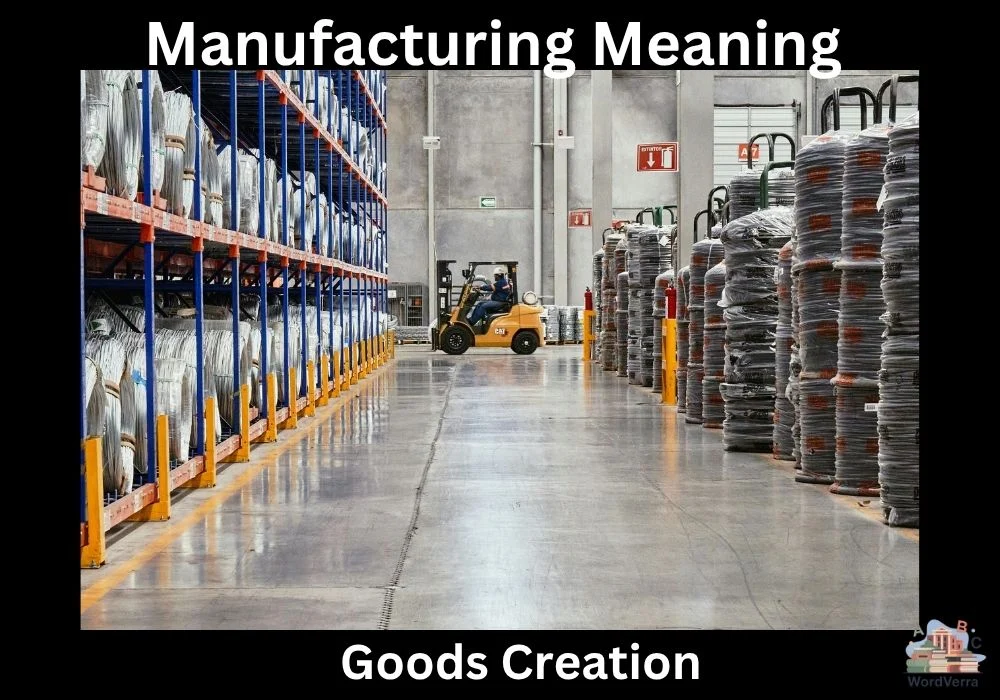
The term manufacturing is widely used in business, economics, and industry discussions. Understanding manufacturing meaning is essential for students, professionals, and anyone interested in how products are made and how industries operate.
This article explains the manufacturing meaning, its history, types, processes, and modern applications—fully SEO-optimized and updated for 2026.
What Does Manufacturing Mean?
Manufacturing refers to:
The process of producing goods on a large scale using machinery, tools, and labor.
Key points:
- Involves converting raw materials into finished products
- Typically done in factories or production plants
- Can be manual, semi-automated, or fully automated
Example:
“The automotive industry is a major hub of manufacturing worldwide.”
Manufacturing Meaning in Simple Words
In simple terms, manufacturing means:
- Making products for sale or use
- Using machines, labor, or technology
- Producing goods efficiently and systematically
Example:
“Manufacturing smartphones involves assembling hundreds of tiny components.”
Origin of the Word Manufacturing
The word manufacturing comes from the Latin manu factus, meaning “made by hand.” Originally, it referred to handmade production, but with the Industrial Revolution, it evolved to describe mechanized, large-scale production.
Types of Manufacturing
Manufacturing processes can be classified into several types:
1. Mass Manufacturing
- Producing large quantities of standardized products
- Example: Cars, electronics, packaged foods
2. Custom Manufacturing
- Producing specialized products for individual customers
- Example: Custom furniture, specialized machinery
3. Job-Shop Manufacturing
- Small batch production of varied products
- Example: Machine parts or prototypes
4. Continuous Manufacturing
- Non-stop production, often automated
- Example: Oil refining, chemical production
Manufacturing Meaning in Business Context
In business, manufacturing:
- Drives economic growth
- Generates jobs and revenue
- Supports supply chains for retailers and consumers
Example:
“Manufacturing contributes significantly to GDP in industrialized countries.”
Modern Manufacturing Practices (2026)
Modern manufacturing has evolved to include:
- Automation: Robots and AI performing repetitive tasks
- Lean manufacturing: Minimizing waste and maximizing efficiency
- 3D printing: On-demand and customizable production
- Sustainable manufacturing: Eco-friendly and energy-efficient processes
Example:
“Smart factories use AI and IoT to optimize manufacturing operations.”
Manufacturing Meaning in Daily Life
We interact with manufacturing every day, often without realizing it:
- Electronics: Phones, laptops, and appliances
- Clothing and footwear
- Vehicles and transportation
- Packaged foods and beverages
Example:
“The shoes you wear are the result of complex manufacturing processes.”
Common Misunderstandings About Manufacturing
- Manufacturing is Only Factories
- While often associated with factories, it includes home-based or small-scale production as well
- Manufacturing Means Manual Work Only
- Modern manufacturing relies heavily on automation and technology
- All Manufacturing Is Large-Scale
- Small batch and custom manufacturing are also forms of manufacturing
Why Manufacturing Matters in 2026
- Economic impact: Supports industries and job creation
- Innovation: Drives technology and product development
- Global trade: Manufactures products for worldwide markets
- Sustainability: Modern practices focus on reducing environmental impact
Example:
“Sustainable manufacturing is becoming a priority for companies in 2025.”
Manufacturing Meaning: Quick Recap
To summarize:
- Manufacturing is the process of turning raw materials into finished products
- It can be mass-produced, customized, or continuous
- Modern manufacturing involves automation, sustainability, and advanced technology
- Understanding manufacturing meaning helps appreciate its role in economy, business, and daily life

Ghumman is a dedicated author at Wordverra, focused on delivering clear, accurate, and high-quality English grammar content for students and learners. With a strong commitment to language clarity and practical learning, Ghumman creates well-researched explanations and examples that make complex grammar rules easy to understand. The goal is to help readers build a solid foundation in English and use the language confidently in academic and everyday settings.