
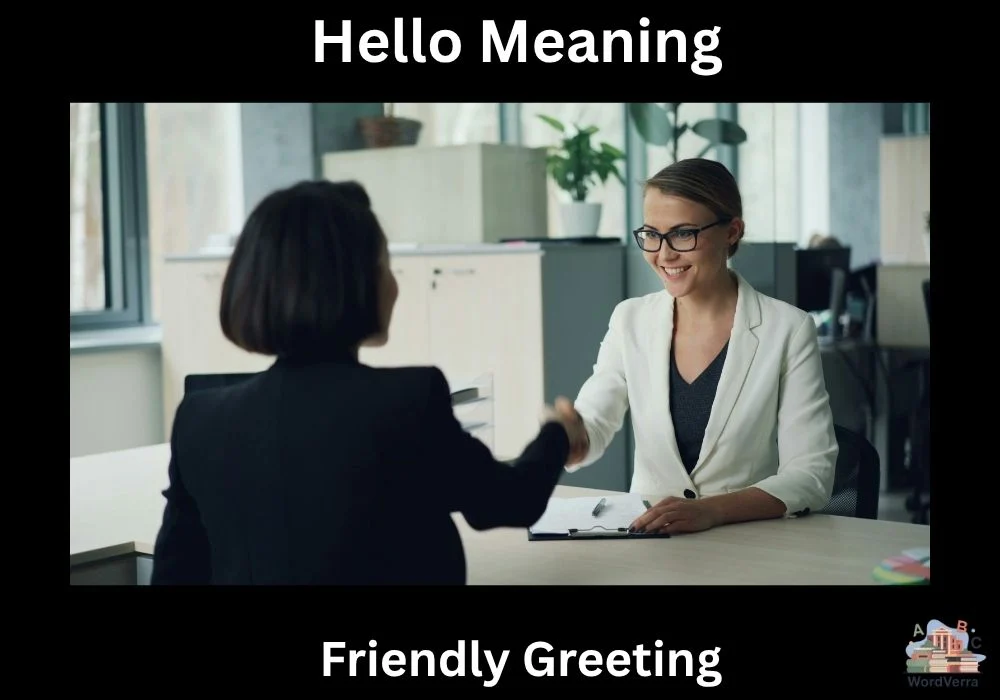
The word hello may seem simple, but it’s one of the most powerful and widely used words in the world. From text messages and phone calls to emails, video chats, and face-to-face conversations, hello is often the very first word we use to connect with someone.
Understanding hello meaning is important because:
- It sets the tone of a conversation
- It reflects politeness, friendliness, or formality
- It changes meaning based on context, tone, and platform
In this complete guide, you’ll learn what hello really means, where it comes from, how it’s used in modern texting and online chats, and how its meaning subtly changes depending on situation — all explained in simple, human language.
What Does Hello Mean? (Simple Explanation)
At its most basic level, hello means:
A greeting used to begin communication or get someone’s attention.
People use hello to:
- Start a conversation
- Acknowledge someone’s presence
- Answer a phone call
- Show politeness
It’s a neutral, friendly word that works in almost every situation.
Origin and History of Hello
The word hello has an interesting history. It became popular in English in the late 19th century, especially with the rise of telephone communication.
Originally, similar forms like “hallo” or “hullo” were used to:
- Call out to someone
- Express surprise
- Get attention
When telephones became common, hello was chosen as the standard way to answer calls — and that decision helped turn it into one of the most used words in modern language.
Hello Meaning in Everyday Conversation
In face-to-face interaction, hello is a polite way to acknowledge someone.
Examples:
- “Hello, how are you?”
- “Hello everyone!”
- “Oh, hello — I didn’t see you there.”
In everyday speech, hello can express:
- Friendliness
- Surprise
- Recognition
Tone and facial expression often change its meaning.
Hello Meaning in Text and Chat
In texting and online messaging, hello can mean more than just a greeting.
Depending on context, it may signal:
- Starting a conversation
- Checking availability
- Re-opening a chat after silence
- Polite introduction
Examples:
- “Hello! Are you free right now?”
- “Hello?? Did you see my message?”
- “Hello there 😊”
In chats, the meaning of hello depends heavily on timing, punctuation, and emojis.
Different Ways Hello Is Interpreted in Messages
Neutral Greeting
“Hello, just wanted to check in.”
This feels polite and calm.
Friendly or Warm
“Hellooo 😊”
Extra letters or emojis add friendliness.
Confused or Annoyed Tone
“Hello???”
Multiple question marks can imply impatience or confusion.
Professional or Formal
“Hello, I’m reaching out regarding the meeting.”
In work chats, hello often replaces casual greetings like “hey.”
Hello Meaning on Phone Calls
On phone calls, hello often means:
- “I’m here”
- “I’m listening”
- “You have my attention”
Examples:
- “Hello? Can you hear me?”
- “Hello, this is Sarah speaking.”
If said sharply, it can also express:
- Confusion
- Poor connection
- Frustration
Tone matters more than the word itself.
Hello Meaning in Emails and Professional Messages
In professional communication, hello is commonly used because it’s:
- Polite
- Neutral
- Universally acceptable
Examples:
- “Hello John,”
- “Hello team,”
- “Hello, I hope you’re doing well.”
It’s often preferred over casual greetings in formal settings.
Hello Meaning in Social Media and Online Platforms
On platforms like Instagram, Facebook, LinkedIn, or forums, hello is used to:
- Introduce yourself
- Start conversations
- Engage with strangers politely
Examples:
- “Hello everyone, I’m new here.”
- “Hello, I loved your post!”
It creates a safe and friendly opening, especially when talking to people you don’t know personally.
Cultural Meaning of Hello
In many cultures, hello represents:
- Respect
- Social courtesy
- Good manners
Failing to say hello can sometimes be seen as:
- Rude
- Distant
- Disinterested
That’s why it’s often the first word taught when learning a new language.
Hello vs Hi vs Hey (Simple Comparison)
Although similar, these greetings feel different.
- Hello → Polite, neutral, universal
- Hi → Casual and friendly
- Hey → Informal and relaxed
Example:
- Talking to a boss → “Hello”
- Talking to a colleague → “Hi”
- Talking to a close friend → “Hey”
Understanding this helps you choose the right tone.
Hello Meaning as an Expression of Surprise
Sometimes, hello isn’t a greeting at all.
Example:
“Hello! What’s going on here?”
Here, it expresses:
- Surprise
- Curiosity
- Mild shock
This usage is common in spoken English.
When Hello Feels Cold or Distant
In some contexts, hello alone can feel:
- Abrupt
- Emotionless
- Distant
For example:
“Hello.”
Without follow-up, it may seem dry. That’s why people often add:
- Emojis
- Follow-up sentences
- Friendly words
Hello Meaning in Modern Digital Etiquette (2026)
In 2026, digital communication values:
- Clarity
- Politeness
- Emotional awareness
Hello remains relevant because it:
- Works across cultures
- Fits formal and semi-formal spaces
- Avoids misunderstandings
It’s still a safe and respectful opener in most situations.
Common Mistakes People Make With Hello
Mistake 1: Using Only “Hello” Repeatedly
Sending just “Hello” multiple times can feel passive or demanding.
Better:
“Hello, just following up on my message.”
Mistake 2: Misreading the Tone
A plain “hello” may not mean disinterest — it may simply be neutral.
Mistake 3: Avoiding Hello Entirely
Jumping straight into a request without greeting can feel impolite.
Hello Meaning in Emotional Contexts
Sometimes hello can feel emotional, especially after silence.
Example:
“Hello… it’s been a long time.”
Here, the word carries:
- Nostalgia
- Hesitation
- Emotional weight
Why Hello Is Still Important in 2026
Even with emojis, voice notes, and AI chats, hello remains important because it:
- Signals respect
- Opens communication gently
- Makes conversations human
Technology changes, but greetings remain essential.
Quick Summary: Hello Meaning in 2026
- A universal greeting
- Used in speech, text, calls, and emails
- Meaning depends on tone and context
- Can express friendliness, formality, surprise, or attention
Final Thoughts
Understanding hello meaning goes beyond knowing it’s a greeting. It’s about recognizing how tone, timing, and platform shape its message. Whether you’re texting a friend, emailing a client, or answering a call, hello sets the emotional direction of what comes next.

Ghumman is a dedicated author at Wordverra, focused on delivering clear, accurate, and high-quality English grammar content for students and learners. With a strong commitment to language clarity and practical learning, Ghumman creates well-researched explanations and examples that make complex grammar rules easy to understand. The goal is to help readers build a solid foundation in English and use the language confidently in academic and everyday settings.