The word frill often pops up in fashion descriptions, everyday conversations, product reviews, and even casual texts — yet many people pause and wonder, “What does frill actually mean here?” Depending on how it’s used, frill can describe something decorative, unnecessary, or purely extra.
Understanding frill meaning is useful because:
- It helps you understand clothing, design, and style descriptions
- It prevents confusion in conversations or product details
- It improves your everyday English and comprehension
This article explains frill meaning in clear, simple language, shows how it’s used in daily life, fashion, and modern communication, and helps you use it naturally in 2026.
What Does Frill Mean? (Simple Explanation)
In basic terms, frill means:
An extra decorative detail or feature that is not essential.
A frill is usually:
- Added for appearance
- Not required for function
- Considered optional or extra
The word can be used both literally (physical decoration) and figuratively (something unnecessary).
Origin and Background of the Word Frill
The word frill comes from older French roots that referred to ruffled fabric or decorative edges on clothing. Over time, its meaning expanded beyond fashion to describe anything added purely for style, comfort, or luxury.
That’s why today, frill meaning works across:
- Clothing
- Design
- Speech
- Everyday expressions
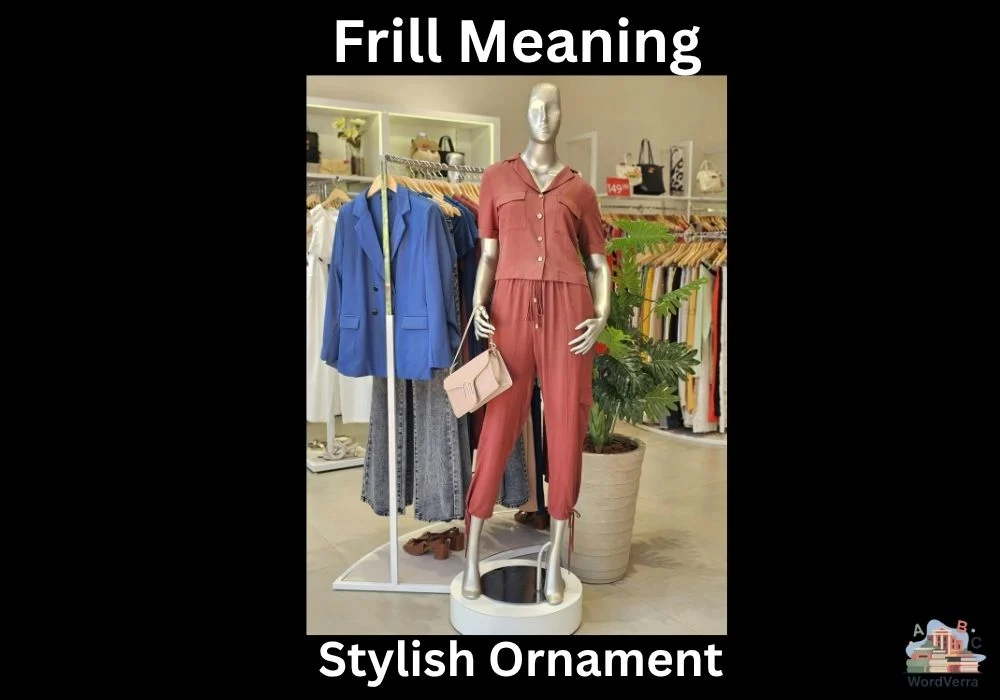
Frill Meaning in Fashion and Clothing
This is the most common and literal use of the word.
In fashion, a frill refers to:
- A ruffled edge
- Decorative fabric trim
- A design detail added for style
Examples:
- “The dress has frills on the sleeves.”
- “She wore a blouse with lace frills.”
- “The skirt features layered frills.”
Here, frills are purely decorative — they don’t change how the clothing functions.
Frill Meaning in Everyday Conversation
Outside fashion, frill often describes something that is not necessary.
Examples:
- “I don’t want any frills — just something simple.”
- “The service is basic, no frills.”
- “It’s a no-frills hotel.”
In these cases, frill means:
- Extra features
- Luxury additions
- Non-essential details
Frill Meaning in Text and Chat
In texting and casual chat, frill is used metaphorically.
Common chat usage includes:
- “No frills, just facts.”
- “I like my coffee simple — no frills.”
- “Straightforward answer, no frill.”
Here, frill represents:
- Unnecessary explanation
- Fancy extras
- Overcomplication
It’s often paired with “no” to emphasize simplicity.
Positive and Negative Meanings of Frill
Positive Sense
In a positive context, frills can mean:
- Beauty
- Elegance
- Personal style
Example:
“The room had charming frills that made it cozy.”
Negative or Neutral Sense
In a critical tone, frills may suggest:
- Waste
- Unneeded luxury
- Overdesign
Example:
“I don’t need frills — just efficiency.”
The tone depends on context and intention.
Frill Meaning in Business and Products
In marketing and product descriptions, frill is often used to clarify value.
Examples:
- “A no-frills smartphone.”
- “Basic service with no frills.”
- “A no-frills subscription plan.”
Here, it reassures customers that:
- They’re getting essentials only
- The product is simple
- The price reflects fewer extras
Common Phrases Using the Word Frill
You’ll often see frill in fixed expressions like:
- No frills – simple, basic, practical
- Added frills – extra features
- Without frills – straightforward
Examples:
- “It’s a no-frills solution.”
- “The app works well without frills.”
These phrases are common in modern English.
Frill Meaning in Writing and Description
Writers often use frill to:
- Describe minimalism
- Emphasize clarity
- Avoid exaggeration
Example:
“The story was told without frills, making it powerful.”
Here, frill refers to unnecessary embellishment, not physical decoration.
Common Misunderstandings About Frill
Mistake 1: Thinking Frill Always Means Clothing
While fashion is common, frill meaning extends far beyond clothes.
Mistake 2: Assuming Frills Are Always Bad
Frills aren’t negative by default — they can add charm or personality.
Mistake 3: Using Frill Instead of Feature
A feature is often useful.
A frill is usually optional.
Understanding this difference helps avoid misuse.
Frill vs Feature: What’s the Difference?
- Feature: Adds function or utility
- Frill: Adds decoration or comfort
Example:
- Touchscreen → feature
- Decorative case → frill
This distinction is especially useful in product reviews.
How to Use Frill Correctly in a Sentence
Correct usage examples:
- “She prefers simple designs without frills.”
- “The hotel offers clean rooms, no frills.”
- “The outfit had elegant frills on the collar.”
Incorrect usage:
- “The engine frill improves speed.” ❌
(That would be a feature, not a frill.)
Why Frill Is Still Common in 2026
In 2026, trends lean toward:
- Minimalism
- Practical design
- Value-based choices
That’s why people often use frill to:
- Reject unnecessary extras
- Highlight simplicity
- Describe minimalist preferences
The word remains relevant in:
- Lifestyle discussions
- Product comparisons
- Everyday speech
Frill Meaning in Simple Words (One-Line Reminder)
A frill is something extra that looks nice but isn’t necessary.
Real-Life Examples of Frill Usage
- Clothing with decorative edges
- Budget airlines offering no-frills travel
- Simple apps without extra features
- Clear explanations without frill
All of these show how flexible the word is.
Quick Summary: Frill Meaning in 2026
- Refers to decorative or unnecessary extras
- Common in fashion and everyday language
- Often used with “no” to stress simplicity
- Can be positive or negative depending on tone
Final Thoughts
Understanding frill meaning helps you interpret language more accurately — whether you’re shopping, chatting, reading reviews, or describing personal preferences. It’s a small word, but it carries a clear message about simplicity versus extras.

Ghumman is a dedicated author at Wordverra, focused on delivering clear, accurate, and high-quality English grammar content for students and learners. With a strong commitment to language clarity and practical learning, Ghumman creates well-researched explanations and examples that make complex grammar rules easy to understand. The goal is to help readers build a solid foundation in English and use the language confidently in academic and everyday settings.