
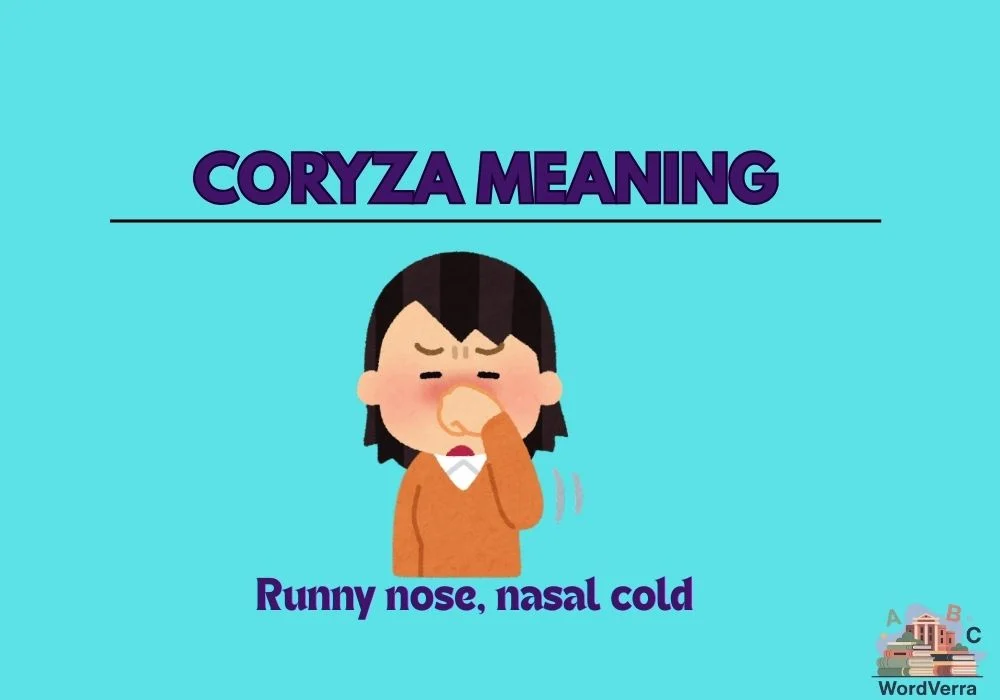
The term coryza is commonly used in medical contexts, particularly in describing respiratory infections. Understanding coryza meaning helps individuals recognize symptoms, communicate effectively with healthcare providers, and manage mild illnesses.
This article explains the coryza meaning, its causes, symptoms, treatment, and relevant information, fully updated for 2026.
What Does Coryza Mean? (Simple Definition)
In medical terms, coryza refers to:
Inflammation of the mucous membranes in the nose, leading to a runny nose, sneezing, and nasal congestion.
It is most commonly associated with common colds or viral upper respiratory infections.
Example:
“The patient presented with coryza, including a runny nose and mild sneezing.”
Origin of the Word Coryza
The word coryza comes from Greek “koryza”, meaning catarrh or nasal cold.
- Historically used to describe any upper respiratory inflammation with nasal discharge
- Entered English medical terminology in the 17th century
Causes of Coryza
Coryza can be triggered by several factors:
- Viral Infections: Most commonly caused by rhinoviruses, coronaviruses, or adenoviruses
- Allergic Reactions: Seasonal allergies can lead to allergic coryza
- Environmental Irritants: Dust, smoke, or strong odors can cause nasal inflammation
- Bacterial Infections: Less common, may occur secondary to viral infections
Example:
“Coryza often occurs during cold seasons when viral infections are more prevalent.”
Symptoms of Coryza
Common symptoms of coryza include:
- Runny or stuffy nose
- Sneezing
- Watery eyes
- Mild sore throat
- Fatigue (in some cases)
Unlike more severe respiratory infections, coryza symptoms are usually mild and self-limiting.
Coryza Meaning in Medical Context
In medical documentation and communication, coryza is used to describe the typical cold-like nasal symptoms.
Example:
“The patient showed signs of mild coryza without fever or systemic infection.”
Healthcare providers may use coryza in clinical notes, reports, or prescriptions to describe upper respiratory inflammation.
Treatment and Management of Coryza
Treatment usually focuses on symptom relief, as most coryza cases are viral:
- Rest and hydration: Allow the immune system to recover
- Over-the-counter medications: Decongestants or antihistamines for nasal relief
- Humidifiers or saline sprays: Help soothe nasal passages
- Avoid irritants: Smoke and dust can worsen symptoms
Note: Antibiotics are generally not recommended, unless there is a confirmed bacterial infection.
Common Misunderstandings About Coryza
Mistake 1: Confusing Coryza With Flu
- Coryza refers specifically to nasal inflammation; flu usually includes fever, body aches, and systemic symptoms.
Mistake 2: Assuming Coryza Requires Medication
- Most cases are self-limiting and resolve in a few days with home care.
Mistake 3: Using Coryza for Any Nasal Issue
- Coryza specifically refers to runny or inflamed nasal mucosa, not all nasal problems.
Coryza Meaning in Simple Words (Quick Reminder)
Coryza is a medical term for the common cold affecting the nose, causing sneezing, runny nose, and congestion.
Conclusion
To summarize:
- Coryza meaning refers to inflammation of the nasal mucosa, often due to viral infections
- Symptoms include runny nose, sneezing, and mild congestion
- Treatment is mostly supportive, focusing on symptom relief
- Understanding coryza meaning helps in recognizing cold symptoms and communicating effectively with healthcare providers

Ghumman is a dedicated author at Wordverra, focused on delivering clear, accurate, and high-quality English grammar content for students and learners. With a strong commitment to language clarity and practical learning, Ghumman creates well-researched explanations and examples that make complex grammar rules easy to understand. The goal is to help readers build a solid foundation in English and use the language confidently in academic and everyday settings.