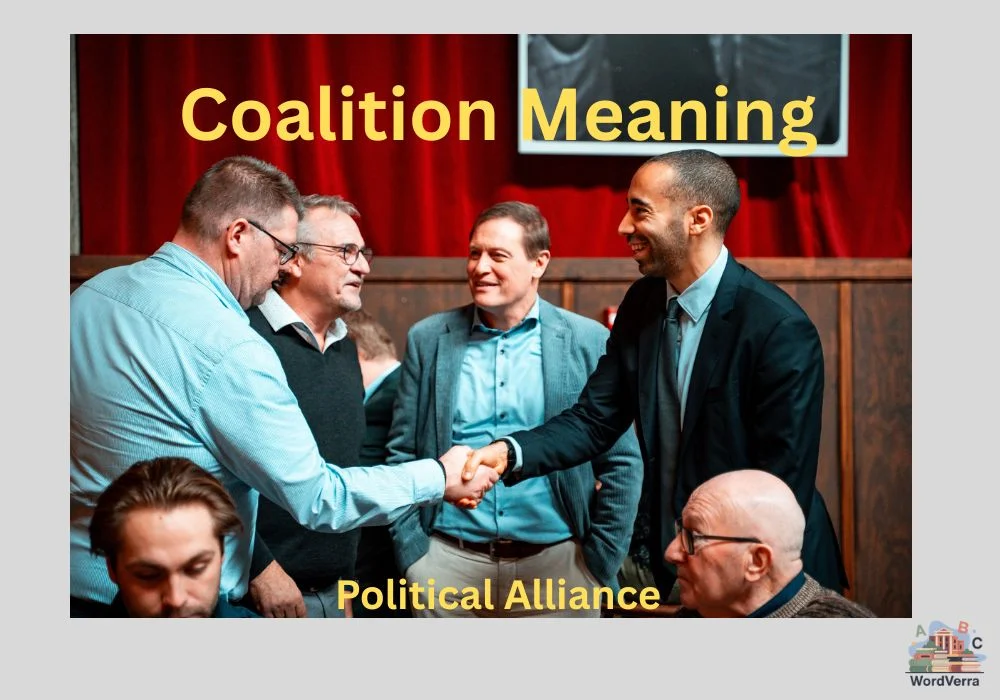
The term coalition is widely used in politics, business, and social contexts. Understanding coalition meaning is essential for anyone following current events, government policies, or collaborative projects.
This article provides a clear explanation of coalition meaning, its types, examples, and practical uses, updated for 2026.
What Does Coalition Mean? (Simple Definition)
In simple terms, a coalition is:
An alliance or partnership between individuals, groups, or organizations formed to achieve a common goal.
Key points about a coalition:
- It involves cooperation between different parties
- Usually temporary, lasting until the goal is achieved
- Often requires compromise and negotiation
Example:
“Several political parties formed a coalition to pass the new law.”
Origin of the Word Coalition
The word coalition comes from the Latin “coalitio”, meaning “a growing together” or “combination.”
- It originally described groups joining forces
- Over time, it became widely used in politics, business, and social movements
Coalition Meaning in Politics
In political contexts, a coalition refers to:
- Parties joining together to form a government
- Temporary alliances to pass specific legislation
- Collaborations in international relations or diplomatic efforts
Example:
“The coalition government struggled to maintain unity due to differing party agendas.”
Coalition Meaning in Business and Organizations
In business or organizational contexts, coalition means:
- Multiple companies or groups joining forces for a project or cause
- Collaborations to influence policies, markets, or social initiatives
Example:
“Several environmental organizations formed a coalition to promote clean energy.”
Types of Coalitions
- Political Coalition: Parties or leaders unite for elections or governance
- Military Coalition: Countries or armies collaborate for defense or intervention
- Business/Organizational Coalition: Groups or companies partner for mutual benefit
- Social Coalition: NGOs, community groups, or activists work together for a cause
Common Misunderstandings About Coalition
Mistake 1: Thinking a Coalition Is Permanent
- Most coalitions are temporary and goal-oriented.
Mistake 2: Confusing Coalition With Merger
- A coalition is a partnership, not a full integration or merger.
Mistake 3: Believing Coalitions Always Succeed
- Coalitions can fail due to conflicting interests or poor communication.
How to Use Coalition in Sentences
- Political: “The coalition government negotiated carefully to pass the budget.”
- Business: “Tech companies formed a coalition to develop new cybersecurity standards.”
- Social: “A coalition of NGOs launched a campaign to improve education.”
Coalition Meaning in Simple Words
A coalition is a temporary alliance of people, groups, or organizations working together toward a common goal.
Conclusion
To summarize:
- Coalition is about cooperation and collaboration across parties or groups
- It is used in politics, business, military, and social contexts
- Understanding coalition meaning helps interpret news, policy decisions, and organizational strategies
- Success depends on shared goals, negotiation, and compromise

Ghumman is a dedicated author at Wordverra, focused on delivering clear, accurate, and high-quality English grammar content for students and learners. With a strong commitment to language clarity and practical learning, Ghumman creates well-researched explanations and examples that make complex grammar rules easy to understand. The goal is to help readers build a solid foundation in English and use the language confidently in academic and everyday settings.