Renown Meaning: Definition, Usage, Examples, and Tips 2026

Renown Meaning

The word renown is often used in conversations, news articles, and literature to describe fame or widespread recognition. Whether you see it in a biography, a business profile, or social media, understanding renown meaning can help you communicate more precisely and sound confident in English.

Knowing what renown means allows you to:

  • Understand discussions about people or achievements
  • Use the word correctly in writing and speech
  • Recognize its formal and literary tone

This article explains renown meaning, explores its origin, provides examples in different contexts, and highlights how to use it correctly in 2026.


What Does Renown Mean? (Simple Definition)

In simple terms, renown means:

Widespread fame, reputation, or recognition, usually for achievements or excellence.

It emphasizes respect and admiration, not just popularity.

Example:

“She gained renown for her groundbreaking research in medicine.”

Here, the focus is on positive recognition.


Origin of the Word Renown

The word renown comes from Old French renom and Latin renominare, which means “to name again” or “celebrate by name.”

  • Over time, it evolved to mean public acclaim or fame
  • Historically, it was often used in literary and formal contexts

Today, it continues to carry a respectful and formal tone.


Renown Meaning in Everyday Use

In daily conversations, renown describes someone or something well-known for excellence.

Examples:

  • “The restaurant is of international renown for its cuisine.”
  • “He is a musician of great renown in the jazz community.”

It highlights achievement and reputation rather than simple popularity.


Renown in Literature and Media

Authors and journalists use renown to give a sense of prestige.

Example:

“The artist, of renown across Europe, held a special exhibition in Paris.”

It conveys formal respect and enhances credibility.


Renown vs Fame: Are They the Same?

Although similar, renown and fame differ slightly:

  • Fame: General popularity, can be good or bad
  • Renown: Recognition for skill, achievement, or excellence

Example:

  • Fame: “He is famous for his social media videos.”
  • Renown: “He is of renown for his humanitarian work.”

Renown always carries a positive connotation.


How to Use Renown in Sentences

With People

“The scientist is of worldwide renown for her discoveries.”

With Places or Institutions

“The university enjoys renown for its engineering programs.”

With Achievements

“The chef earned renown for innovative culinary techniques.”


Common Mistakes When Using Renown

Mistake 1: Confusing Renown with Popularity

  • Renown emphasizes achievement and respect, not just widespread attention.

Mistake 2: Using It in Informal Texting

  • Using renown casually may sound too formal. Use famous or well-known instead.

Mistake 3: Misplacing “Of”

  • Correct: “A writer of renown”
  • Incorrect: “A writer renown” ❌

The preposition “of” is commonly used to indicate the subject recognized for achievement.


Renown in Professional and Academic Contexts

In 2026, renown remains relevant in professional writing and academic discussions:

  • Recognizing experts: “The professor is of renown in the field of astrophysics.”
  • Describing institutions: “The hospital is of renown for advanced cardiac care.”
  • Highlighting achievements in publications or awards

Using renown appropriately adds sophistication and authority to your writing.


Renown Meaning in Simple Words (Quick Reminder)

Renown means widespread recognition or respect for someone or something’s achievements.

It signals prestige, honor, and excellence, not just popularity.


Fun Examples in Modern Context (2026)

  • Social Media: “The chef gained renown on TikTok for her innovative recipes.”
  • Workplace: “The company is of renown in renewable energy solutions.”
  • Academia: “The scientist’s research brought her international renown.”

These examples show how renown can be used across various fields and contexts.


Conclusion

To summarize:

  • Renown refers to recognition and respect for achievements
  • It has a formal and positive connotation
  • The word is used in literature, professional writing, and everyday descriptions of excellence

Understanding renown meaning allows you to write and speak with clarity, precision, and sophistication.

Dud Meaning: Definition, Usage, Examples, Modern Context 2026

Dud Meaning

The word dud is a popular term in English, used in casual conversation, media, and even business contexts. You might hear someone say, “That movie was a dud” or “The firework was a dud”, but what does it actually mean?

Understanding dud meaning is important because it helps you:

  • Understand informal speech and slang
  • Express disappointment or failure effectively
  • Recognize how the term is used in different contexts

This article explains dud meaning, its origin, different uses, examples, and common mistakes, updated for 2026.


What Does Dud Mean? (Simple Definition)

In simple terms, a dud is:

Something that fails to work properly or does not meet expectations.

It is often used informally to describe:

  • Objects that malfunction
  • Events that are disappointing
  • People who fail to meet expectations

Example:

“The new phone was a dud; it stopped working after a week.”

Here, it clearly conveys failure or ineffectiveness.


Origin of the Word Dud

The word dud comes from the late 17th century, originally meaning:

  • Clothing that is worn out or tattered
  • Later evolved to mean something worthless or ineffective

The modern informal use applies broadly to failures or disappointments in objects, events, or performance.


Dud Meaning in Everyday Conversation

People often use dud casually to describe:

  • A failed experience
  • A malfunctioning object
  • A person who underperforms

Examples:

  • “The party was a dud; no one showed up.”
  • “The battery turned out to be a dud.”
  • “He was a dud in the match; couldn’t score at all.”

It’s a quick and informal way to express dissatisfaction.


Dud Meaning in Movies, Games, and Entertainment

In entertainment, dud often refers to:

  • Films, shows, or games that fail to impress
  • Products that do not meet expectations

Example:

“The highly anticipated movie was a dud at the box office.”

This usage is common in reviews and social media commentary.


Dud Meaning in Military or Technical Context

In technical or military contexts, a dud is an explosive device that fails to detonate.

Example:

“The bomb was a dud, so no one was hurt.”

This is the literal sense of the word and is less common in casual conversation.


Dud as a Person

Sometimes, people describe others as a dud, meaning:

  • Someone who is unexciting or ineffective
  • Someone who fails to deliver on expectations

Example:

“He was a dud at the party — didn’t talk to anyone or contribute to the fun.”

It’s usually informal and slightly humorous or critical.


How to Use Dud in Sentences

Objects or Products

  • “The laptop I bought turned out to be a dud.”

Events

  • “The concert was a dud; the sound system failed.”

People

  • “He tried to impress everyone, but he was a dud.”

Common Misunderstandings About Dud Meaning

Mistake 1: Confusing Dud With Dangerous

  • A dud can be safe (like a firework that fails), not always dangerous.

Mistake 2: Using Dud Formally

  • Dud is informal and works best in casual speech or writing.

Mistake 3: Assuming Dud Means Small

  • Dud does not refer to size; it refers to failure or ineffectiveness.

Dud Meaning in Modern Context (2026)

In 2026, the word dud remains relevant in:

  • Tech discussions: Gadgets or apps that fail
  • Entertainment: Movies, shows, or games that disappoint
  • Everyday language: Expressing frustration or humor

Example in social media:

“Tried the new coffee shop — total dud. ☕😅”

Its informal, relatable tone makes it a popular expression for disappointment.


Dud Meaning in Simple Words (Quick Reminder)

A dud is something or someone that doesn’t work, fails, or disappoints.


Conclusion

To summarize:

  • Dud describes failure or disappointment in objects, events, or people
  • It originated from the idea of worn-out clothing and evolved into a general term for ineffectiveness
  • Commonly used in casual speech, entertainment, and even technical contexts
  • Understanding dud meaning helps you express dissatisfaction clearly and informally

Crow Tattoo Meaning: Symbolism, Cultural Significance 2026

Crow Tattoo Meaning

Crow tattoos have grown in popularity in recent years, both for their striking visual appeal and rich symbolism. If you’ve ever wondered about the crow tattoo meaning, this guide will help you understand the cultural, spiritual, and personal significance behind this mysterious and powerful bird.

Understanding crow tattoo meaning can help you:

  • Choose a design that resonates personally
  • Appreciate cultural and spiritual symbolism
  • Interpret crow tattoos in art, media, and other people’s designs

This article explores the meaning of crow tattoos, their history, symbolism, and design ideas updated for 2026.


What Does a Crow Tattoo Mean?

A crow tattoo is not just a decoration; it represents a variety of themes depending on cultural, spiritual, and personal interpretations. Common meanings include:

  • Intelligence and adaptability: Crows are known for their sharp minds.
  • Mystery and magic: They often appear in folklore as mystical creatures.
  • Transformation and change: Associated with life transitions and personal growth.
  • Protection and guidance: In some cultures, crows are spiritual guides.
  • Death and rebirth: Representing cycles and the balance of life.

Example:

“Her crow tattoo represents a journey ofpersonal transformation and resilience.”


Crow Tattoo Meaning in Different Cultures

Native American Culture

Crows are seen as messengers and guides. They symbolize wisdom, foresight, and transformation.

Celtic Culture

Crows often symbolize war, prophecy, and guardianship, appearing in legends and stories.

Japanese Culture

In Japan, crows are sometimes considered protectors and bringers of good fortune, particularly the three-legged crow Yatagarasu.

Western Pop Culture

Crows are associated with mystery, intelligence, and sometimes darkness, frequently appearing in literature, movies, and art.


Crow Tattoo Meaning in Spirituality

Spiritually, crow tattoos can symbolize:

  • Connection with ancestors
  • Intuition and psychic abilities
  • Guidance through difficult times

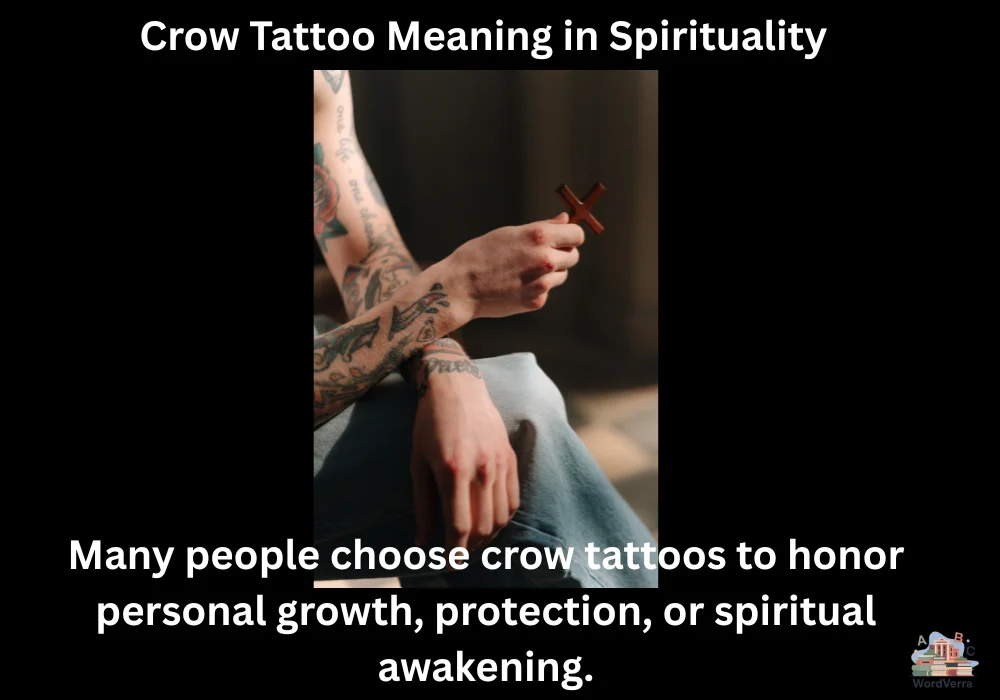
Many people choose crow tattoos to honor personal growth, protection, or spiritual awakening.


Crow Tattoo Design Ideas

Crow tattoos come in a variety of styles, each carrying slightly different symbolism:

  • Realistic Crow Tattoos: Emphasize intelligence and life-like beauty.
  • Celtic Crow Tattoos: Include knotwork and symbols of protection.
  • Minimalist Crow Tattoos: Small designs representing mystery or transformation.
  • Crow and Skull Tattoos: Often symbolize death, rebirth, and life cycles.
  • Crow on Tree or Branch Tattoos: Represent adaptability, freedom, and perspective.

Placement ideas include arms, chest, back, or even fingers for subtle designs.


Crow Tattoo Meaning in Personal Expression

Beyond cultural or spiritual meanings, crow tattoos often symbolize personal journeys, such as:

  • Overcoming challenges or obstacles
  • Celebrating resilience and strength
  • Embracing mystery and individuality

Example:

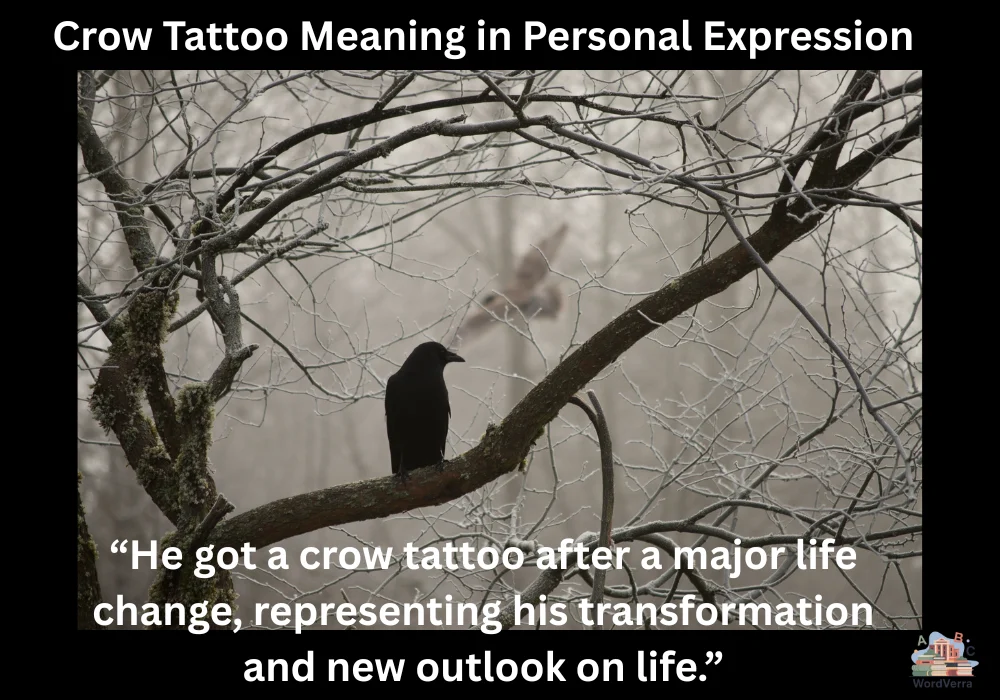
“He got a crow tattoo after a major life change, representing his transformation and new outlook on life.”


Common Misunderstandings About Crow Tattoos

Mistake 1: Thinking They Only Represent Death

While crows are associated with death in some cultures, they also represent wisdom, guidance, and transformation.

Mistake 2: Assuming All Crow Tattoos Are Dark or Gothic

Crows can symbolize positivity, intelligence, and personal growth, depending on design and intention.

Mistake 3: Ignoring Cultural Significance

Crow tattoos often have rich cultural histories, so understanding the background adds depth to your design.


Crow Tattoo Meaning in Modern Context (2026)

In 2026, crow tattoos are popular for their versatility and symbolism. They appear in:

  • Social media art communities
  • Personal blogs and lifestyle posts
  • Tattoo magazines and portfolios

Crow tattoos appeal to people seeking meaningful, mysterious, or transformative designs.


Crow Tattoo Meaning: Quick Summary

  • Symbol of intelligence, mystery, and transformation
  • Represents personal growth, protection, and spiritual guidance
  • Varies in meaning across cultures and personal experiences
  • Designs can be realistic, minimalist, or symbolic

Understanding the crow tattoo meaning ensures your tattoo reflects both aesthetic and personal significance.

Cin Cin Meaning: Definition, Origin, and How It’s Used Today 2026

Cin Cin Meaning

You may have heard people say “cin cin” while raising a glass at a party, in a movie scene, or during a dinner celebration. If you’ve ever wondered about the cin cin meaning, you’re not alone. It’s a short, cheerful phrase with a rich cultural background that’s still widely used today.

This article explains the meaning of cin cin, where it comes from, how it’s used in real life, and why it remains popular across cultures in 2026.


What Does Cin Cin Mean?

In its most common use, cin cin means:

“Cheers!” or “Let’s drink!”

It is said when people clink glasses together before taking a sip of their drinks. The phrase expresses good wishes, celebration, and friendliness.

Example:

“Everyone raised their glasses and said ‘cin cin’ before the toast.”


Origin of Cin Cin

Cin cin comes from the Italian language and has been used for centuries as a friendly drinking toast. Interestingly, the phrase is believed to have roots in Chinese influence, where a similar-sounding expression meant “please, please” or “I invite you.”

Over time, Italians adopted cin cin as a lighthearted and joyful way to toast duringsocial gatherings. Today, it is one of the most recognizable Italian expressions worldwide.


Cin Cin Meaning in Everyday Life

In everyday situations, cin cin is used during:

  • Celebrations
  • Family dinners
  • Parties and weddings
  • Casual drinks with friends

Example:

“They met for dinner, ordered wine, and said cin cin before drinking.”

The phrase creates a warm, social atmosphere and signals shared enjoyment.


Cin Cin in Different Cultures

Although cin cin is Italian, it has spread internationally and is often used by non-Italian speakers. In many countries, people say it simply because:

  • It sounds cheerful
  • It feels festive
  • It’s easy to remember

In English-speaking settings, cin cin is often used playfully or stylishly to add a European touch to a toast.


Cin Cin Meaning Beyond Drinking

While most commonly associated with alcohol, cin cin can also be used with:

  • Non-alcoholic drinks
  • Coffee or tea
  • Celebratory moments without drinks

Example:

“They raised their coffee cups and said cin cin before starting the meeting.”

This shows that the phrase represents celebration and togetherness, not just drinking.


Common Misunderstandings About Cin Cin

Mistake 1: Thinking It’s Only for Alcohol

  • Cin cin can be used with any drink during a celebratory moment.

Mistake 2: Believing It’s Formal

  • The phrase is casual and friendly, not formal or ceremonial.

Mistake 3: Assuming Everyone Uses It the Same Way

  • While common in Italy, usage outside Italy is often playful or symbolic.

How to Use Cin Cin Correctly

To use cin cin naturally:

  • Say it while raising your glass
  • Make eye contact when possible
  • Smile—it’s a friendly expression

Example:

“Cin cin to new beginnings!”

It works best in relaxed, social settings.


Cin Cin Meaning in Modern Context (2026)

In 2026, cin cin continues to appear in:

  • Travel content
  • Food and wine blogs
  • Social media captions
  • Movies and lifestyle shows

Example:

“Vacation vibes in Italy—sunset, wine, and cin cin.”

The phrase remains popular because it conveys joy, connection, and celebration in just two words.


Cin Cin Meaning in Simple Words (Quick Reminder)

Cin cin is a friendly way to say “cheers” when celebrating or sharing a drink.


Conclusion

To sum it up:

  • Cin cin means “cheers” and is used during toasts
  • It originates from Italian culture with historical influences
  • The phrase symbolizes celebration, friendship, and good moments
  • Even in 2026, it remains a popular and joyful expression worldwide

Inhibition Meaning: Definition, & Real-Life Context Explained 2026

Inhibition Meaning

The word inhibition is commonly used in psychology, biology, social behavior, and everyday conversation. Understanding inhibition meaning helps you better interpret human behavior, emotional responses, and even scientific explanations. Whether someone says a person is “losing their inhibitions” or a process is being “inhibited,” the meaning changes slightly depending on context.

This article explains the meaning of inhibition, its origin, how it’s used in different situations, common misunderstandings, and modern relevance—updated for 2026.


What Does Inhibition Mean? (Simple Definition)

In simple terms, inhibition means:

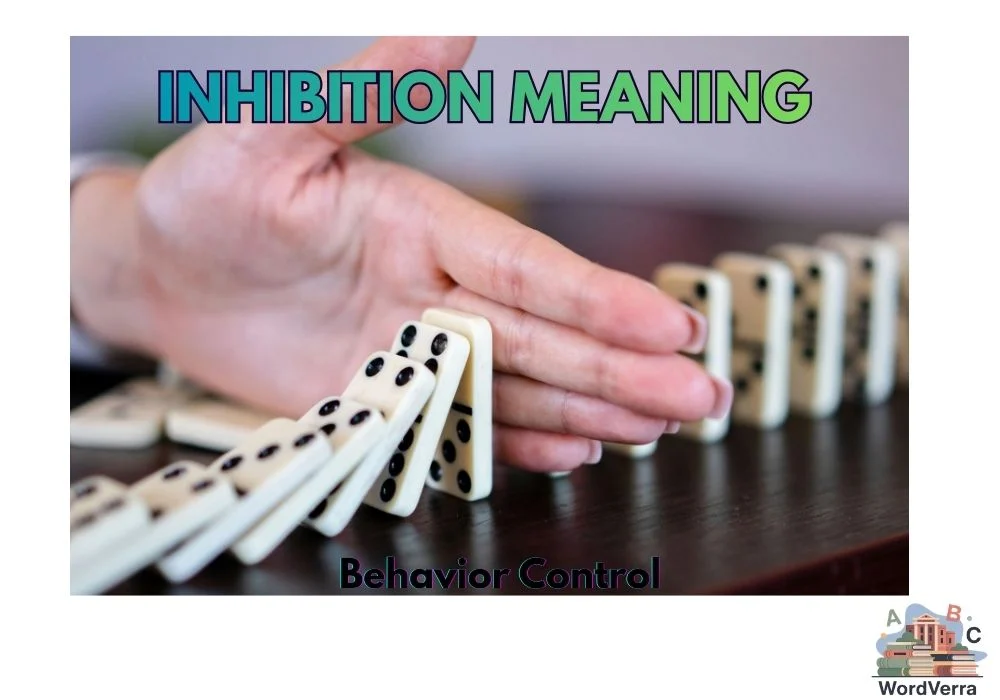
A mental, emotional, or physical restraint that prevents someone or something from acting freely.

It refers to anything that holds back behavior, expression, or action.

Example:

“Fear of judgment created an inhibition that stopped her from speaking up.”

Here, inhibition acts as a barrier to action.


Origin of the Word Inhibition

The word inhibition comes from the Latin inhibere, meaning to restrain, hold back, or prevent.
Historically, it entered English through scientific and philosophical writing and later became common in everyday language.

The core idea has always remained the same: control or restraint.


Inhibition Meaning in Psychology

In psychology, inhibition refers to internal processes that regulate behavior and emotions. These can include:

  • Self-control
  • Emotional restraint
  • Fear or anxiety-based hesitation

Example:

“Social inhibition can make people avoid conversations even when they want to connect.”

Psychologists often view inhibition as both protective and limiting, depending on the situation.


Inhibition Meaning in Everyday Life

In daily conversation, inhibition usually relates tosocial behavior or emotions.

Common examples:

  • “Alcohol lowered his inhibitions.”
  • “She struggled with inhibition when meeting new people.”

In these cases, inhibition describes shyness, hesitation, or restraint that affects behavior.


Inhibition Meaning in Science and Biology

In biology and chemistry, inhibition refers to a process that slows down or prevents a reaction.

Example:

“The drug works by enzyme inhibition, slowing the chemical reaction.”

Here, inhibition has nothing to do with emotions—it simply means blocking or reducing activity.


Common Misunderstandings About Inhibition

Mistake 1: Thinking Inhibition Is Always Negative

  • Inhibition can protect people from harmful actions or poor decisions.

Mistake 2: Confusing Inhibition With Depression

  • Inhibition is about restraint, not sadness or loss of motivation.

Mistake 3: Using It Only for Social Situations

  • Inhibition applies to science, psychology, and behavior—not just shyness.

Synonyms of Inhibition

Depending on context, similar words include:

  • Restraint
  • Hesitation
  • Suppression
  • Constraint
  • Control

Example:

“His natural inhibition acted as a form of self-control.”


How to Use Inhibition Correctly in Sentences

  • Emotional context:

“Her inhibition disappeared once she felt comfortable.”

  • Scientific context:

“The experiment focused on reaction inhibition.”

  • Social context:

“Cultural norms can create inhibition in public behavior.”


Inhibition Meaning in Modern Context (2026)

In 2026, inhibition is frequently discussed in:

  • Mental health conversations
  • Workplace communication
  • Scientific research articles
  • Social media discussions about confidence and self-expression

Example:

“Remote work has reduced social inhibition for many people during meetings.”

The word remains relevant because it explains why people pause, hesitate, or hold back.


Inhibition Meaning in Simple Words (Quick Reminder)

Inhibition means something that holds you back—emotionally, mentally, socially, or physically.


Conclusion

To summarize:

  • Inhibition refers to restraint or limitation on action or expression
  • It appears in psychology, science, and everyday conversation
  • It can be helpful or restrictive depending on context
  • Understanding inhibition meaning improves communication and self-awareness

Attitude Meaning: Definition, Types, and Modern Usage 2026

Attitude Meaning

The word attitude is everywhere—in psychology, personal development, workplace communication, and everyday conversation. Understanding attitude meaning helps you describe behavior, mindset, and personality accurately in various contexts.

This article explains the meaning of attitude, its origin, types, examples, common misunderstandings, and how to use it effectively in modern life, fully updated for 2026.


What Does Attitude Mean? (Simple Definition)

In simple terms, attitude refers to:

A settled way of thinking, feeling, or behaving toward someone or something.

It can reflect one’s mindset, emotions, or behavior, often influencing how people respond to situations.

Example:

“Her positive attitude helped the team overcome challenges.”

Here, attitude refers to a person’s approach or mindset that impacts outcomes.


Origin of the Word Attitude

The word attitude comes from the Italian “attitudine”, meaning posture or disposition, and was later adopted into English in the 17th century. Initially, it referred to physical posture, but over time it evolved to describe mental or emotional disposition.


Types of Attitude

Attitude can be categorized in several ways:

1. Positive Attitude

  • Optimistic, proactive, and constructive
  • Example: “He faced the difficult task with a positive attitude.”

2. Negative Attitude

  • Pessimistic, resistant, or critical
  • Example: “Her negative attitude made teamwork challenging.”

3. Neutral Attitude

  • Neither strongly positive nor negative; indifferent or balanced
  • Example: “He remained neutral with a calm attitude toward the debate.”

4. Aggressive Attitude

  • Confrontational or assertive beyond reason
  • Example: “The player showed an aggressive attitude on the field.”

Attitude in Everyday Life

Attitude affects relationships, work, and personal growth. Examples include:

  • At work: “A professional attitude can lead to promotions and respect.”
  • Social interactions: “A friendly attitude makes new connections easier.”
  • Personal development: “Maintaining a learning attitude improves skills over time.”

Attitude in Psychology

In psychology, attitude is defined as a psychological tendency expressed by evaluating a particular entity with some degree of favor or disfavor.

  • Components include:
    1. Cognitive: Beliefs or thoughts about something
    2. Affective: Feelings or emotions toward something
    3. Behavioral: Actions or intentions toward something

Example:

“His attitude toward health changed after the awareness campaign, reflecting cognitive and behavioral shifts.”


Common Misunderstandings About Attitude

Mistake 1: Confusing Attitude with Personality

  • Personality is enduring; attitude is more situational and flexible.

Mistake 2: Assuming Attitude Is Fixed

  • Attitude can be changed through experiences, learning, or reflection.

Mistake 3: Overusing Attitude as Negative

  • Not all attitudes are bad; “having an attitude” is sometimes perceived as confidence, not rudeness.

How to Use Attitude Correctly in Sentences

  • Describing behavior:

“She has a confident attitude in meetings.”

  • In advice:

“Maintain a positive attitude even during challenges.”

  • Observing others:

“His attitude toward learning impressed his teachers.”


Attitude Meaning in Modern Context (2026)

In 2026, attitude continues to be important in:

  • Workplace and corporate culture
  • Personal development and motivation content
  • Social media and lifestyle discussions
  • Educational psychology and coaching

Example:

“A growth mindset attitude is crucial for online learners in 2025.”


Attitude Meaning in Simple Words (Quick Reminder)

Attitude is the way someone thinks, feels, or behaves toward people, situations, or ideas. It can be positive, negative, or neutral.


Conclusion

To summarize:

  • Attitude reflects mindset, feelings, and behavior
  • It influences personal, social, and professional life
  • Types include positive, negative, neutral, and aggressive
  • Understanding attitude meaning helps improve communication, personal growth, and relationships

TMP Meaning in Text: Definition, Usage, and Examples 2026

TMP Meaning in Text

If you’ve come across TMP in texts, chats, or social media and wondered what it means, you’re not alone. Abbreviations like TMP are increasingly common in modern digital communication, and understanding them is key to keeping up with texting culture.

This article explains the TMP meaning in text, its origin, usage examples, related slang, and common misunderstandings, fully updated for 2026.


What Does TMP Mean in Text?

In texting and online messaging, TMP commonly stands for:

“Too Much Pressure”

It is used to express feelings of stress, overwhelm, or being burdened by expectations or responsibilities.

Example:

“I can’t handle all these assignments, TMP right now.”

Here, the sender conveys that the workload is overwhelming.


Other Possible Meanings of TMP in Text

While “Too Much Pressure” is the most common interpretation in casual texting, TMP can also mean:

  • Temporary – often used in notes or informal online writing
  • The Most Powerful – sometimes used humorously in games or social media
  • Team Member Project – in work-related group chats

Context is crucial when interpreting TMP, as the meaning changes depending on the conversation.


Origin of TMP in Texting

The abbreviation TMP comes from internet and mobiletexting culture, where users aim to save time by using initials for common phrases or concepts.

  • “Too Much Pressure” likely emerged in online forums and social media platforms
  • Temporary uses often come from workplace or educational settings
  • Today, TMP is part of the broader trend of using acronyms to communicate quickly in digital spaces

How to Use TMP in Texts and Chats

  • Expressing stress or overwhelm:

“This project deadline is TMP, I need a break.”

  • Shortening phrases for quick communication:

“TMP assignment due tomorrow, anyone else ready?”

  • Casual social media use:

“That game was TMP, couldn’t handle the last level!”

Tips:

  • Make sure the recipient knows the context
  • Use TMP in informal conversations, not formal emails or documents

Common Misunderstandings About TMP

Mistake 1: Assuming One Meaning

  • TMP has multiple interpretations; always consider context.

Mistake 2: Using TMP in Formal Writing

  • Abbreviations like TMP are suitable for texting, chat, or social media, not professional or academic writing.

Mistake 3: Confusing TMP With Similar Acronyms

  • TMP is different from TMI (“Too Much Information”) or TBF (“To Be Fair”).

Example:

“TMP” = Too Much Pressure
“TMI” = Too Much Information


Related Slangs or Abbreviations

  • TMI – Too Much Information
  • SMH – Shaking My Head
  • IDK – I Don’t Know
  • BRB – Be Right Back

Knowing related slang helps you understand digital communication better.


TMP Meaning in Modern Context (2026)

In 2026, TMP is commonly used in:

  • Texting among friends
  • Social media captions and replies
  • Online gaming chats
  • Group messaging apps

Example:

“TMP with all these notifications, my phone won’t stop buzzing!”

It reflects the digital generation’s tendency to communicate emotions and reactions quickly.


TMP Meaning in Simple Words (Quick Reminder)

TMP usually means “Too Much Pressure” in texts, expressing stress or overwhelm, but can also mean temporary or other context-dependent phrases.


Conclusion

To summarize:

  • TMP meaning in text usually stands for Too Much Pressure, expressing overwhelm
  • It can also mean Temporary, The Most Powerful, or Team Member Project depending on context
  • TMP is part of digital slang and widely used in texting, social media, and online chats
  • Understanding TMP helps you interpret messages accurately and participate effectively in online conversations

Prune Meaning: Definition, Uses, and Examples Explained 2026

Prune Meaning

The word prune can have multiple meanings depending on the context—ranging from food to gardening, and even figurative language. Understanding prune meaning helps you interpret texts accurately, communicate clearly, and use the term appropriately in conversation or writing.

This article explores the meaning of prune, its origin, examples, common misunderstandings, and modern usage, updated for 2026.


What Does Prune Mean? (Simple Definition)

Prune has two main definitions:

  1. As a noun (food): A dried plum, often eaten as a snack or used in cooking.
    Example: “Prunes are rich in fiber and are great for digestion.”
  2. As a verb (gardening or figuratively): To trim or cut away unwanted parts of a plant or, figuratively, to remove unnecessary elements from something.
    Example (gardening): “I need to prune the rose bushes before winter.”
    Example (figurative): “The editor pruned the article to make it clearer.”

Origin of the Word Prune

The word prune comes from Latin “prunum”, meaning plum.

  • It entered English through Old French in the 14th century
  • Originally referred only to the fruit, but the verb sense evolved from the idea of cutting or thinning (like trimming fruit trees)

Prune Meaning in Everyday Life

In daily life, prune is used both literally and figuratively:

  • Literal (food):
    “She enjoys eating prunes as a healthy snack.”
  • Gardening (verb):
    “The gardener pruned the hedges to keep them neat.”
  • Figurative (editing or improving):
    “We pruned the team’s workflow to make it more efficient.”

Prune in Health and Nutrition

Prunes are often associated with:

  • Digestive health: High in fiber and natural laxatives
  • Vitamins and minerals: Contain potassium, vitamin K, and antioxidants
  • Dietary benefits: Used in snacks, baked goods, or smoothies

Example:

“Adding prunes to your diet can help maintain healthy digestion and energy levels.”


Common Misunderstandings About Prune

Mistake 1: Confusing Prune With Plum

  • A prune is a dried plum, not a fresh fruit.

Mistake 2: Thinking Prune Only Refers to Food

  • As a verb, prune can mean trimming plants or removing unnecessary parts in a figurative sense.

Mistake 3: Mispronunciation

  • Correct pronunciation: /pruːn/

Synonyms of Prune

Depending on context, synonyms include:

  • For food: dried plum
  • For gardening: trim, cut back, clip
  • For figurative use: streamline, reduce, remove

Example:

“The company pruned unnecessary expenses to improve efficiency.”


How to Use Prune Correctly in Sentences

  • Literal (food):

“Prunes are a nutritious snack.”

  • Gardening:

“You should prune the trees in early spring.”

  • Figurative:

“The writer pruned the manuscript to make it concise.”


Prune Meaning in Modern Context (2026)

In 2026, prune is used in:

  • Health and nutrition articles
  • Gardening and horticulture content
  • Figurative business or productivity advice
  • Cooking and recipe blogs

Example:

“Prune your digital files regularly to keep your computer organized.”

The term remains versatile, making it relevant in multiple fields.


Prune Meaning in Simple Words (Quick Reminder)

Prune can mean a dried plum, to trim plants, or to remove unnecessary elements figuratively.


Conclusion

To summarize:

  • Prune as a noun refers to a dried plum, and as a verb means to trim or remove
  • It is used in gardening, cooking, health, and figurative language
  • Synonyms include trim, clip, dried plum, and streamline
  • Understanding prune meaning helps you use the word accurately in conversation, writing, and practical contexts

No Taxation Without Representation Meaning: History 2026

No Taxation Without Representation Meaning

The phrase “no taxation without representation” is one of the most famous slogans in American history. If you’ve ever wondered about the meaning of no taxation without representation, its origins, and why it still matters today, this article breaks it down for you in clear and engaging terms.

Updated for 2026, this guide explores the historical context, practical meaning, examples, and modern implications of this iconic phrase.


What Does No Taxation Without Representation Mean?

In simple terms, no taxation without representation means:

The government should not impose taxes on citizens unless those citizens have elected representatives in the decision-making process.

The phrase emphasizes fairness and consent in governance. If people do not have a voice in how taxes are levied or spent, they are being unfairly burdened.

Example:

“The colonists protested because they faced taxes without being allowed to vote in Parliament—no taxation without representation.”


Origin of the Phrase

The slogan “no taxation without representation” emerged in the 18th century during the buildup to the American Revolution. Key points include:

  • British Parliament imposed taxes on American colonies, such as the Stamp Act (1765) and Tea Act (1773)
  • Colonists had no representatives in Parliament to voice their concerns
  • Leaders like James Otis and Patrick Henry popularized the phrase as a rallying cry for independence

The slogan became a symbol of political rights and democratic principles.


Historical Context

The idea reflects the belief that:

  • Government authority comes from the consent of the governed
  • Citizens should have participation in decision-making affecting their lives and finances
  • Taxation without representation is unjust and oppressive

Example:

“During protests in Boston, colonists shouted slogans like ‘no taxation without representation’ while resisting British policies.”

This phrase played a crucial role in motivating the American Revolution (1775–1783) and shaping the founding principles of the United States.


Modern Meaning and Relevance

Today, the phrase is used beyond its historical context to represent fair representation in governance:

  • Voting rights advocacy
  • Local, state, and national elections
  • Civic engagement campaigns

Example:

“Citizens argue that certain policies violate the principle of no taxation without representation if they have no voice in legislative decisions.”

The slogan serves as a reminder of democratic accountability and civic rights.


Common Misunderstandings About No Taxation Without Representation

Mistake 1: Thinking It Only Applies to Taxes

  • While it originated with taxation, it broadly refers to any policies that affect people without their input.

Mistake 2: Believing It’s Only American

  • Other countries have used similar principles in governance debates, emphasizing representation in democracy.

Mistake 3: Confusing Symbolism With Legal Application

  • The phrase is both a historical slogan and a political principle, not a specific law.

How to Apply This Principle Today

Understanding no taxation without representation helps in:

  • Promoting voter registration and participation
  • Advocating for inclusive political processes
  • Educating citizens about fair governance

Example:

“Communities use the principle to challenge unfair local taxes imposed without proper public input.”


Synonyms and Related Concepts

  • Fair taxation
  • Democratic participation
  • Civic representation
  • Political accountability
  • Government transparency

Example:

“The concept of civic representation is central to no taxation without representation.”


No Taxation Without Representation Meaning in Simple Words (Quick Reminder)

It means people should not be taxed by a government unless they have a voice in the decisions through elected representatives.


Conclusion

To summarize:

  • No taxation without representation originated in 18th-century America as a protest against unfair taxes
  • The slogan represents fairness, consent, and democratic participation
  • Its modern relevance extends to voting rights, civic engagement, and governance accountability

Understanding this principle helps citizens advocate for representation, fairness, and democratic rights.

DEI Meaning in Business: Importance,Implementation 2026

DEI Meaning in Business

In the modern workplace, the term DEI has become increasingly common. Understanding DEI meaning in business is essential for professionals, managers, and organizations striving to foster an inclusive and productive work environment.

This article explores the definition of DEI, its significance in business, practical examples, challenges, and tips for implementation, fully updated for 2026.


What Does DEI Mean in Business?

In a business context, DEI stands for:

Diversity, Equity, and Inclusion

  • Diversity: Refers to the presence of differences in a workplace, including race, gender, age, sexual orientation, religion, disability, and more
  • Equity: Ensures fair treatment, access, and opportunities for all employees, addressing systemic barriers
  • Inclusion: Creates an environment where all individuals feel valued, respected, and able to contribute fully

Example:

“Our company prioritizes DEI initiatives to ensure every employee feels welcome and empowered.”


Origin and Evolution of DEI in Business

  • DEI concepts evolved from civil rights movements and social justice initiatives
  • Initially focused on diversity hiring, it now encompasses equity policies, inclusive culture, and organizational accountability
  • In 2026, DEI is considered a strategic business priority, affecting recruitment, retention, and overall company performance

Why DEI Is Important in Business

Implementing DEI strategies provides several benefits:

  1. Improved Innovation and Creativity
    Diverse teams bring varied perspectives that fuel innovation.
  2. Better Employee Engagement
    Inclusion fosters a sense of belonging, increasing productivity and job satisfaction.
  3. Enhanced Reputation and Brand Image
    Companies known for strong DEI policies attract top talent and loyal customers.
  4. Compliance and Risk Management
    DEI initiatives help organizations adhere to regulations and mitigate discrimination risks.

Example:

“Companies with high DEI scores are 35% more likely to outperform competitors in innovation metrics.”


Examples of DEI Initiatives in Business

Businesses implement DEI through practical strategies:

  • Diversity Hiring Programs – Recruiting candidates from diverse backgrounds
  • Equity Audits – Reviewing policies to ensure fair pay and promotion opportunities
  • Employee Resource Groups (ERGs) – Supporting underrepresented communities
  • Inclusive Training Programs – Educating staff on unconscious bias and cultural competence

Example:

“The tech company launched a DEI mentorship program to support women and minority employees in leadership roles.”


Common Misunderstandings About DEI

Mistake 1: DEI Is Only About Diversity

  • DEI is not just diversity; equity and inclusion are equally important.

Mistake 2: One-Time Efforts Are Enough

  • DEI is an ongoing process, not a one-off initiative.

Mistake 3: DEI Is Only HR’s Responsibility

  • True DEI requires leadership involvement across all levels of the organization.

How to Implement DEI in Business Effectively

  1. Assess Current Culture – Identify gaps in diversity, equity, and inclusion
  2. Set Measurable Goals – Define clear objectives for hiring, retention, and engagement
  3. Educate Employees – Provide workshops, seminars, and training programs
  4. Encourage Open Dialogue – Foster safe spaces for feedback and discussion
  5. Monitor and Adjust – Track DEI metrics and continuously improve initiatives

Example:

“By integrating DEI into performance reviews and leadership goals, the company ensured accountability and progress.”


DEI Meaning in Modern Context (2026)

In 2026, DEI is not just a buzzword—it is a critical business strategy. Organizations that actively pursue DEI:

  • Promote fairness and respect in remote and hybrid work environments
  • Leverage diverse talent to drive innovation and market relevance
  • Build resilient and adaptable organizational cultures

Example:

“The multinational corporation’s DEI dashboard tracks employee satisfaction, pay equity, and participation in inclusion programs.”


DEI Meaning in Simple Words (Quick Reminder)

DEI in business stands for Diversity, Equity, and Inclusion, representing fair treatment, respect for differences, and inclusive practices within organizations.


Conclusion

To summarize:

  • DEI meaning in business emphasizes diversity, fairness, and inclusive workplace culture
  • Effective DEI initiatives improve innovation, engagement, and company reputation
  • Understanding DEI helps businesses create equitable opportunities and a positive organizational culture