
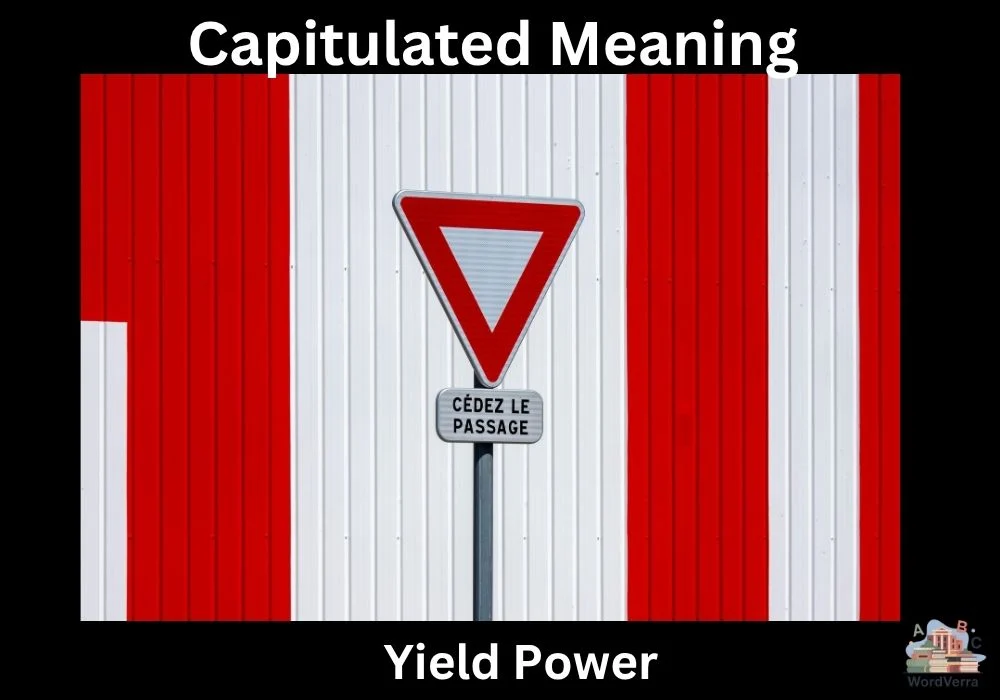
The word capitulated is often used in historical, military, and everyday contexts to describe surrender or yielding. Understanding capitulated meaning helps readers interpret literature, news reports, and professional communication accurately.
This article explores capitulated meaning, its origin, practical examples, and tips for proper usage in 2026.
What Does Capitulated Mean?
In simple terms, capitulated is:
The past tense of “capitulate,” meaning to surrender or give in, often after negotiation or pressure.
It implies yielding to authority, demands, or force rather than continuing resistance.
Example:
“After several hours of negotiation, the company capitulated to the union’s demands.”
Here, it indicates acceptance after initial resistance.
Capitulated Meaning in Simple Words
Put simply, capitulated means:
- Gave up
- Surrendered
- Yielded under pressure
Example:
“The team capitulated after facing repeated defeats.”
This conveys a loss of resistance or control.
Origin of the Word Capitulated
- Derived from the Latin word capitulat-, meaning “draw up in chapters”
- Historically, used in treaties or agreements when one side surrendered
- Entered English in the late 16th century, primarily in military and political contexts
The origin reflects the formal act of surrender.
Capitulated Meaning in Historical and Military Contexts
In history and military usage, capitulated often refers to:
- Surrendering to enemy forces
- Signing agreements or treaties after defeat
- Yielding control or territory
Example:
“The fortress capitulated after a long siege, ending the conflict.”
Historical texts frequently use this term for formal acts of surrender.
Capitulated Meaning in Everyday Contexts
In modern, everyday English, capitulated is used metaphorically to describe:
- Giving in during negotiations
- Yielding in arguments or debates
- Conceding in personal situations
Example:
“After hours of debate, she finally capitulated and agreed to the plan.”
This usage conveys reluctant acceptance.
How to Use Capitulated in Sentences
Formal/Professional Context
“The board capitulated to shareholders’ demands after extensive discussions.”
Historical or Military Context
“The army capitulated after running out of supplies.”
Casual/Everyday Context
“He capitulated to his friend’s request to attend the event.”
Common Mistakes When Using Capitulated
Mistake 1: Confusing It With Simple Giving Up
- Capitulated implies a formal or pressured surrender, not casual quitting.
Incorrect:
“I capitulated and skipped breakfast.” ❌
Correct:
“She capitulated after realizing the negotiation was unwinnable.” ✔️
Mistake 2: Using Capitulate as an Adjective
- Only the verb form and past tense (capitulated) are correct; it is not an adjective.
Mistake 3: Overusing in Casual Speech
- Capitulated is formal; simpler words like gave in or yielded may be better in informal contexts.
Capitulated Meaning: Quick Summary
- Capitulated is the past tense of capitulate, meaning to surrender or yield
- Used in historical, military, professional, and metaphorical contexts
- Suggests reluctant acceptance under pressure or authority
- Proper usage adds precision and formality to writing and speech
Understanding capitulated meaning enhances clarity when reading historical texts, news reports, or professional documents.

Ghumman is a dedicated author at Wordverra, focused on delivering clear, accurate, and high-quality English grammar content for students and learners. With a strong commitment to language clarity and practical learning, Ghumman creates well-researched explanations and examples that make complex grammar rules easy to understand. The goal is to help readers build a solid foundation in English and use the language confidently in academic and everyday settings.