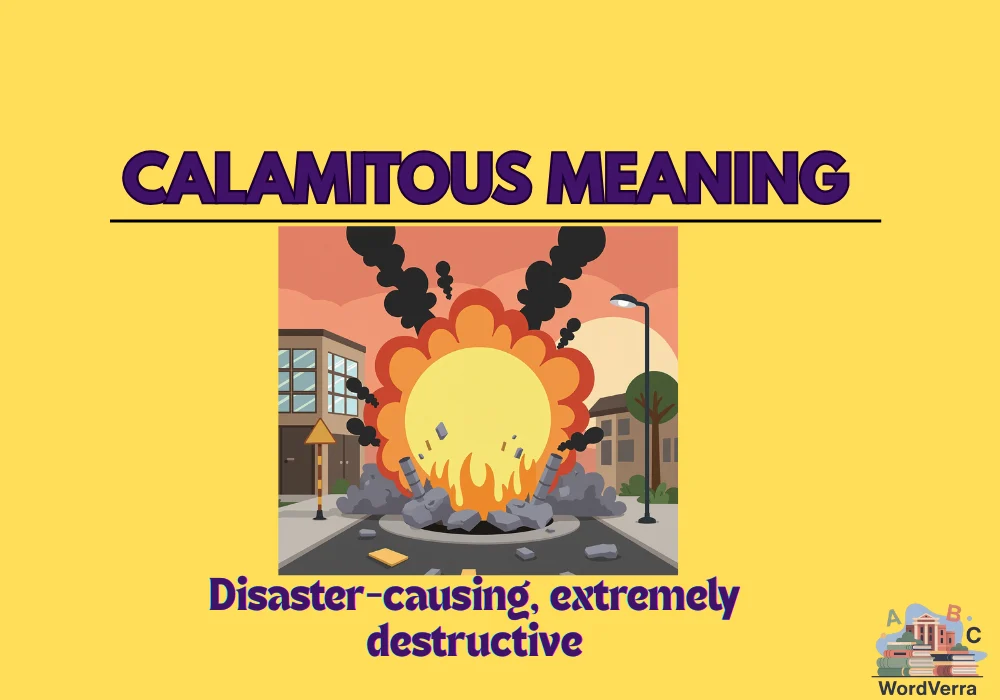
The word calamitous is a powerful adjective often used in literature, journalism, and formal speech to describe disastrous events or situations. Understanding calamitous meaning can help you enhance your vocabulary and convey the severity of situations effectively.
This article provides a complete guide to calamitous meaning, its origin, usage examples, common misunderstandings, and modern relevance, fully updated for 2026.
What Does Calamitous Mean? (Simple Definition)
In simple terms, calamitous means:
Extremely harmful, disastrous, or causing great misfortune.
It is used to describe events, decisions, or situations that result in severe negative consequences.
Example:
“The calamitous storm destroyed homes and roads across the region.”
Here, calamitous emphasizes the seriousness and devastation of the storm.
Origin of the Word Calamitous
The word calamitous comes from the Latin “calamitosus”, derived from “calamitas”, meaning damage, loss, or disaster.
- First used in English in the 16th century
- Historically associated with misfortune, disasters, or significant hardship
Understanding the origin helps explain why the word conveys severe and impactful consequences.
Calamitous Meaning in Everyday Context
While formal, calamitous can also be applied in everyday language to describe events or actions with disastrous effects:
Examples:
- “His calamitous decision led to the failure of the project.”
- “The calamitous traffic jam made everyone late for the meeting.”
Even minor disasters or unfortunate situations can sometimes be described as calamitous for emphasis.
Calamitous in Literature and Media
Authors and journalists frequently use calamitous to add drama and intensity:
- Literature: “The calamitous fate of the hero shocked readers.”
- News: “The earthquake had calamitous effects on local communities.”
- Movies/TV: “The calamitous battle changed the course of the story.”
Using calamitous in writing highlights the seriousness and impact of events.
Synonyms of Calamitous
Other words similar in meaning include:
- Disastrous
- Catastrophic
- Devastating
- Tragic
- Ruinous
Example:
“The calamitous decision / disastrous decision led to severe consequences.”
These synonyms can be used interchangeably depending on tone and context.
Common Misunderstandings About Calamitous
Mistake 1: Overusing Calamitous for Minor Issues
- The word implies serious harm or misfortune; avoid using it for trivial problems.
Mistake 2: Confusing Calamitous With Unfortunate
- While related, calamitous emphasizes severity, not just bad luck.
Mistake 3: Using Calamitous Only for Natural Disasters
- It applies to events, decisions, or situations causing significant damage, not just natural phenomena.
How to Use Calamitous Correctly in Sentences
- Describing disasters:
“The calamitous flood affected thousands of families.”
- In professional writing:
“The company’s calamitous strategy led to financial losses.”
- In casual storytelling:
“It was a calamitous day when everything went wrong.”
Calamitous Meaning in Modern Context 2026
In 2026, calamitous continues to appear in:
- News articles and media reports
- Academic writing and analysis
- Literature and creative writing
- Social media when describing major events
Example:
“The calamitous cyberattack disrupted the operations of multiple companies worldwide.”
The word is valuable for expressing gravity, severity, and impact in both written and spoken communication.
Calamitous Meaning in Simple Words (Quick Reminder)
Calamitous means extremely disastrous or causing severe misfortune.
Conclusion
To summarize:
- Calamitous describes events, decisions, or situations that are highly disastrous or harmful
- It has roots in Latin and has been used in English for centuries
- Synonyms include disastrous, catastrophic, and devastating
- Using calamitous meaning correctly adds emphasis and clarity to writing and speech

Ghumman is a dedicated author at Wordverra, focused on delivering clear, accurate, and high-quality English grammar content for students and learners. With a strong commitment to language clarity and practical learning, Ghumman creates well-researched explanations and examples that make complex grammar rules easy to understand. The goal is to help readers build a solid foundation in English and use the language confidently in academic and everyday settings.