
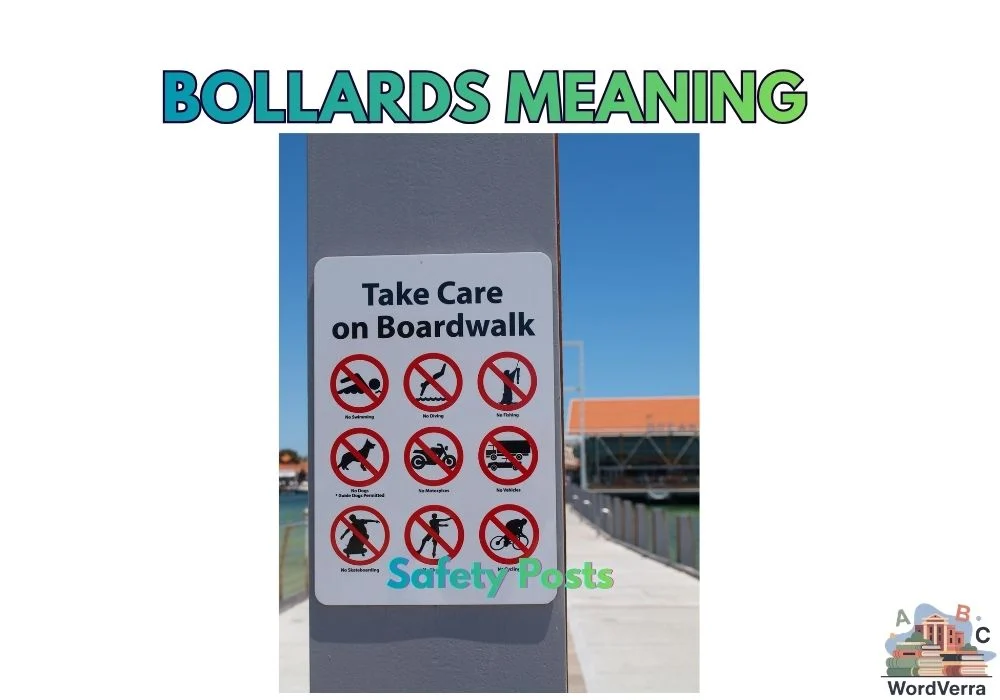
The term bollards is commonly seen in urban spaces, transportation planning, and architecture. Understanding bollards meaning helps homeowners, city planners, and safety-conscious individuals recognize their purpose and applications.
This article explains bollards meaning, types, uses, and practical examples, updated for 2026.
What Does Bollards Mean?
A bollard is:
A short, vertical post used to control or direct traffic, protect pedestrians, and secure property.
Bollards are often:
- Placed on streets or sidewalks
- Used to prevent vehicle intrusion
- Installed around buildings, parks, or public spaces
Example:
“The new shopfront was protected by steel bollards to prevent accidental vehicle damage.”
Origin and Background of Bollards
The word bollard comes from the early 19th-century nautical term ‘bollard’, referring to posts on a ship used for mooring ropes. Over time, its use expanded to street safety and property protection on land.
Common Uses of Bollards
- Traffic Control
- Direct vehicles along roads or pedestrian zones
- Prevent vehicles from entering restricted areas
- Safety and Security
- Protect pedestrians in crowded areas
- Prevent vehicle ramming attacks in public spaces
- Property Protection
- Shield buildings, utility boxes, and infrastructure from accidents
- Aesthetic and Decorative Purposes
- Some bollards are designed for urban decoration while remaining functional
Example:
“Decorative bollards in the plaza add visual appeal while ensuring pedestrian safety.”
Types of Bollards
- Fixed Bollards: Permanent and immovable; provide strong protection
- Removable Bollards: Can be temporarily removed for vehicle access
- Flexible Bollards: Bendable; absorb impact to prevent damage to vehicles
- Automatic Bollards: Retractable and controlled electronically for security
Example:
“Automatic bollards were installed at the government building for high-security access control.”
Materials Used for Bollards
Bollards can be made from:
- Steel or iron: Strong, durable, high-security
- Concrete: Affordable and sturdy
- Plastic or rubber: Flexible and often used for temporary or lightweight purposes
- Wood: Decorative and aesthetic, commonly in parks or pedestrian areas
Bollards Meaning in Modern Context (2026)
In 2026, bollards are increasingly used in:
- Urban planning and pedestrian safety
- Event management to control crowds
- Smart cities, where automatic or sensor-enabled bollards improve traffic control
- Environmental design, where decorative bollards combine aesthetics with function
Example:
“Smart bollards lowered automatically to allow authorized vehicles through while keeping the pedestrian zone safe.”
Common Misunderstandings About Bollards
- Mistake 1: Confusing Bollards With Barriers or Fences
- Bollards are individual posts, not continuous barriers
- Mistake 2: Assuming All Bollards Are Permanent
- Many types are temporary, removable, or retractable
- Mistake 3: Underestimating Safety Importance
- Bollards play a critical role in preventing accidents and protecting lives
How to Use Bollards in Sentences
- Urban planning: “The city installed bollards along the busy sidewalk to improve pedestrian safety.”
- Security context: “Security bollards prevented vehicles from accessing the restricted area.”
- Decorative use: “The park entrance featured wooden bollards as both decoration and guidance.”
Bollards Meaning in Simple Words (Quick Reminder)
Bollards are short posts used to protect people, property, and direct traffic. They can be decorative, temporary, or permanent, depending on the purpose.
Conclusion
To summarize:
- Bollards are short posts that control traffic, protect pedestrians, and secure property
- They come in various types, materials, and functions, from fixed security posts to decorative street furniture
- Modern uses include smart city applications, pedestrian zones, and event management
- Understanding bollards meaning helps improve safety, design, and urban planning decisions

Ghumman is a dedicated author at Wordverra, focused on delivering clear, accurate, and high-quality English grammar content for students and learners. With a strong commitment to language clarity and practical learning, Ghumman creates well-researched explanations and examples that make complex grammar rules easy to understand. The goal is to help readers build a solid foundation in English and use the language confidently in academic and everyday settings.