
Demiromantic Meaning: Signs, How It Works in Real Life 2026

Demiromantic Meaning

The term demiromantic has become more visible in online discussions, social media bios, dating conversations, and identity-focused communities. Yet many people still ask, “What does demiromantic actually mean?” or confuse it with similar romantic or sexual orientations.

Understanding demiromantic meaning is important because it helps:

  • Improve communication in relationships
  • Reduce misunderstandings in dating
  • Promote emotional awareness and respect

This article explains demiromantic meaning in simple, human language, with real-life examples, emotional context, and modern usage — so you can understand it without confusion or labels feeling overwhelming.


What Does Demiromantic Mean in Simple Words?

In the simplest terms, demiromantic means:

A person who only develops romantic feelings after forming a strong emotional connection.

A demiromantic person usually:

  • Does not feel romantic attraction instantly
  • Needs time to build trust and emotional closeness
  • May feel romance only after deep bonding

This does not mean they are cold, shy, or afraid of relationships — it simply describes how romantic attraction forms for them.


Breaking Down the Word Demiromantic

The term combines:

  • “Demi” meaning half or partial
  • “Romantic” referring to romantic attraction

So, demiromantic meaning reflects that romantic attraction happens partially or conditionally, not automatically or instantly.


How Demiromantic Attraction Works

How Demiromantic Attraction Works

For demiromantic people, romance usually develops in stages:

  1. Emotional connection forms first
  2. Trust and comfort increase
  3. Romantic feelings may develop later

This is different from people who experience romantic attraction quickly, even toward strangers.


Demiromantic Pansexual

“Demiromantic pansexual” combines two identity terms:

1. Demiromantic

👉 A person who only develops romantic feelings after a strong emotional bond is formed

  • No instant crushes
  • Feelings grow slowly with deep connection

2. Pansexual

👉 A person who can feel sexual attraction to people of any gender

  • Gender is not a limiting factor

Combined Meaning:

👉 Demiromantic pansexual =
A person who:

  • Can be sexually attracted to any gender
  • But develops romantic feelings only after emotional closeness

Simple Example:

  • Someone may feel physical attraction to different genders
  • But only falls in love after building trust and connection

Demiromantic Spectrum

The demiromantic spectrum refers to a range of identities related to how people experience romantic attraction.

👉 It falls under the aromantic spectrum (aro-spec)

What It Includes:

  • People who feel little or rare romantic attraction
  • Or only under specific conditions (like emotional bonding)

Key Idea:

Not everyone experiences love the same way 💭
Some people:

  • Feel attraction instantly
  • Others (demiromantic) need time and connection

Simple Meaning:

👉 Demiromantic spectrum = different ways people experience romantic feelings slowly or conditionally


Demiromantic vs Romantic Attraction

Romantic attraction can include:

  • Wanting to date someone
  • Feeling emotionally drawn to them
  • Desiring romantic gestures

A demiromantic person may not feel these things early on — even if they enjoy someone’s company.


Demiromantic Meaning in Everyday Life

Demiromantic Meaning in Everyday Life

In real life, demiromantic people often:

  • Prefer friendships that grow naturally
  • Feel confused by love-at-first-sight stories
  • Take longer to label relationships

Example:

“I didn’t like them romantically at first, but after months of talking, something changed.”

That experience aligns closely with demiromantic meaning.


Common Signs Someone May Be Demiromantic

While everyone is different, some common patterns include:

  • Rarely experiencing crushes
  • Developing romantic feelings only for close friends
  • Feeling disconnected from fast-paced dating culture
  • Needing emotional safety before romance

These are patterns, not rules.


Demiromantic Meaning in Dating and Relationships

Dating as a demiromantic person may look different:

  • Slow emotional pacing
  • Preference for deep conversations
  • Less interest in casual dating

This doesn’t mean relationships are less passionate — they often become deeply meaningful once emotional bonds form.


Demiromantic and Sexual Attraction: Not the Same Thing

A very common misunderstanding is confusing romantic attraction with sexual attraction.

  • Demiromantic → how romantic feelings form
  • Sexual orientation → how sexual attraction works

A demiromantic person can be:

  • Heterosexual
  • Bisexual
  • Asexual
  • Gay or lesbian

The two aspects are independent.


Demiromantic Meaning in Online Communities

In 2026, the term is commonly seen in:

  • Social media profiles
  • Dating app bios
  • Mental health discussions

People use it to:

  • Set emotional expectations
  • Communicate boundaries clearly
  • Feel understood

Example:

“I’m demiromantic, so I take time to develop feelings.”


Common Myths About Demiromantic People

Myth 1: Demiromantic People Hate Romance

False. Many demiromantic people love romance — they just need emotional connection first.


Myth 2: Demiromantic Is Just Being Shy

Being shy is about social comfort. Demiromantic meaning is about how attraction forms, not personality.


Myth 3: Demiromantic People Don’t Date

They do date — just often more intentionally and slowly.


Demiromantic vs Grayromantic

These two terms are related but not identical.

  • Demiromantic: Romantic attraction only after emotional bonding
  • Grayromantic: Rare or infrequent romantic attraction

Some people may relate to both experiences.


Why Language Like Demiromantic Matters

Having words like demiromantic helps people:

  • Understand themselves better
  • Communicate needs clearly
  • Reduce pressure to conform

Language gives people permission to experience attraction in their own way.


Using Demiromantic Correctly in a Sentence

Correct usage examples:

  • “They identify as demiromantic.”
  • “As a demiromantic person, I value emotional connection.”
  • “Demiromantic attraction takes time.”

Incorrect usage:

  • “Demiromantic means afraid of dating.” ❌

Emotional Connection and Trust

Emotional safety plays a big role in demiromantic experiences. Without trust:

This often leads to strong, lasting relationships once feelings develop.


Demiromantic Meaning in Simple One-Line Terms

Demiromantic means feeling romantic attraction only after emotional closeness forms.


Modern Relevance in 2026

In today’s fast-paced dating culture, many people feel pressure to:

  • Feel attraction quickly
  • Label relationships early

The concept of demiromantic meaning challenges that pressure and supports emotional authenticity.


Final Thoughts

Understanding demiromantic meaning helps create empathy, better communication, and healthier relationships. It reminds us that romance doesn’t follow one universal timeline — and that emotional depth matters.

IRC Meaning: Internet Relay Chat Explained 2026

IRC Meaning

The term IRC is one of those internet abbreviations that has been around for decades, yet it still appears in online discussions, tech forums, and digital history conversations. If you’ve seen someone mention IRC and wondered what it means—or why people still talk about it—you’re not alone.

Understanding IRC meaning is useful because it helps you:

  • Understand early internet chat culture
  • Decode references in tech communities and forums
  • See how modern messaging apps evolved

This article explains IRC meaning in simple, human language, how it was used, why it still matters today, and where you might still encounter it in 2026.


What Does IRC Mean?

IRC stands for:

Internet Relay Chat

It is a system that allows people to communicate with each other in real time through text-based messages over the internet.

In short, IRC meaning refers to:

  • A real-time chat protocol
  • One of the earliest online messaging systems
  • A foundation for modern chat platforms

The Origin of IRC

IRC was created in 1988 by a Finnish developer named Jarkko Oikarinen. At the time, the internet was mostly used by universities and researchers, and there were very few ways to chat instantly with people online.

IRC quickly became popular because it allowed:

  • Group discussions
  • Private messaging
  • Global communication in real time

It was revolutionary for its time and laid the groundwork for today’s messaging culture.


How IRC Worked in Simple Terms

Unlike modern apps with graphics and emojis, IRC was mostly text-based.

Here’s how people used it:

  • Users connected to an IRC server
  • They joined chat rooms called channels
  • Messages appeared instantly for everyone in the channel

Channels were usually named with a # symbol, such as #music or #technology.


IRC Meaning in Medical

IRC Meaning in Medical

In medical terms, “IRC” most commonly stands for:

👉 Chronic Kidney Disease (from Insuffisance Rénale Chronique, a term used in some regions/languages)

Meaning:

  • A condition where the kidneys slowly lose their function over time
  • Waste and fluids build up in the body

Symptoms:

  • Fatigue
  • Swelling (especially in legs)
  • Nausea
  • Shortness of breath

👉 Simple Meaning:
IRC (medical) = long-term kidney failure or reduced kidney function


IRC Meaning in Business

In business, “IRC” can have different meanings depending on context:

1. Internal Rate of Return (Finance)

👉 A measure used to evaluate profitability of an investment

  • Shows expected return percentage
  • Used in project and investment decisions

2. International Red Cross (Organizational Context)

👉 Refers to the International Committee of the Red Cross

  • A global humanitarian organization
  • Works in disaster relief and conflict zones

3. Internet Relay Chat (Communication)

👉 A system used for online communication or group chats (older tech but still referenced)


Simple Summary

  • IRC (medical): chronic kidney disease
  • IRC (business): internal rate of return / Red Cross / chat system (depends on context)

IRC Meaning in Online Communities

IRC Meaning in Online Communities

For many early internet users, IRC was more than just a chat tool—it was a community hub.

People used IRC for:

  • Tech discussions
  • Gaming communities
  • Programming help
  • Open-source collaboration

Even today, some developer communities still rely on IRC for communication.


Why IRC Was So Popular

IRC gained popularity because it offered features that were rare at the time, including:

  • Instant group chat
  • User nicknames
  • Moderation tools
  • Private conversations

It also worked well on slow internet connections, making it accessible worldwide.


IRC Meaning in Modern Context (2026)

You might be wondering: Is IRC still used today?

Yes—but on a much smaller scale.

In 2026, IRC is mostly used by:

  • Developers
  • Open-source projects
  • Tech enthusiasts
  • Internet historians

While apps like Discord and Slack dominate, IRC is still respected for its simplicity and reliability.


IRC vs Modern Chat Apps

When comparing IRC to modern platforms, the differences are clear.

IRC focuses on:

  • Text-only communication
  • Lightweight performance
  • Open standards

Modern apps focus on:

  • Multimedia sharing
  • Voice and video calls
  • Visual interfaces

Despite this, many modern chat tools borrowed ideas directly from IRC.


Common Terms You’ll See in IRC Conversations

If you ever explore IRC, you may encounter terms like:

  • Nickname (user identity)
  • Channel (group chat room)
  • Operator (moderator)
  • Server (connection point)

These terms helped shape the language of online chat we still use today.


IRC Meaning in Tech Discussions

In tech forums or documentation, IRC often appears as:

  • A support channel
  • A collaboration space
  • A reference to legacy systems

Example sentence:

“Join our IRC channel for live support.”

Here, IRC refers to a real-time communication method, not slang.


Is IRC Considered Slang?

Not exactly.

Unlike abbreviations such as LOL or BRB, IRC is:

  • A technical acronym
  • A platform name
  • A communication protocol

However, it’s still grouped with internet terms because of its strong association with online chat culture.


Why Some People Still Prefer IRC

Despite its age, IRC has loyal users because it:

  • Respects privacy
  • Doesn’t rely on heavy apps
  • Works on simple systems
  • Encourages focused conversation

For many, it represents a cleaner, distraction-free internet experience.


IRC Meaning in Online History

IRC played a major role in:

  • Early social interaction online
  • Growth of open-source communities
  • Development of internet etiquette

Without IRC, modern chat culture might look very different.


Common Misunderstandings About IRC

Mistake 1: Thinking IRC Is Obsolete

While not mainstream, IRC is still active and functional.


Mistake 2: Confusing IRC With Social Media

IRC is not social media. It does not focus on profiles, followers, or content feeds.


Mistake 3: Assuming IRC Is Insecure

Security depends on how it’s used. Many modern IRC networks use encryption.


How IRC Influenced Modern Chat Language

Many things we use today originated from IRC, including:

  • User handles
  • Chat moderation roles
  • Online community rules
  • Real-time group discussions

Its influence is still visible across the internet.


IRC Meaning in Simple Words

IRC is an early system that lets people chat with each other online in real time using text.


Real-Life Example of IRC Usage

Example:

“The developers coordinated the release using an IRC channel.”

This shows IRC being used as a professional communication tool rather than casual chat slang.


Why Understanding IRC Meaning Still Matters

Knowing what IRC means helps you:

  • Understand tech references
  • Appreciate internet history
  • Follow developer conversations

Even if you never use it, understanding the term improves digital literacy.


Final Thoughts

The IRC meaning goes far beyond a simple abbreviation. It represents one of the earliest forms of online community and real-time communication. While newer platforms have taken over, IRC’s influence is still deeply woven into how we chat today.

Mormon Meaning: Beliefs, Usage, History, Modern Context 2026

Mormon Meaning

In today’s digital world, language evolves faster than ever. Texting, social media, and chat platforms have their own unique lingo, abbreviations, and terms.

One term that might come up in conversations or online forums is “Mormon.” Understanding its meaning can help you navigate discussions about religion, culture, and community, and ensure respectful communication.

Whether you’ve seen it in a text, meme, or social post, knowing the Mormon meaning is essential for clear understanding and accurate use. This article breaks it down in a simple, engaging way—updated for 2026 trends in communication.


What Does “Mormon” Mean? (Definition & Origin)

Basic Definition

Mormon refers to a member of The Church of Jesus Christ of Latter-day Saints (LDS Church), a religious movement founded in the early 19th century by Joseph Smith in the United States.

Members of this faith follow the teachings of the Book of Mormon, which they believe complements the Bible, and practice unique cultural and religious traditions.

Origin of the Term

The term “Mormon” comes from the Book of Mormon, a sacred text published in 1830. While it was historically used as a nickname, members now often prefer “LDS” or “Latter-day Saint” for formal references.


How to Use “Mormon” in Texts or Chat

How to Use “Mormon” in Texts or Chat

Understanding context is key. While “Mormon” primarily identifies a religious group, it can appear in casual chats, memes, or discussions about culture.

Common Ways to Use

  • Talking about religious beliefs or practices
  • Discussing cultural norms or traditions
  • Referring to LDS community events or activities
  • Memes or humor (always respectful context is best)

Examples of Usage in Chat

  • “My friend is Mormon, so she doesn’t drink coffee ☕”
  • “We’re attending a Mormon family gathering this weekend!”
  • “That video has Mormon humor, but it’s all in good fun 😂”

Examples of “Mormon” in Conversations

1. Informative Chat

A: “Do you know why Mormons don’t drink alcohol?”
B: “Yes! It’s part of their religious rules called the Word of Wisdom.”

2. Cultural Discussion

A: “I met a Mormon family yesterday—they were super welcoming.”
B: “Yeah, hospitality is a big part of their culture.”

3. Meme or Humor Context

  • “When the Mormon kid says no caffeine… and you realize your soda stash is gone 😅”

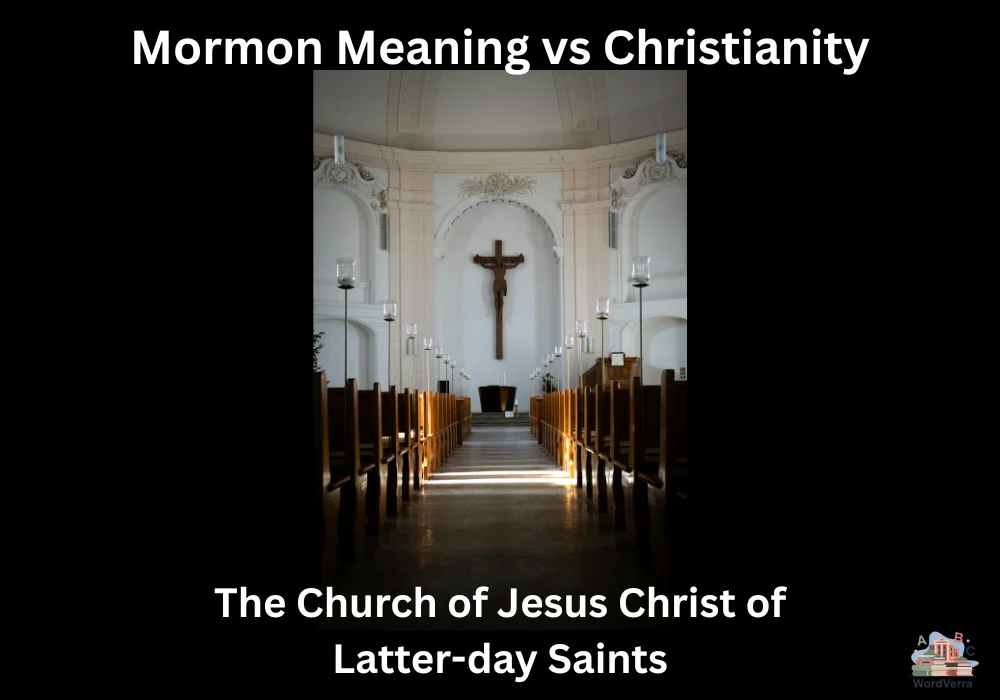
Mormon Meaning vs Christianity

Mormon Meaning vs Christianity

What “Mormon” Means

“Mormon” commonly refers to members of The Church of Jesus Christ of Latter-day Saints.

  • The term comes from the Book of Mormon, a sacred text in that tradition.
  • Many members today prefer “Latter-day Saints (LDS)” instead of “Mormon.”

How It Relates to Christianity

👉 Mormons consider themselves Christian because they believe in:

  • Jesus Christ as Savior
  • The Bible as scripture

👉 However, there are differences from mainstream Christianity:

Key Differences:

  • Additional Scripture: LDS members use the Book of Mormon along with the Bible
  • Beliefs about God: Different understanding of the nature of God and the Trinity
  • Modern Prophets: Believe in ongoing revelation through modern-day prophets

👉 Simple Idea:
Mormonism = a branch within the broader Christian tradition, but with unique beliefs and scriptures


Mormon Meaning “Wives”

The phrase “Mormon wives” is often misunderstood.

Historical Context:

👉 In the 19th century, some early members practiced polygamy (having more than one wife).

  • This practice was officially ended by the LDS Church in 1890

Modern Reality:

👉 Today, members of the LDS Church:

  • Do NOT practice polygamy
  • Follow monogamous marriage (one husband, one wife)

Why the Confusion?

  • Media, history, and shows sometimes still associate “Mormon” with multiple wives
  • But that does not reflect current beliefs or practices

Simple Summary

  • Mormon: member of the LDS Church (a Christian-based faith)
  • Mormon vs Christianity: similar core belief in Jesus, but with unique teachings
  • Mormon wives: historical practice of polygamy (no longer followed today)

Common Mistakes or Misunderstandings

Even though the term seems simple, there are a few pitfalls:

Mistake #1: Using “Mormon” as an Insult

❌ Wrong: “That’s so Mormon” (in a negative way)
✅ Correct: Use it respectfully to refer to someone’s faith or culture


Mistake #2: Assuming All LDS Members Follow the Same Practices

Not all members interpret or practice teachings identically. Avoid generalizations.


Mistake #3: Confusing “Mormon” with “Christian”

While Mormons identify as Christians, some Christian groups do not consider LDS doctrine aligned with mainstream Christianity. Context matters in discussions.


Related Slangs or Abbreviations

If you’re exploring Mormon meaning in chat, you might encounter related terms:

  • LDS – Latter-day Saints (preferred formal term)
  • Temple – LDS place of worship
  • Ward – Local congregation or community group
  • Missionary – A young adult member who spreads the faith

Why “Mormon” Appears in Modern Digital Culture

Even in 2026, “Mormon” trends online because of:

  • Cultural conversations about faith and lifestyle
  • Memes referencing traditions or humor
  • Discussions around media, movies, or books featuring LDS culture

Creators, bloggers, and social media users often include it for educational or entertainment purposes.


When to Use “Mormon” in Texting or Social Media

✔ Use it respectfully when referring to faith or cultural practices
✔ Pair with context to clarify meaning, especially in diverse groups
✔ Avoid casual negative usage or stereotypes

Examples:

  • “Attending a Mormon wedding this weekend—excited to learn their traditions!”
  • “Mormon missionaries often serve in pairs for community work.”

Pro Tips for Discussing Mormonism Online

  1. Be Respectful: Avoid jokes that could offend.
  2. Use Accurate Terms: “LDS” or “Latter-day Saint” is preferred in formal contexts.
  3. Provide Context: Especially in memes or casual chats.
  4. Highlight Culture: Include facts about traditions, dress, or ceremonies if relevant.

Conclusion: Understanding “Mormon” in Text and Chat

Mormon meaning in 2026 is straightforward but nuanced. It refers to a member of The Church of Jesus Christ of Latter-day Saints, and the term appears in:

  • Texting about religion
  • Cultural discussions
  • Social media content and memes

By using it respectfully, you can engage in meaningful conversations, share knowledge about LDS traditions, and even enjoy humor without offending anyone.

VIN Meaning: What a VIN Is, Why It Matters, How to Use It 2026

VIN Meaning

If you’ve ever bought a car, checked vehicle details online, or dealt with insurance or registration, you’ve likely come across the term VIN. Many people see it printed on documents or stamped on a vehicle but aren’t fully sure what it means or why it’s so important.

Understanding VIN meaning is essential because it helps you:

  • Identify a vehicle accurately
  • Avoid fraud or stolen vehicles
  • Access correct vehicle history and specifications

This guide explains VIN meaning in simple, human language, how it’s used in real life, and why it plays such a critical role in the automotive world today.


What Does VIN Mean in Simple Words?

VIN stands for Vehicle Identification Number.

In simple terms:

A VIN is a unique code assigned to every motor vehicle to identify it.

Think of a VIN as:

  • A car’s fingerprint
  • A vehicle’s identity number
  • A permanent ID that never changes

No two vehicles in the world share the same VIN.


Why VIN Meaning Is Important in Daily Life

The VIN meaning goes beyond just a random code. It helps connect a vehicle to its:

  • Manufacturer
  • Model and year
  • Engine type
  • Country of origin

This makes it a powerful tool for buyers, sellers, mechanics, and authorities.


What a VIN Looks Like

A VIN is usually:

  • 17 characters long
  • A mix of letters and numbers
  • Written without spaces

Example format:

1HGCM82633A004352

Each character or group of characters has a specific purpose.


Where You Can Find a VIN

In real life, a VIN can be found in several places, including:

  • On the dashboard near the windshield
  • Inside the driver-side door frame
  • Vehicle registration documents
  • Insurance papers

Online car listings also display VINs for transparency.


VIN Meaning (Car)

VIN stands for Vehicle Identification Number.

👉 It is a unique 17-character code given to every car.

What VIN Includes:

  • Manufacturer details
  • Country of origin
  • Engine type
  • Model and year
  • Serial number

Where to Find VIN:

  • On the dashboard (near windshield)
  • Inside driver-side door
  • Registration documents

Why It’s Important:

  • Identifies a car uniquely 🚗
  • Used for registration and insurance
  • Helps check accident or ownership history

👉 Simple Meaning:
VIN = a car’s unique ID number


VIN Meaning in Mercedes

VIN Meaning in Mercedes

For Mercedes-Benz, the VIN works the same way but gives specific brand details.

What Makes It Special:

  • Shows exact model (like C-Class, E-Class, etc.)
  • Identifies engine type and features
  • Helps verify original parts and specifications

Example Use:

  • Mechanics use VIN to find correct spare parts
  • Buyers use it to check vehicle authenticity

👉 Simple Meaning:
VIN (Mercedes) = detailed identity code for a Mercedes car with full specs info


VIN Meaning in Car Buying and Selling

When buying or selling a vehicle, the VIN is extremely important.

It allows people to:

  • Check vehicle history
  • Confirm ownership details
  • Verify mileage records
  • Detect past accidents or damage

A missing or altered VIN is often a red flag.


VIN Meaning in Vehicle History Checks

VIN Meaning in Vehicle History Checks

One of the most common uses of a VIN is checking vehicle history.

Using a VIN, reports can reveal:

  • Accident records
  • Flood or salvage status
  • Number of previous owners
  • Maintenance records

This protects buyers from hidden problems.


VIN Meaning in Insurance and Registration

Insurance companies and registration authorities rely heavily on VINs.

They use the VIN to:

  • Issue accurate insurance policies
  • Register vehicles correctly
  • Track claims and ownership

Even small VIN errors can delay paperwork.


VIN Meaning in Manufacturing Details

Each section of a VIN tells a story about the vehicle.

It can reveal:

  • Manufacturing country
  • Brand and model
  • Production plant
  • Serial production number

This information is valuable for recalls and repairs.


Is VIN Meaning the Same Worldwide?

Yes, the concept of a VIN is global.

Most modern vehicles follow international standards, which ensures:

  • Consistency across countries
  • Easier import and export processes
  • Accurate global tracking

However, older vehicles may have shorter identification numbers.


Common Misunderstandings About VIN Meaning

Mistake 1: Thinking VIN and License Plate Are the Same

They are different:

  • License plates can change
  • VINs are permanent

Mistake 2: Believing VINs Can Be Easily Changed

Tampering with a VIN is illegal and considered a serious offense.


Mistake 3: Assuming VIN Is Only for Cars

VINs are used for:

  • Cars
  • Motorcycles
  • Trucks
  • Buses

Almost all road vehicles have one.


VIN Meaning in Online Searches and Listings

In 2026, VINs are widely used online.

People use them to:

  • Compare vehicle details
  • Confirm listings
  • Avoid scams

Many platforms encourage VIN sharing for transparency.


How VIN Meaning Helps Prevent Fraud

VINs help authorities:

  • Identify stolen vehicles
  • Track illegal resales
  • Verify legal ownership

That’s why VIN checks are recommended before any purchase.


VIN Meaning in Simple Terms (Quick Reminder)

A VIN is a unique identification number that tells you exactly what a vehicle is and where it comes from.


Why VIN Still Matters in 2026

With the rise of:

  • Online car marketplaces
  • Imported vehicles
  • Digital registration systems

VINs have become even more essential. They act as a trusted source of truth in a digital-first automotive world.


Real-Life Examples of VIN Usage

  • A buyer checks a VIN before purchasing a used car
  • An insurance company verifies a VIN for coverage
  • A mechanic uses a VIN to order correct parts
  • Authorities trace a stolen vehicle using its VIN

All of these depend on understanding VIN meaning correctly.


How to Use a VIN Responsibly

Best practices include:

  • Double-checking VIN accuracy
  • Matching VINs across documents
  • Avoiding vehicles with altered VINs

This ensures safety and legal compliance.


Final Summary

To recap:

  • VIN stands for Vehicle Identification Number
  • It uniquely identifies every vehicle
  • It plays a role in buying, selling, insurance, and safety
  • Understanding VIN meaning helps you make smarter decisions

Hogging Meaning: Definition, Usage & Examples 2026

Hogging Meaning

The word hogging is something most people hear in daily conversations, online chats, and even arguments — yet many are unsure about its exact meaning or whether it’s formal, rude, or casual. You might hear someone say, “Stop hogging the TV,” or see a message like, “You’re hogging all the attention.”

Understanding hogging meaning is important because it helps you:

  • Interpret tone correctly in conversations
  • Avoid sounding rude or selfish unintentionally
  • Use the word naturally in spoken and written English

This article breaks down hogging meaning in simple, clear language, with real-life examples, texting usage, and modern context.


What Does Hogging Mean in Simple Words?

In everyday English, hogging means:

Taking more than your fair share of something and not letting others use it.

It often carries a negative tone and implies selfish behavior.

For example:

  • Using something for too long
  • Not sharing resources
  • Dominating attention or space

Origin and Background of the Word Hogging

The word comes from hog, an animal associated with eating a lot or taking more than needed. Over time, hogging became a figurative term to describe human behavior that feels greedy or inconsiderate.

That’s why the word still feels informal and expressive today.


Hogging Meaning in Everyday Conversation

In daily speech, hogging is commonly used in casual and emotional situations.

Examples:

  • “You’re hogging the bathroom!”
  • “He keeps hogging the conversation.”
  • “Stop hogging the snacks.”

In all these cases, hogging suggests:

  • Overuse
  • Lack of sharing
  • Ignoring others

Hogging Meaning in Text and Online Chat

In texting and social media, hogging is often used humorously or sarcastically.

Common chat examples:

  • “Why are you hogging the Wi-Fi 😭”
  • “You’ve been hogging my charger all day.”
  • “Stop hogging the spotlight.”

In online spaces, it can refer to:

  • Attention
  • Digital resources
  • Conversation dominance

Tone usually depends on emojis, context, or relationship.


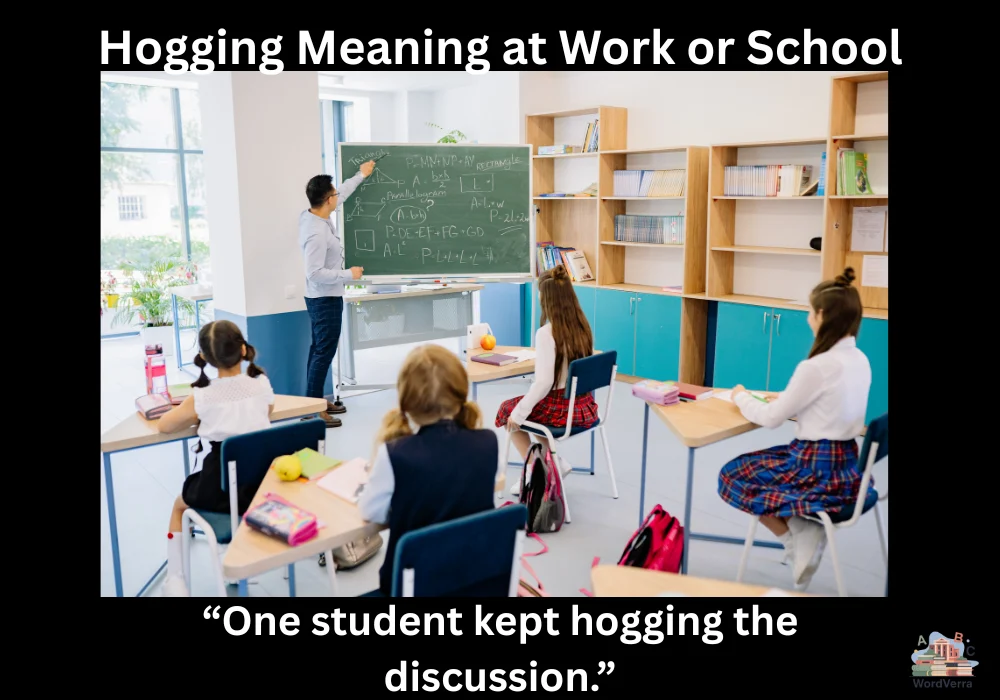
Hogging Meaning at Work or School

Hogging Meaning at Work or School

In professional or academic settings, hogging still applies but may sound less formal.

Examples:

  • “She’s hogging all the credit.”
  • “One student kept hogging the discussion.”
  • “He hogged the shared printer.”

While understandable, people often replace it with softer terms in formal writing.


Hogging Meaning (Slang)

In slang, “hogging” means:

👉 taking or using more than your fair share, often in a selfish way

Common Uses:

  • Attention hogging → trying to get all the attention
  • Food hogging → eating more than others
  • Space hogging → taking up too much room

Examples:

  • Stop hogging the snacks!
  • He was hogging all the attention at the party.

👉 Simple Meaning:
Hogging (slang) = being greedy or not sharing


Hogging Meaning in Driving

Hogging Meaning in Driving

In driving, “hogging” refers to:

👉 staying in a lane (especially the fast/right lane) without moving, blocking others

Common Situation:

  • A driver stays in the overtaking lane even when not overtaking
  • Slower cars behind cannot pass easily

Example:

  • That car is hogging the right lane and causing traffic.

Why It’s Bad:

  • Causes traffic congestion 🚗
  • Can be unsafe or frustrating for other drivers

👉 Simple Meaning:
Hogging (driving) = blocking a lane by not moving or letting others pass


Is Hogging Always Rude?

Not always — but it often sounds critical.

Playful or Light Usage

  • Among friends or family
  • Used jokingly
  • Often paired with laughter

Example:

“You’re hogging the couch again 😄”


Serious or Negative Usage

  • In conflicts
  • Expressing frustration
  • Calling out selfish behavior

Example:

“You keep hogging resources and it’s unfair.”

Tone matters a lot with this word.


Hogging Meaning in Emotional or Social Contexts

The word isn’t limited to physical objects.

People can hog:

  • Attention
  • Time
  • Credit
  • Space

Example:

“He hogged all the attention at the party.”

This use is very common in modern social language.


Common Situations Where Hogging Is Used

You’ll often hear hogging mentioned when:

  • Sharing items
  • Waiting turns
  • Group activities
  • Limited resources

Examples include:

  • Remote controls
  • Gaming consoles
  • Food
  • Conversations

Hogging vs Sharing: Understanding the Contrast

  • Sharing involves fairness and awareness
  • Hogging suggests ignoring others

Example:

  • Sharing snacks equally ✔
  • Eating most of them alone ❌

This contrast is why hogging feels negative.


Hogging Meaning in Simple Sentences

Correct usage:

  • “You’re hogging the blanket.”
  • “Stop hogging the microphone.”
  • “She hogged all the attention.”

Incorrect usage:

  • “He hogged happy.” ❌
    (The word needs an object.)

Common Misunderstandings About Hogging

Mistake 1: Thinking It’s a Formal Word

Hogging is informal and conversational.


Mistake 2: Using It Without an Object

The word usually needs something being hogged.


Mistake 3: Assuming It’s Always Aggressive

Sometimes it’s playful and harmless.


Why Hogging Is Still Popular in 2026

In 2026, the word remains common because:

  • Shared spaces are more common
  • Digital resources are limited
  • Online attention matters more

From group chats to streaming platforms, hogging fits modern life perfectly.


Cultural Tone of the Word Hogging

The word feels:

  • Casual
  • Direct
  • Slightly emotional

That’s why it’s popular in:

  • Family talk
  • Online comments
  • Informal complaints

Hogging Meaning in One Line

Hogging means taking more than your fair share and not letting others have a turn.


Real-Life Examples You’ll Recognize

  • Someone hogging the TV remote
  • A coworker hogging credit
  • A friend hogging the conversation
  • One user hogging bandwidth

These examples show how flexible the word is.


Tips for Using Hogging Correctly

To use it naturally:

  • Keep it informal
  • Be aware of tone
  • Use it with people you’re comfortable with

If you want to sound polite, consider alternatives in formal settings.


Final Summary

To wrap it up:

  • Hogging refers to unfair or selfish use
  • It applies to objects, time, and attention
  • Tone can be playful or critical
  • Context determines how rude it sounds

Understanding hogging meaning helps you communicate more clearly and avoid misunderstandings — especially in casual conversations and online chats.

Seal Meaning: Uses, Types, Examples, Everyday English 2026

Seal Meaning

The word seal is one of those English terms that appears everywhere — in documents, packaging, conversations, nature discussions, and even casual expressions. But its meaning changes depending on how and where it’s used. This often leaves people confused about what seal actually means in a specific situation.

Understanding seal meaning is important because it helps you:

  • Interpret offichttps://wordverra.com/conyo-meaning/ial documents and approvals correctly
  • Understand packaging, safety, and protection terms
  • Use the word naturally in everyday English

This article explains seal meaning in simple, human language, covering its different uses, real-life examples, and modern relevance.


What Does Seal Mean in Simple Words?

In general, seal means:

To close, secure, approve, or mark something so it is protected or officially confirmed.

Depending on context, seal can refer to:

  • An action (to seal something)
  • An object (a seal on a document or container)
  • An animal (a marine mammal)

The exact meaning depends entirely on usage.


Seal Meaning as an Action

Seal Meaning as an Action

When used as a verb, seal means:

  • To close tightly
  • To prevent air, water, or access
  • To make something official

Examples:

  • “Seal the envelope before mailing it.”
  • “The container was sealed to keep it fresh.”
  • “They sealed the agreement yesterday.”

In all these cases, sealing ensures protection or finality.


Seal Meaning as an Object

As a noun, a seal can refer to:

  • A stamp or mark
  • A protective closure
  • A symbol of authority

Examples:

  • “The document has an official seal.”
  • “The bottle seal was broken.”
  • “The company logo appears as a seal.”

Here, seal meaning focuses on authentication and security.


Seal Meaning in French

The word “seal” has different meanings in French depending on context:

1. Animal (Sea Seal)

👉 phoque

  • Refers to the marine animal

Example:

  • The seal is swimming.Le phoque nage.

2. Official Stamp / Mark

👉 sceau

  • Used for official documents or authority

Example:

  • The document has a seal.Le document a un sceau.

3. To Close Tightly (Verb)

👉 sceller

  • Means to seal or close something securely

Seal Meaning in Bible

In the Bible, “seal” has a symbolic and spiritual meaning:

👉 a mark of ownership, authority, or protection from God

Key Meanings:

  • Authority: shows something is approved by God
  • Protection: believers are “sealed” for safety
  • Authenticity: proves something is true or chosen

Spiritual Idea:

  • Being “sealed” means being chosen, protected, or confirmed by God

Example Idea:

  • God’s seal represents trust, promise, and divine approval

Simple Summary

  • Seal (French): phoque (animal), sceau (stamp), sceller (to close)
  • Seal (Bible): mark of God’s protection, authority, and approval

Seal Meaning in Official and Legal Use

In formal settings, a seal represents:

  • Approval
  • Authority
  • Legitimacy

Examples:

  • Government seal
  • Court seal
  • Company seal

If something carries a seal, it usually means it has been:

  • Verified
  • Approved
  • Officially recognized

Seal Meaning in Packaging and Products

In daily life, seal is commonly used in packaging.

Examples:

  • “The food comes in a sealed pack.”
  • “Check if the seal is intact.”
  • “Tamper-proof seal.”

In this context, seal meaning relates to:

  • Safety
  • Freshness
  • Protection

A broken seal often indicates prior opening.


Seal Meaning in Everyday Conversation

Seal Meaning in Everyday Conversation

People also use seal figuratively in speech.

Examples:

  • “That sealed the deal.”
  • “His reaction sealed my decision.”
  • “The answer sealed our plan.”

Here, seal means to finalize or confirm something emotionally or logically.


Seal Meaning in Nature and Animals

A seal can also refer to a marine animal.

In this case, seal meaning describes:

  • A sea-dwelling mammal
  • Known for flippers and smooth skin

Example:

  • “We saw a seal at the beach.”

This meaning is completely different but equally common.


Common Situations Where Seal Is Used

You’ll often see the word seal in:

  • Contracts
  • Food packaging
  • Security labels
  • Casual expressions
  • Wildlife discussions

Its flexibility makes it a high-usage word in modern English.


Seal vs Close: What’s the Difference?

Although related, they are not the same.

  • Close: simply shut something
  • Seal: shut tightly and securely

Example:

  • Closing a lid vs sealing it airtight

Sealing adds an extra layer of protection or certainty.


Common Misunderstandings About Seal Meaning

Mistake 1: Thinking Seal Always Means an Animal

While common, seal has many non-animal meanings.


Mistake 2: Using Seal When No Security Is Involved

Seal implies protection, not just closure.


Mistake 3: Confusing Seal With Signature

A seal may represent approval, but it’s not always a personal signature.


How to Use Seal Correctly in a Sentence

Correct examples:

  • “Please seal the package carefully.”
  • “The approval seal was stamped.”
  • “That promise sealed our trust.”

Incorrect example:

  • “He sealed the door open.” ❌

Why Seal Is Still Important in 2026

In 2026, seal meaning remains relevant due to:

  • Increased focus on product safety
  • Digital and physical verification
  • Official documentation

From secure packaging to online approvals, the concept of sealing still matters.


Seal Meaning in One Simple Line

Seal means to secure, confirm, or officially mark something so it stays protected or final.


Real-Life Examples of Seal Usage

  • Sealed food containers
  • Official approval marks
  • Sealed agreements
  • Wildlife observations

These examples show how versatile the word is.


Final Thoughts

The word seal may look simple, but it carries powerful meanings related to security, trust, and final decisions. Whether you’re reading a contract, opening a package, or describing a moment that “sealed the deal,” understanding seal meaning helps you interpret language correctly and confidently.

Conyo Meaning: Understanding the Slang Term in 2026

Conyo Meaning

If you spend time on social media, watch Filipino content online, or chat with people familiar with urban slang, you’ve probably heard the word conyo. It often comes with mixed reactions — sometimes funny, sometimes teasing, and sometimes misunderstood. So what exactly does it mean, and why does it matter?

Understanding conyo meaning is important because it helps you:

  • Understand modern slang and cultural references
  • Avoid misusing the word in conversations
  • Better interpret online jokes, memes, and comments

This article explains conyo meaning in simple, human language, how it’s used in everyday talk and texting, and why it’s still relevant in 2026.


What Does Conyo Mean in Simple Words?

In simple terms, conyo refers to:

A way of speaking that mixes English with Filipino (Tagalog), often associated with an upper-class or urban lifestyle.

Over time, the word has also become a slang label used to describe:

  • A person who speaks this mixed style
  • A personality associated with privilege or city life
  • A humorous or teasing stereotype

The meaning depends heavily on tone and context.


Where Did the Word Conyo Come From?

The term conyo is believed to have originated in the Philippines and evolved through youth culture, schools, and social circles. Initially, it described a distinct speaking style, but later it became a cultural expression used online and offline.

Today, conyo meaning goes beyond language — it often reflects:

  • Social background
  • Lifestyle perception
  • Humor or satire

Conyo Meaning in Everyday Conversation

In casual conversation, conyo is often used playfully.

Examples:

  • “She talks conyo, mixing English and Tagalog.”
  • “That accent sounds so conyo.”
  • “Stop being conyo, just explain it normally.”

In these cases, the word may:

  • Tease someone lightly
  • Describe a communication style
  • Highlight cultural differences

It’s usually informal and context-based.


Conyo Outfit

Conyo Outfit

A “conyo outfit” refers to a fashion style associated with the conyo culture in the Philippines.

👉 It usually reflects a rich, stylish, and Western-influenced look.

Common Features:

  • Branded or trendy clothes 👕
  • Clean, polished appearance
  • Casual but expensive-looking style
  • Mix of streetwear + preppy fashion

Typical Outfit Examples:

  • Polo shirt + shorts + sneakers
  • Oversized hoodie + designer shoes
  • Sunglasses, watch, and accessories

👉 The vibe is: effortlessly cool, modern, and a bit elite


Conyo Etymology

The word “conyo” originally comes from Spanish:

👉 Spanish language word “coño”

  • Originally a vulgar term

How Meaning Changed:

  • In the Philippines, it evolved into slang describing:
    • People who speak Taglish (mix of Tagalog + English)
    • Often from wealthy or private-school backgrounds

Modern Meaning:

👉 “Conyo” = a person with a stylish, Westernized lifestyle and mixed-language speech


Conyo Meaning in Text and Online Chat

On social media and in texting, conyo appears frequently in:

  • Comments
  • Memes
  • Casual jokes

Example messages:

  • “That reply was so conyo 😂”
  • “Conyo vibes all over this post.”
  • “Why are you typing conyo again?”

Here, the word often has a humorous or sarcastic tone, not meant to insult — though it can feel offensive if used carelessly.


Is Conyo an Insult or Just Slang?

This is one of the most common questions.

The answer: It depends on how it’s used.

  • Used jokingly → playful
  • Used mockingly → disrespectful
  • Used descriptively → neutral

Because conyo meaning can shift based on tone, it’s important to:

  • Know your audience
  • Avoid using it in formal settings
  • Be cautious with strangers

Conyo as a Cultural Stereotype

Over time, the word has also become linked to a stereotype, often portraying someone as:

  • Privileged
  • Urban
  • Western-influenced
  • Educated in private schools

This stereotype is common in online humor and parody videos, especially on platforms like TikTok and YouTube.


Real-Life Examples of Conyo Usage

Real-Life Examples of Conyo Usage

Here are some relatable scenarios:

  • A student switching between English and Tagalog during a conversation
  • A social media influencer speaking casually with mixed language
  • A friend jokingly calling another friend “conyo” for their accent

These examples show how naturally the word appears in modern interactions.


Why People Use the Word Conyo

People use conyo to:

  • Describe a speaking style
  • Express humor
  • Point out cultural identity
  • Create relatable jokes

In many cases, it’s not about criticism but shared understanding.


Conyo Meaning vs Code-Switching

It’s important to note that conyo is different from general code-switching.

  • Code-switching is a linguistic behavior
  • Conyo is a slang label with cultural meaning

Not everyone who mixes languages is considered conyo — the term usually carries social context.


Common Misunderstandings About Conyo

Mistake 1: Thinking It Only Refers to Language

While language is key, lifestyle and perception also play a role.


Mistake 2: Assuming It’s Always Negative

Many people embrace the term and use it jokingly.


Mistake 3: Using It in Professional Settings

Because it’s informal slang, it’s best avoided in serious conversations.


How to Use Conyo Correctly in a Sentence

Correct examples:

  • “His way of talking sounds conyo.”
  • “That meme is poking fun at conyo culture.”
  • “They joke about being conyo online.”

Incorrect example:

  • “The meeting was conyo.” ❌
    (The word refers to people or speech, not events.)

Why Conyo Is Still Popular in 2026

In 2026, online culture thrives on:

  • Identity-based humor
  • Short slang terms
  • Relatable stereotypes

That’s why conyo meaning continues to trend in:

  • Viral videos
  • Meme culture
  • Casual texting

It remains a shorthand for a very specific cultural idea.


Conyo Meaning in Simple One-Liner

Conyo describes a person or speech style that mixes English and Filipino, often linked to urban or privileged culture.


Final Thoughts

Understanding conyo meaning helps you navigate modern slang with cultural awareness. Whether you hear it in a joke, see it in a comment, or encounter it in a meme, knowing what it means — and how it’s meant — makes communication smoother and more respectful.

Language evolves fast, and slang like conyo reflects how culture, humor, and identity blend in everyday talk.

Synagogue Meaning: History, Everyday Understanding 2026

Synagogue Meaning

The word synagogue is often heard in religious discussions, history lessons, news reports, and cultural conversations. Many people recognize it as a Jewish place of worship, but the full meaning goes much deeper than that single definition.

Understanding synagogue meaning is important because it helps you:

  • Respect religious and cultural references
  • Understand Jewish traditions and community life
  • Follow news, education, and historical discussions more clearly

This article explains synagogue meaning in simple, clear language, including its purpose, historical background, modern use, and how the word is commonly understood today.


What Does Synagogue Mean in Simple Words?

In the simplest terms, a synagogue is:

A place where Jewish people gather for prayer, learning, and community activities.

A synagogue is not only a place for worship. It also serves as:

  • A learning center
  • A meeting place
  • A community space

Unlike some religious buildings used only for prayer, synagogues play multiple roles in daily Jewish life.


Understanding Synagogue Meaning Beyond Worship

While prayer is important, the synagogue has broader significance.

It is a place where people:

  • Read and study sacred texts
  • Celebrate religious events
  • Hold community discussions
  • Mark important life moments

This makes the synagogue a central part of Jewish culture and tradition.


Historical Background of the Synagogue

The concept of the synagogue developed thousands of years ago when Jewish communities needed places to gather, especially during times when the central temple was not accessible.

Over time, synagogues became:

  • Centers of faith
  • Places of education
  • Symbols of community identity

Today, synagogues exist in countries all over the world.


Synagogue Meaning in Religious Context

Synagogue Meaning in Religious Context

In religious terms, a synagogue is where:

  • Prayers are recited
  • Sacred scriptures are read aloud
  • Religious teachings are shared

Services may be held:

  • Daily
  • Weekly
  • On special religious occasions

The structure and style of services may vary depending on tradition.


Synagogue Pronunciation

synagogue (SIN-uh-gog)

👉 Stress is on the first syllable: SIN-uh-gog


Synagogue Meaning in Bible

Synagogue Meaning in Bible

In the Bible, a synagogue is:

👉 a place where Jewish people gather for worship, prayer, and reading scriptures

Biblical Context:

  • Synagogues were community centers for teaching and prayer
  • Jesus Christ often taught in synagogues
  • Used for reading the Torah

Purpose:

  • Worship and prayer 🙏
  • Teaching religious laws
  • Community gatherings

Different Names You May Hear for a Synagogue

Depending on language and culture, synagogues may also be called:

  • A Jewish house of worship
  • A community prayer space
  • A place of religious gathering

Despite different names, the purpose remains the same.


Synagogue Meaning in Everyday Conversation

In everyday language, the word synagogue is often used in:

  • Educational settings
  • News articles
  • Cultural discussions

Example:

“The community gathered at the synagogue for the festival.”

Here, the word refers not only to a building but also to the people and traditions connected to it.


What Happens Inside a Synagogue?

A synagogue may host many activities, such as:

  • Group prayers
  • Religious study sessions
  • Community meetings
  • Cultural celebrations

These activities help strengthen community bonds and preserve traditions.


Is a Synagogue the Same as a Temple?

This is a common question.

While the words are sometimes used interchangeably in casual speech:

  • Synagogue refers to a Jewish place of worship
  • Temple can have broader or historical meanings

Understanding this difference helps avoid confusion in religious discussions.


Synagogue Meaning in Modern Society

In 2026, synagogues continue to adapt to modern life. Many now offer:

  • Online study sessions
  • Community outreach programs
  • Educational workshops

Despite modern updates, their core purpose remains rooted in tradition.


Cultural Importance of the Synagogue

Beyond religion, synagogues often serve as:

  • Cultural centers
  • Historical landmarks
  • Educational institutions

They help preserve language, customs, and shared values across generations.


Common Misunderstandings About Synagogue Meaning

Mistake 1: Thinking It’s Only for Prayer

In reality, synagogues support education and community life as much as worship.


Mistake 2: Assuming All Synagogues Are the Same

Design, practices, and traditions can vary by region and community.


Mistake 3: Believing Synagogues Are Only Historical

Synagogues remain active and relevant in modern society.


How to Use the Word Synagogue Correctly

Correct examples:

  • “They attended a service at the synagogue.”
  • “The synagogue organized a community event.”
  • “Classes are held at the synagogue every week.”

Incorrect example:

  • “The synagogue religion is Judaism.” ❌
    (The synagogue is a place, not a religion.)

Why Understanding Synagogue Meaning Matters

Understanding this term helps:

  • Promote cultural awareness
  • Encourage respectful communication
  • Improve understanding of world religions

Knowledge reduces misunderstanding and builds respect.


Synagogue Meaning in Simple Words (Quick Reminder)

A synagogue is a Jewish place for prayer, learning, and community gatherings.


Modern Relevance in 2026

Today, synagogues play an important role in:

  • Maintaining cultural identity
  • Supporting community welfare
  • Teaching values and traditions

They continue to evolve while honoring their historical roots.


Final Summary

To summarize:

  • A synagogue is a central place in Jewish life
  • It supports worship, education, and community connection
  • The word represents both a building and a shared tradition

Understanding synagogue meaning helps you better understand cultural conversations, religious references, and global history.

Erosion Meaning: Causes, Types, Everyday Usage 2026

Erosion Meaning

Understanding the meaning of words is more important than ever in today’s fast-moving digital world—especially when terms like “erosion” appear in schoolwork, news, social media, and even casual conversations.

While it’s not exactly internet slang, the word erosion is widely used in both scientific and everyday contexts, making it essential to understand clearly.

So, what does erosion mean, and how can you use it correctly in real-life conversations, writing, or even online chats? This complete guide will break it down in the simplest way possible, with examples, tips, and modern usage.


What Does “Erosion” Mean? (Definition & Origin)

Basic Definition of Erosion

Erosion refers to the process by which natural forces like water, wind, or ice slowly wear away soil, rock, or land over time.

👉 In simple words:
Erosion = Gradual wearing away or loss of something


Origin of the Word “Erosion”

The word comes from the Latin term “erodere”, which means:

  • To gnaw away
  • To wear down

This origin perfectly explains how erosion works—it’s a slow, continuous process of removal or damage.


Different Types of Erosion

Understanding erosion becomes easier when you know its types:

  1. Water Erosion – Caused by rain, rivers, or floods
  2. Wind Erosion – Common in deserts or dry areas
  3. Glacial Erosion – Caused by moving ice
  4. Soil Erosion – Loss of topsoil, often due to farming or deforestation

How to Use “Erosion” in Texts or Chat

Even though erosion is a formal word, people still use it in casual chats, social media, and discussions, especially in metaphorical ways.

1. Literal Usage (Scientific or Real Meaning)

Used when talking about nature, geography, or the environment.

👉 Example:

  • “Heavy rain is causing soil erosion in our village.”

2. Figurative Usage (Modern & Chat Context)

In modern communication, erosion is often used metaphorically to describe a slow loss of something.

👉 Example:

  • “There’s been an erosion of trust between them.”
  • “Too much stress leads to mental erosion.”

3. Social Media Context

People use erosion in captions or discussions related to environment or emotions.

👉 Example:

  • “Climate change is accelerating coastal erosion 🌍”
  • “Slow erosion of friendships hurts more than fights.”

Erosion Meaning in Geography

Erosion Meaning in Geography

In geography, erosion is the process by which natural forces wear away and carry off soil, rocks, or land materials.

👉 It is a key concept in Physical Geography

Main Causes:

  • Water (rivers, rain) 🌧️
  • Wind 🌬️
  • Ice (glaciers) ❄️
  • Waves (coastal areas) 🌊

Example:

  • A river slowly cutting through land and forming a valley

👉 Simple Meaning:
Erosion (geography) = wearing away of land by natural forces


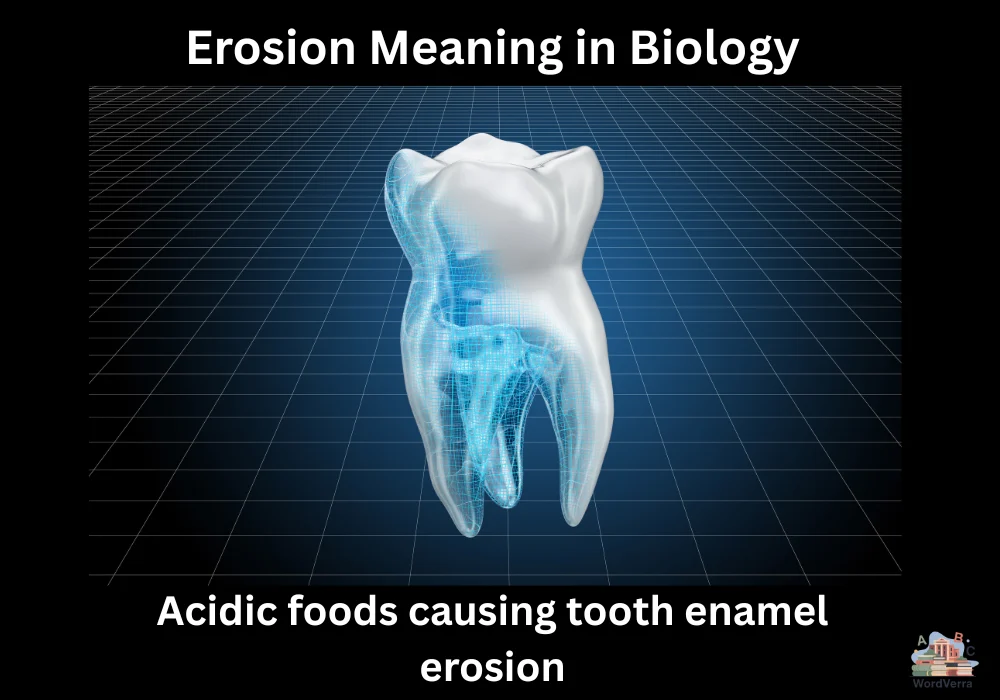
Erosion Meaning in Biology

Erosion Meaning in Biology

In biology, erosion refers to:

👉 the gradual wearing away or loss of tissue or surface in living organisms

Where It Happens:

  • Skin
  • Teeth (tooth enamel erosion)
  • Internal tissues

Causes:

  • Chemicals (like acids)
  • Infection or disease
  • Physical damage

Example:

  • Acidic foods causing tooth enamel erosion

Examples of “Erosion” in Conversations

To fully understand erosion meaning, let’s look at real-life style examples:


1. School/Study Context

Student A: “What is erosion?”
Student B: “It’s when soil or rock gets worn away by water or wind.”


2. Casual Chat

Friend 1: “Why is that land shrinking?”
Friend 2: “Probably erosion from the river.”


3. Emotional/Metaphorical Use

Person A: “Why did they break up?”
Person B: “It wasn’t sudden—just slow erosion of trust.”


4. Social Media Example

  • “Years of neglect caused erosion of the coastline.”
  • “Silent erosion of confidence is dangerous.”

Common Mistakes or Misunderstandings

Even though erosion is a simple concept, many people misunderstand it.


Mistake #1: Confusing Erosion with Weathering

❌ Wrong: Thinking both are the same
✅ Correct:

  • Weathering = Breaking down
  • Erosion = Carrying away

Mistake #2: Using It Only for Nature

❌ Wrong: Erosion only applies to land
✅ Correct: It can also be used figuratively

👉 Example:

  • Erosion of values
  • Erosion of trust

Mistake #3: Thinking It’s Fast

❌ Wrong: Erosion happens quickly
✅ Correct: It’s usually a slow process over time


Related Words, Synonyms & Similar Terms

Common Synonyms of Erosion

  • Wear
  • Deterioration
  • Decay
  • Degradation
  • Corrosion
  • Loss

2-Word SEO-Friendly Variations

  • Soil Loss
  • Land Wear
  • Surface Damage
  • Gradual Decay
  • Natural Wear

Related Concepts

You can link this topic with other useful terms:

  • Weathering – Breaking down rocks
  • Deposition – Dropping sediments
  • Corrosion – Chemical wearing away
  • Degradation – Decline in quality
  • “Difference Between Erosion and Weathering”
  • “Soil Erosion Causes and Prevention”

Why “Erosion” Matters in 2026 (Modern Relevance)

In 2026, erosion is more important than ever due to:

1. Climate Change

  • Rising sea levels increase coastal erosion
  • Heavy rainfall leads to soil loss

2. Environmental Awareness

People are more aware of:

  • Deforestation
  • Land degradation
  • Sustainable farming

3. Everyday Usage in Language

The word erosion is now commonly used to describe:

  • Emotional decline
  • Relationship issues
  • Social and political changes

👉 Example:

  • “Erosion of freedom”
  • “Erosion of trust in society”

How to Use “Erosion” Correctly (Pro Tips)

If you want to sound natural and smart, follow these tips:

✔ Use It When Talking About Slow Change

  • Works best for gradual processes

✔ Use It in Both Literal & Figurative Ways

  • Nature: soil erosion
  • Life: erosion of confidence

✔ Keep Context Clear

  • Make sure the reader understands what is being “eroded”

Quick Usage Formula:

👉 Erosion of + (something valuable)

Examples:

  • Erosion of trust
  • Erosion of land
  • Erosion of values

Conclusion: What Does Erosion Mean?

To sum it up, erosion is a powerful and versatile word that describes the gradual wearing away of something, whether it’s land, emotions, or even relationships. It’s not just a scientific term—it’s also widely used in everyday language and modern communication.

By understanding erosion meaning, you can use it correctly in school, writing, conversations, and even social media. In 2026, as environmental and emotional awareness grows, this word continues to stay relevant in multiple contexts.

Dessert Meaning: Types, Examples, and Everyday Usage 2026

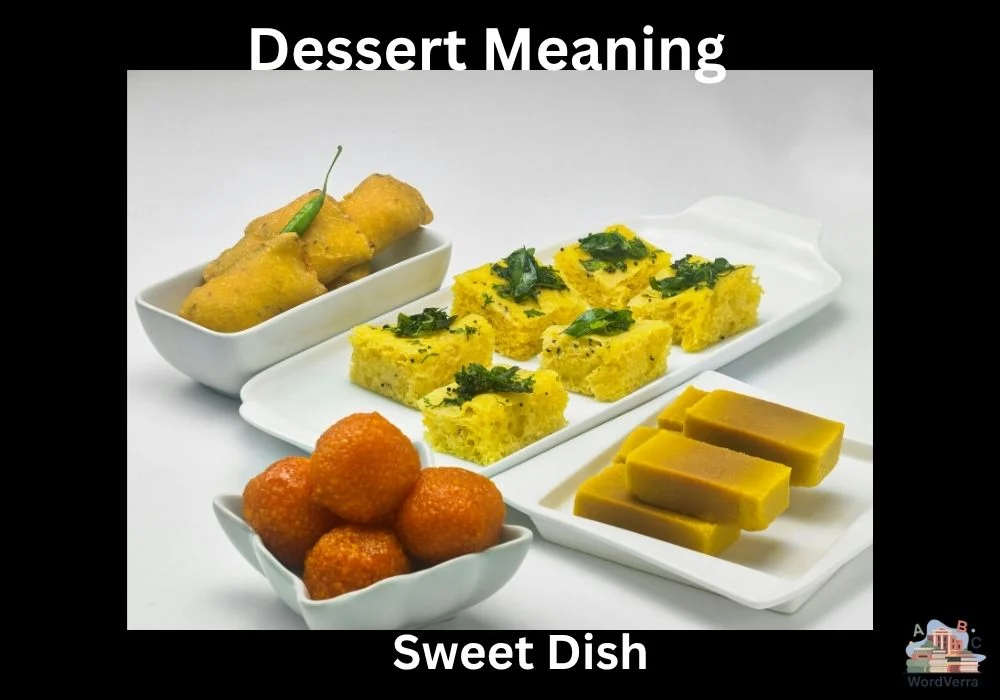
Dessert Meaning

Few words in the English language bring as much joy as dessert. Whether you’re scrolling through a menu, chatting about your favorite treat, or reading a recipe online, understanding dessert meaning is essential to fully enjoy food culture and conversations around it.

Knowing the meaning of dessert helps you:

  • Understand menus and recipes
  • Talk confidently about food
  • Recognize cultural references in conversation

This article explains dessert meaning in simple terms, explores types of desserts, provides real-life examples, and shows how the word is used in everyday English and modern conversations.

What Does Dessert Mean?

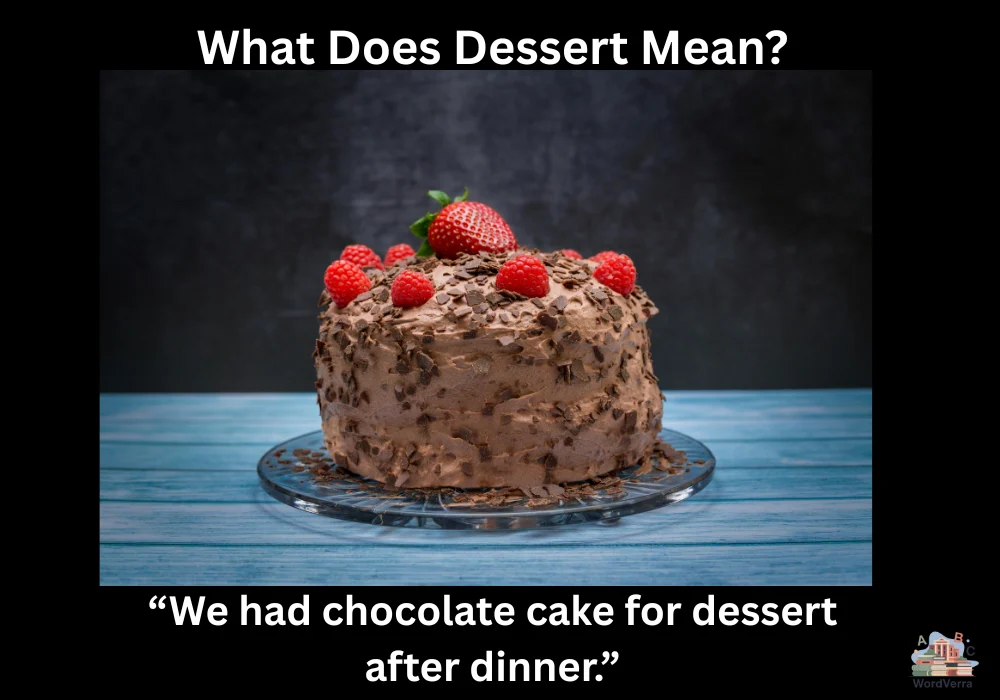
What Does Dessert Mean?

In simple terms, dessert means:

A sweet course typically eaten at the end of a meal.

Key points about dessert:

  • Usually sweet (cakes, ice cream, pies)
  • Often served after lunch or dinner
  • Can be hot or cold
  • Sometimes shared in social gatherings

Example:

“We had chocolate cake for dessert after dinner.”


Origin of the Word Dessert

The word dessert comes from the French word desservir, meaning to clear the table. Historically, it referred to the final course served after the main meal.

Over time, the word came to signify:

  • Sweet foods
  • Treats that conclude a meal
  • Indulgent snacks for enjoyment

Types of Desserts

Desserts come in a variety of forms, and each culture has its favorites. Here are the most common types:

1. Baked Desserts

  • Cakes, cupcakes, muffins, pies
  • Usually baked in an oven
  • Example: “Pumpkin pie is a popular baked dessert.”

2. Frozen Desserts

  • Ice cream, sorbet, gelato
  • Served cold and refreshing
  • Example: “Vanilla ice cream is my favorite frozen dessert.”

3. Custards and Puddings

  • Creamy, smooth desserts
  • Examples: Flan, crème brûlée, chocolate pudding

4. Confections

  • Candy, chocolates, fudge
  • Often small, bite-sized treats

5. Fruit-Based Desserts

  • Fruit salads, tarts, or compotes
  • Healthy and naturally sweet options

Dessert Meaning and Sentence

Meaning:

Dessert is a sweet food eaten at the end of a meal 🍰

Examples of Desserts:

  • Cake
  • Ice cream
  • Cookies
  • Pudding

Sentences:

  • We had chocolate cake for dessert.
  • Dessert is my favorite part of dinner.
  • She made a delicious dessert for the guests.

Dessert Meaning in English

In English, “dessert” means:

👉 a sweet dish served after the main meal

It usually includes sugary or sweet items like cakes, fruits, or ice cream.


Dessert Meaning in Everyday Conversation

In casual English, dessert may be used beyond meals. People often talk about it to express indulgence, celebration, or enjoyment.

Examples:

  • “Let’s go out for dessert!”
  • “Ice cream is my favorite dessert.”
  • “No meal is complete without dessert.”

Dessert is associated with treats, celebration, and enjoyment, making it a positive, cheerful word.


Dessert vs Desert: Common Confusion

It’s important not to confuse dessert (sweet treat) with desert (arid land).

  • Dessert: Chocolate cake, fruit pie, ice cream
  • Desert: Sahara, Gobi, or any dry, sandy region

Tip: Dessert has two S’s, like “sweet stuff.” Desert has one S.


Dessert in Modern Culture (2026 Trends)

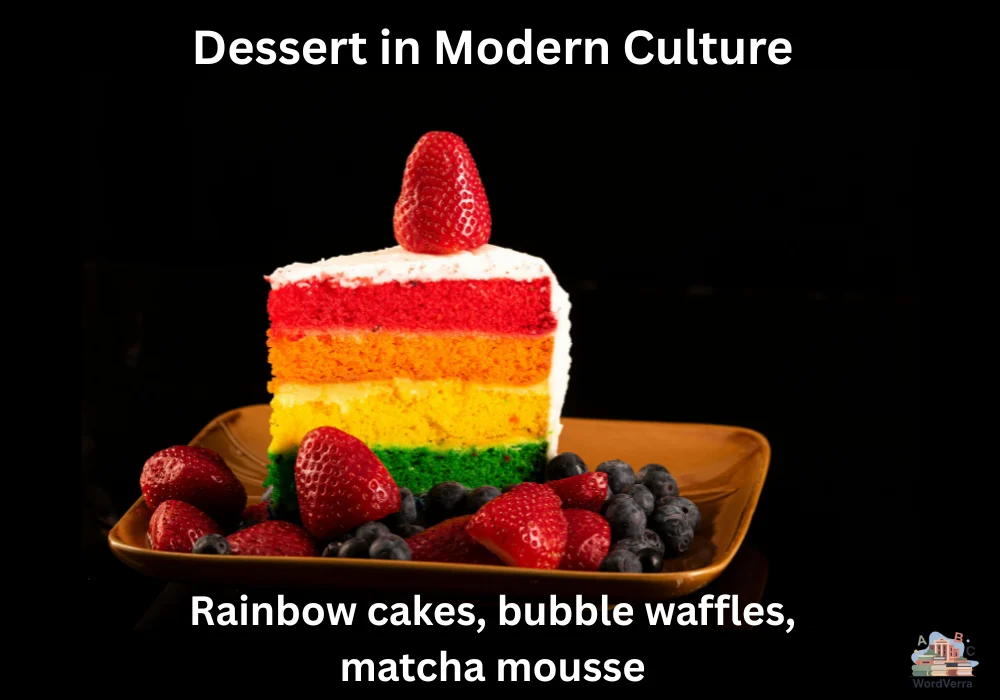
Dessert in Modern Culture

Today, desserts are more than just a meal ending:

  • Instagram and TikTok feature visually stunning desserts
  • People explore fusion desserts, combining flavors from different cuisines
  • Dessert cafes and specialty bakeries are booming

Examples:

  • Rainbow cakes, bubble waffles, matcha mousse
  • “Dessert tours” are popular in cities worldwide

Dessert Meaning in Recipes and Food Writing

In recipes, dessert refers to:

  • The final sweet course
  • Specific instructions for preparation
  • Serving suggestions

Example:

“Prepare the dessert 30 minutes before guests arrive.”

Food writers may also use dessert metaphorically, for instance:

  • “Life is a dessert, enjoy every bite.”

Common Misunderstandings About Dessert

Mistake 1: Using Dessert for Savory Foods

Dessert almost always refers to sweet dishes, not main courses or snacks.

Mistake 2: Thinking Dessert Is Only Cake

While cake is common, desserts include a wide range of sweet treats.

Mistake 3: Confusing Dessert with Snack

Snacks can be savory or sweet and eaten anytime; dessert is usually after a meal.


How to Use Dessert in a Sentence

Correct usage:

  • “Chocolate mousse is my favorite dessert.”
  • “We ordered a dessert platter to share.”
  • “She loves making homemade desserts.”

Incorrect usage:

  • “I had dessert for breakfast” ❌
    (While technically possible, it’s unusual; breakfast is not a meal-ending course.)

Why Understanding Dessert Meaning Matters

Knowing the meaning of dessert helps you:

  • Read and understand menus
  • Talk about food confidently
  • Explore different cuisines and cultural traditions
  • Enjoy social conversations about meals

Dessert Meaning in Simple Words (Quick Reminder)

Dessert is a sweet course served at the end of a meal, often for enjoyment or celebration.


Final Thoughts

Desserts are more than food; they are experiences that bring joy and comfort. Understanding

dessert meaning allows you to appreciate culinary culture, participate in social conversations, and explore the wide variety of sweet treats in 2026.