
The word hogging is something most people hear in daily conversations, online chats, and even arguments — yet many are unsure about its exact meaning or whether it’s formal, rude, or casual. You might hear someone say, “Stop hogging the TV,” or see a message like, “You’re hogging all the attention.”
Understanding hogging meaning is important because it helps you:
- Interpret tone correctly in conversations
- Avoid sounding rude or selfish unintentionally
- Use the word naturally in spoken and written English
This article breaks down hogging meaning in simple, clear language, with real-life examples, texting usage, and modern context.
What Does Hogging Mean in Simple Words?
In everyday English, hogging means:
Taking more than your fair share of something and not letting others use it.
It often carries a negative tone and implies selfish behavior.
For example:
- Using something for too long
- Not sharing resources
- Dominating attention or space
Origin and Background of the Word Hogging
The word comes from hog, an animal associated with eating a lot or taking more than needed. Over time, hogging became a figurative term to describe human behavior that feels greedy or inconsiderate.
That’s why the word still feels informal and expressive today.
Hogging Meaning in Everyday Conversation
In daily speech, hogging is commonly used in casual and emotional situations.
Examples:
- “You’re hogging the bathroom!”
- “He keeps hogging the conversation.”
- “Stop hogging the snacks.”
In all these cases, hogging suggests:
- Overuse
- Lack of sharing
- Ignoring others
Hogging Meaning in Text and Online Chat
In texting and social media, hogging is often used humorously or sarcastically.
Common chat examples:
- “Why are you hogging the Wi-Fi 😭”
- “You’ve been hogging my charger all day.”
- “Stop hogging the spotlight.”
In online spaces, it can refer to:
- Attention
- Digital resources
- Conversation dominance
Tone usually depends on emojis, context, or relationship.
Hogging Meaning at Work or School
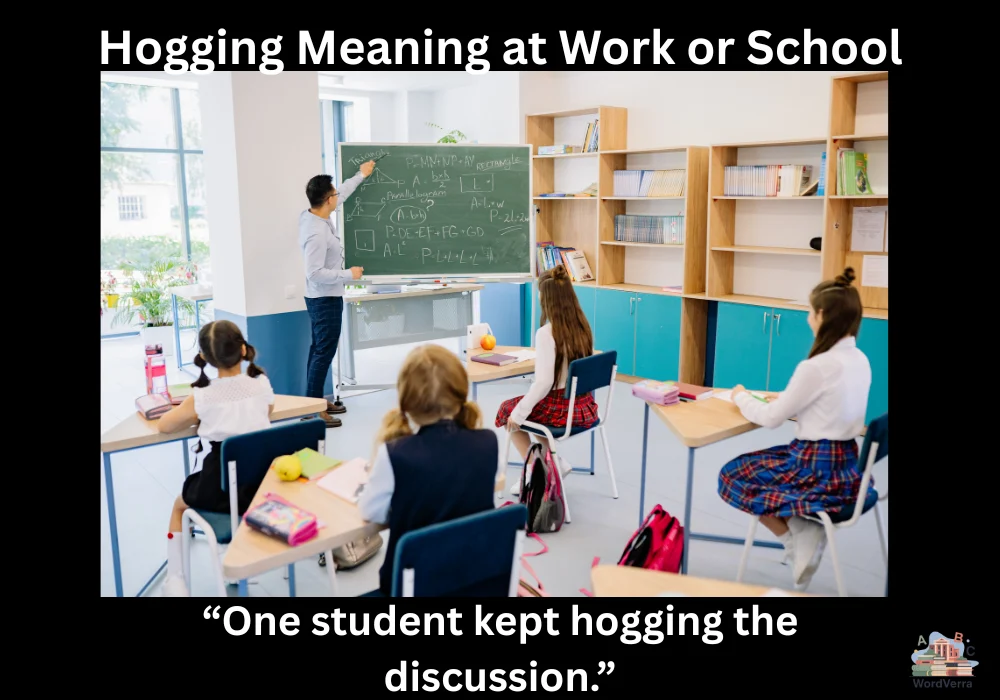
In professional or academic settings, hogging still applies but may sound less formal.
Examples:
- “She’s hogging all the credit.”
- “One student kept hogging the discussion.”
- “He hogged the shared printer.”
While understandable, people often replace it with softer terms in formal writing.
Hogging Meaning (Slang)
In slang, “hogging” means:
👉 taking or using more than your fair share, often in a selfish way
Common Uses:
- Attention hogging → trying to get all the attention
- Food hogging → eating more than others
- Space hogging → taking up too much room
Examples:
- Stop hogging the snacks!
- He was hogging all the attention at the party.
👉 Simple Meaning:
Hogging (slang) = being greedy or not sharing
Hogging Meaning in Driving
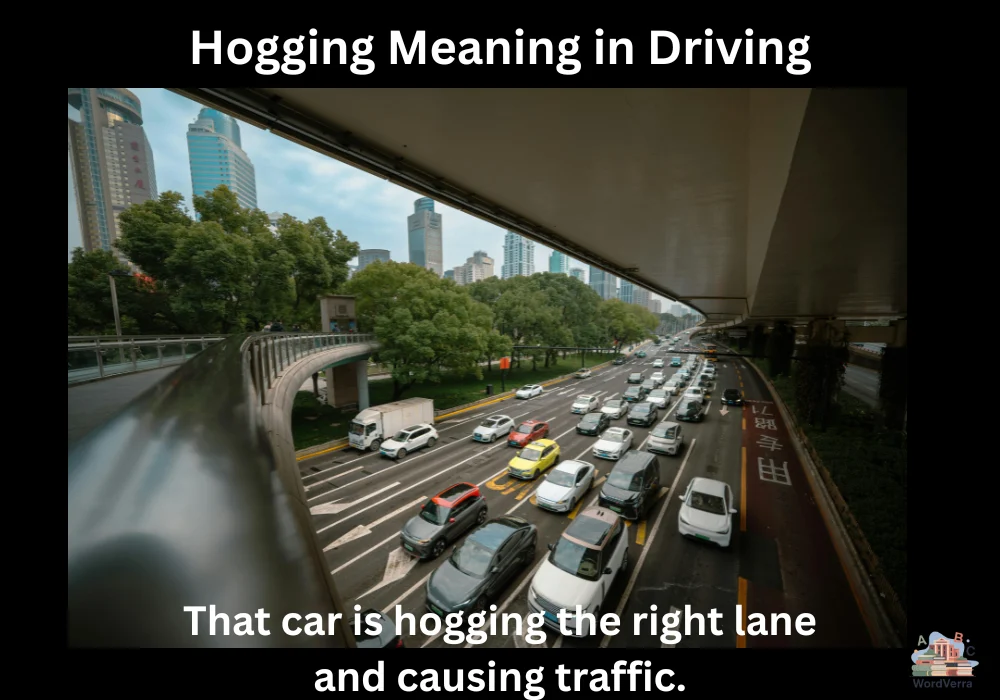
In driving, “hogging” refers to:
👉 staying in a lane (especially the fast/right lane) without moving, blocking others
Common Situation:
- A driver stays in the overtaking lane even when not overtaking
- Slower cars behind cannot pass easily
Example:
- That car is hogging the right lane and causing traffic.
Why It’s Bad:
- Causes traffic congestion 🚗
- Can be unsafe or frustrating for other drivers
👉 Simple Meaning:
Hogging (driving) = blocking a lane by not moving or letting others pass
Is Hogging Always Rude?
Not always — but it often sounds critical.
Playful or Light Usage
- Among friends or family
- Used jokingly
- Often paired with laughter
Example:
“You’re hogging the couch again 😄”
Serious or Negative Usage
- In conflicts
- Expressing frustration
- Calling out selfish behavior
Example:
“You keep hogging resources and it’s unfair.”
Tone matters a lot with this word.
Hogging Meaning in Emotional or Social Contexts
The word isn’t limited to physical objects.
People can hog:
- Attention
- Time
- Credit
- Space
Example:
“He hogged all the attention at the party.”
This use is very common in modern social language.
Common Situations Where Hogging Is Used
You’ll often hear hogging mentioned when:
- Sharing items
- Waiting turns
- Group activities
- Limited resources
Examples include:
- Remote controls
- Gaming consoles
- Food
- Conversations
Hogging vs Sharing: Understanding the Contrast
- Sharing involves fairness and awareness
- Hogging suggests ignoring others
Example:
- Sharing snacks equally ✔
- Eating most of them alone ❌
This contrast is why hogging feels negative.
Hogging Meaning in Simple Sentences
Correct usage:
- “You’re hogging the blanket.”
- “Stop hogging the microphone.”
- “She hogged all the attention.”
Incorrect usage:
- “He hogged happy.” ❌
(The word needs an object.)
Common Misunderstandings About Hogging
Mistake 1: Thinking It’s a Formal Word
Hogging is informal and conversational.
Mistake 2: Using It Without an Object
The word usually needs something being hogged.
Mistake 3: Assuming It’s Always Aggressive
Sometimes it’s playful and harmless.
Why Hogging Is Still Popular in 2026
In 2026, the word remains common because:
- Shared spaces are more common
- Digital resources are limited
- Online attention matters more
From group chats to streaming platforms, hogging fits modern life perfectly.
Cultural Tone of the Word Hogging
The word feels:
- Casual
- Direct
- Slightly emotional
That’s why it’s popular in:
- Family talk
- Online comments
- Informal complaints
Hogging Meaning in One Line
Hogging means taking more than your fair share and not letting others have a turn.
Real-Life Examples You’ll Recognize
- Someone hogging the TV remote
- A coworker hogging credit
- A friend hogging the conversation
- One user hogging bandwidth
These examples show how flexible the word is.
Tips for Using Hogging Correctly
To use it naturally:
- Keep it informal
- Be aware of tone
- Use it with people you’re comfortable with
If you want to sound polite, consider alternatives in formal settings.
Final Summary
To wrap it up:
- Hogging refers to unfair or selfish use
- It applies to objects, time, and attention
- Tone can be playful or critical
- Context determines how rude it sounds
Understanding hogging meaning helps you communicate more clearly and avoid misunderstandings — especially in casual conversations and online chats.

Ghumman is a dedicated author at Wordverra, focused on delivering clear, accurate, and high-quality English grammar content for students and learners. With a strong commitment to language clarity and practical learning, Ghumman creates well-researched explanations and examples that make complex grammar rules easy to understand. The goal is to help readers build a solid foundation in English and use the language confidently in academic and everyday settings.