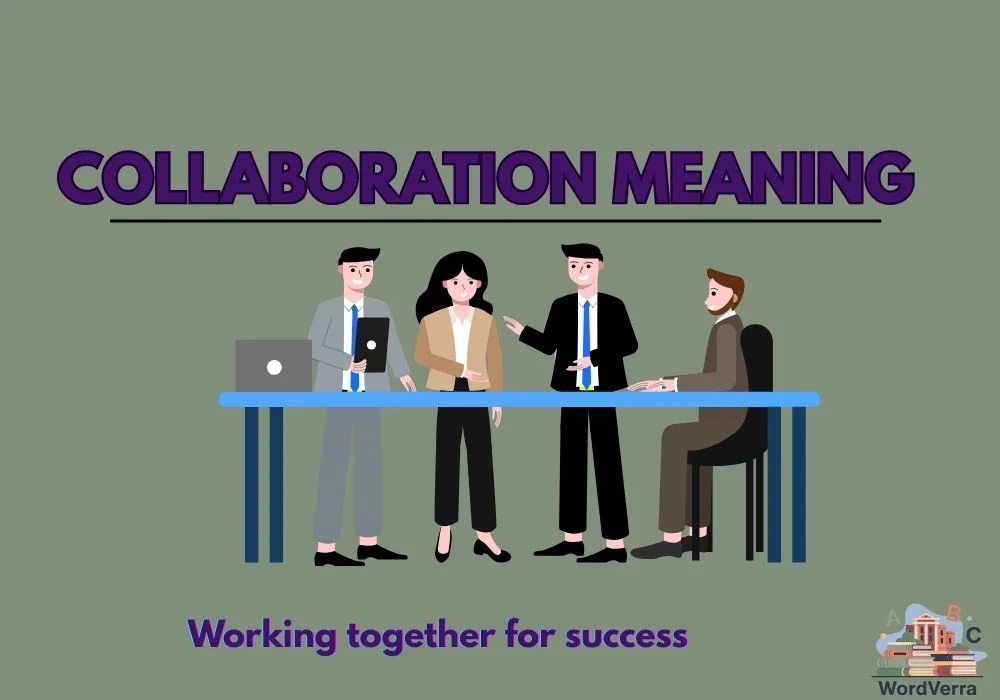
In today’s professional and digital world, the term collaboration is everywhere—from workplaces and academic projects to creative industries and online platforms. Understanding collaboration meaning is essential for effective communication, teamwork, and achieving shared goals.
This article explores the meaning of collaboration, its origin, examples, common misconceptions, and its relevance in modern contexts, fully updated for 2026.
What Does Collaboration Mean? (Simple Definition)
Collaboration refers to:
The act of working together with one or more people to achieve a common goal, share ideas, and produce results collectively.
It emphasizes joint effort, communication, and cooperation.
Example:
“The project’s success was due to strong collaboration between the marketing and design teams.”
Origin of the Word Collaboration
The word collaboration comes from the Latin “collaborare”, meaning to work together.
- “Col-” = together
- “Laborare” = to work
It entered English in the 19th century, initially referring to cooperative work. Over time, it evolved to include professional, academic, and creative teamwork.
Collaboration Meaning in Different Contexts
1. Workplace and Professional Collaboration
In business, collaboration is critical for:
- Enhancing productivity
- Sharing expertise
- Driving innovation
- Buildingteam cohesion
Example:
“Remote collaboration tools like Slack and Microsoft Teams have made it easier for teams to work together globally.”
2. Academic Collaboration
In education, collaboration involves:
- Group projects
- Research partnerships
- Peer learning
Example:
“The students collaborated on a science project, sharing ideas and dividing tasks efficiently.”
3. Creative Collaboration
Artists, writers, musicians, and creators often collaborate to:
- Blend skills and talents
- Produce unique content
- Reach wider audiences
Example:
“The film was a collaboration between directors, screenwriters, and visual effects artists.”
4. Online and Digital Collaboration
With the rise of technology, collaboration now includes:
- Cloud-based platforms (Google Workspace, Notion)
- Social media collaborations
- Open-source projects
Example:
“The open-source software was developed through collaboration across multiple countries.”
Synonyms of Collaboration
Some words similar to collaboration include:
- Cooperation
- Partnership
- Teamwork
- Alliance
- Joint effort
Example:
“Collaboration and cooperation are key to solving complex problems.”
Common Misunderstandings About Collaboration
Mistake 1: Confusing Collaboration with Coordination
- Coordination is organizing tasks, while collaboration involves active joint work and shared decision-making.
Mistake 2: Assuming Collaboration Is Easy
- Effective collaboration requires communication, compromise, and trust.
Mistake 3: Limiting Collaboration to Formal Settings
- Collaboration happens in informal projects, creative endeavors, volunteer work, and social initiatives, not just in offices.
How to Foster Effective Collaboration
- Set clear goals and roles
- Communicate openly and respectfully
- Utilize digital tools for remote teams
- Encourage idea sharing and constructive feedback
- Celebrate joint achievements
Example:
“By fostering collaboration, the company launched a successful product in record time.”
Collaboration Meaning in Modern Context (2026)
In 2026, collaboration is central to:
- Remote and hybrid workplaces
- Academic research and publications
- Creative industries and entertainment
- Digital platforms and online communities
Example:
“Collaboration between AI researchers and medical professionals is leading to faster vaccine development.”
Modern collaboration emphasizes flexibility, diversity, and global connectivity.
Collaboration Meaning in Simple Words (Quick Reminder)
Collaboration means working together with others to achieve a shared goal or create something collectively.
Conclusion
To summarize:
- Collaboration is about teamwork, joint effort, and shared responsibility
- It is essential in business, academics, creative projects, and online platforms
- Effective collaboration requires communication, trust, and goal alignment
- Understanding collaboration meaning helps you work efficiently, share ideas, and achieve better outcomes

Ghumman is a dedicated author at Wordverra, focused on delivering clear, accurate, and high-quality English grammar content for students and learners. With a strong commitment to language clarity and practical learning, Ghumman creates well-researched explanations and examples that make complex grammar rules easy to understand. The goal is to help readers build a solid foundation in English and use the language confidently in academic and everyday settings.