The word blanch appears in everyday English, cooking instructions, literature, and even medical descriptions. Understanding blanch meaning is important because the word changes slightly depending on context. Many readers recognize it from recipes, while others encounter it in descriptive writing or conversation.
This article explains the meaning of blanch, its origin, how it’s used in different situations, common misunderstandings, and modern usage in 2026.
What Does Blanch Mean? (Simple Explanation)
In general, blanch means:
To become pale or to make something pale, either physically or emotionally.
The word can describe:
- A physical change in color
- A cooking technique
- A reaction caused by fear, shock, or embarrassment
Example:
“His face began to blanch when he heard the news.”
Origin of the Word Blanch
The word blanch comes from the Old French word “blanc,” meaning white.
Over time, it entered English to describe anything that turns white or pale.
This origin explains why the word is commonly linked to:
- Loss of color
- Whitening
- Sudden emotional reactions
Blanch Meaning in Everyday Language
In daily conversation, blanch is often used to describe a physical reaction to emotion.
Examples:
- “She blanched with fear when the lights went out.”
- “He didn’t even blanch at the shocking announcement.”
In these cases, blanch suggests:
- Fear
- Shock
- Discomfort
- Emotional intensity
Blanch Meaning in Cooking
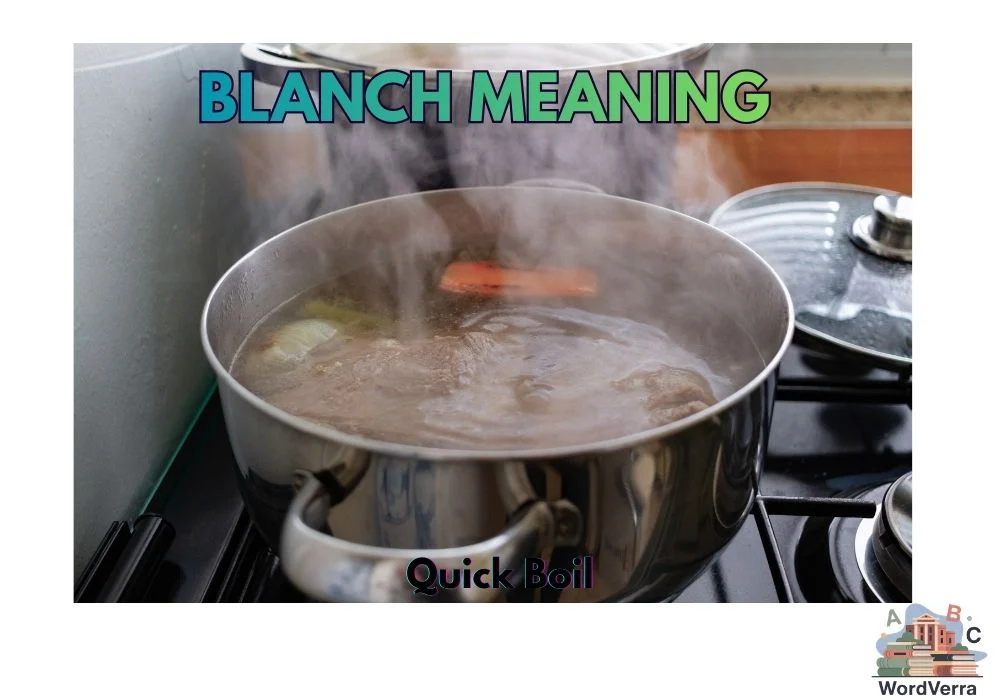
One of the most common modern uses of blanch is in cooking. In culinary terms, blanch means:
Briefly boiling food and then quickly cooling it in cold water.
This technique is used to:
- Preserve color
- Improve texture
- Remove bitterness
- Prepare food for freezing
Example:
“Blanch the vegetables before adding them to the stir-fry.”
This meaning is practical and widely used in recipes, cooking shows, and food blogs.
Blanch Meaning in Medical or Physical Contexts
In medical or physical descriptions, blanch refers to loss of blood flow or color, often due to pressure or stress.
Example:
- “The skin will blanch when pressed, then return to normal color.”
This usage helps describe circulation and physical response.
Common Misunderstandings About Blanch
Mistake 1: Thinking Blanch Only Means Cooking
- While popular in recipes, blanch also describes emotional and physical reactions.
Mistake 2: Confusing Blanch With Bleach
- Blanch means to become pale naturally or briefly.
- Bleach involves chemical whitening.
Mistake 3: Using Blanch for Long-Term Change
- Blanch usually describes a temporary condition, not a permanent one.
Synonyms of Blanch
Depending on context, synonyms include:
- Pale
- Whiten
- Fade
- Lighten
- Flush (in opposite emotional direction)
Example:
“Her expression turned pale, almost as if she had blanched.”
How to Use Blanch Correctly in Sentences
- Emotional reaction:
“He blanched at the sight of the accident.”
- Cooking instruction:
“Blanch the spinach for two minutes before draining.”
- Descriptive writing:
“The room fell silent, and several faces blanched.”
Blanch Meaning in Modern Context (2026)
In 2026, blanch is commonly used in:
- Cooking tutorials and food blogs
- Health and medical discussions
- Fiction and storytelling
- Educational content
Example:
“Most home cooks blanch vegetables to preserve nutrients and color.”
The word remains relevant because it bridges practical action and emotional description.
Blanch Meaning in Simple Words (Quick Reminder)
Blanch means to turn pale or to briefly boil food, depending on the situation.
Conclusion
To summarize:
- Blanch describes becoming pale due to emotion or physical reaction
- In cooking, it refers to a quick boiling method
- The word comes from roots meaning “white”
- Understanding blanch meaning helps you read recipes, stories, and instructions more accurately

Ghumman is a dedicated author at Wordverra, focused on delivering clear, accurate, and high-quality English grammar content for students and learners. With a strong commitment to language clarity and practical learning, Ghumman creates well-researched explanations and examples that make complex grammar rules easy to understand. The goal is to help readers build a solid foundation in English and use the language confidently in academic and everyday settings.