
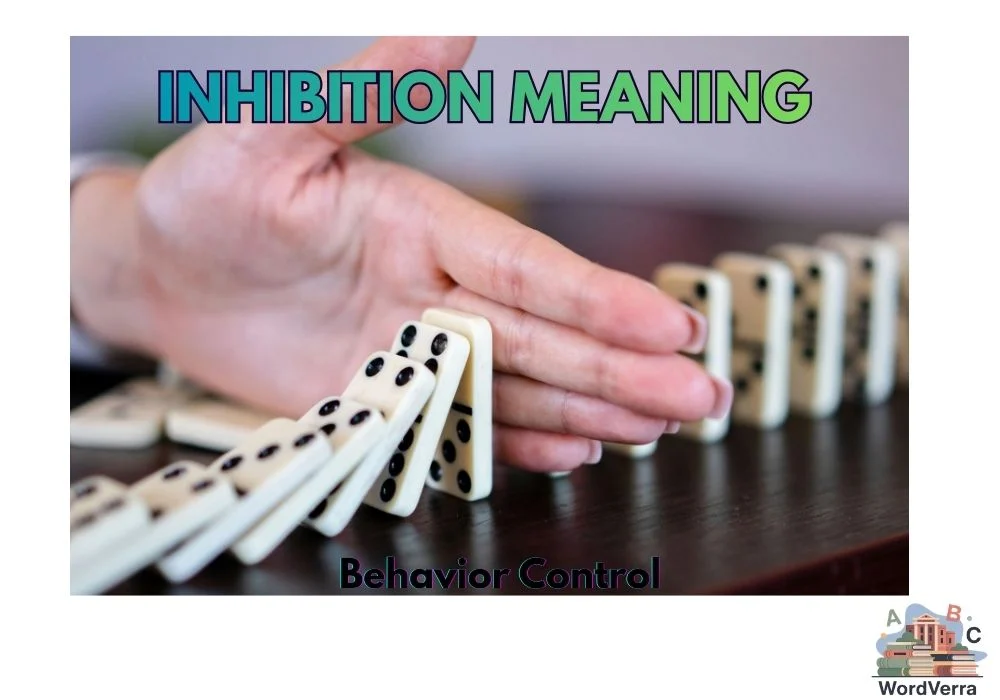
The word inhibition is commonly used in psychology, biology, social behavior, and everyday conversation. Understanding inhibition meaning helps you better interpret human behavior, emotional responses, and even scientific explanations. Whether someone says a person is “losing their inhibitions” or a process is being “inhibited,” the meaning changes slightly depending on context.
This article explains the meaning of inhibition, its origin, how it’s used in different situations, common misunderstandings, and modern relevance—updated for 2026.
What Does Inhibition Mean? (Simple Definition)
In simple terms, inhibition means:
A mental, emotional, or physical restraint that prevents someone or something from acting freely.
It refers to anything that holds back behavior, expression, or action.
Example:
“Fear of judgment created an inhibition that stopped her from speaking up.”
Here, inhibition acts as a barrier to action.
Origin of the Word Inhibition
The word inhibition comes from the Latin inhibere, meaning to restrain, hold back, or prevent.
Historically, it entered English through scientific and philosophical writing and later became common in everyday language.
The core idea has always remained the same: control or restraint.
Inhibition Meaning in Psychology
In psychology, inhibition refers to internal processes that regulate behavior and emotions. These can include:
- Self-control
- Emotional restraint
- Fear or anxiety-based hesitation
Example:
“Social inhibition can make people avoid conversations even when they want to connect.”
Psychologists often view inhibition as both protective and limiting, depending on the situation.
Inhibition Meaning in Everyday Life
In daily conversation, inhibition usually relates tosocial behavior or emotions.
Common examples:
- “Alcohol lowered his inhibitions.”
- “She struggled with inhibition when meeting new people.”
In these cases, inhibition describes shyness, hesitation, or restraint that affects behavior.
Inhibition Meaning in Science and Biology
In biology and chemistry, inhibition refers to a process that slows down or prevents a reaction.
Example:
“The drug works by enzyme inhibition, slowing the chemical reaction.”
Here, inhibition has nothing to do with emotions—it simply means blocking or reducing activity.
Common Misunderstandings About Inhibition
Mistake 1: Thinking Inhibition Is Always Negative
- Inhibition can protect people from harmful actions or poor decisions.
Mistake 2: Confusing Inhibition With Depression
- Inhibition is about restraint, not sadness or loss of motivation.
Mistake 3: Using It Only for Social Situations
- Inhibition applies to science, psychology, and behavior—not just shyness.
Synonyms of Inhibition
Depending on context, similar words include:
- Restraint
- Hesitation
- Suppression
- Constraint
- Control
Example:
“His natural inhibition acted as a form of self-control.”
How to Use Inhibition Correctly in Sentences
- Emotional context:
“Her inhibition disappeared once she felt comfortable.”
- Scientific context:
“The experiment focused on reaction inhibition.”
- Social context:
“Cultural norms can create inhibition in public behavior.”
Inhibition Meaning in Modern Context (2026)
In 2026, inhibition is frequently discussed in:
- Mental health conversations
- Workplace communication
- Scientific research articles
- Social media discussions about confidence and self-expression
Example:
“Remote work has reduced social inhibition for many people during meetings.”
The word remains relevant because it explains why people pause, hesitate, or hold back.
Inhibition Meaning in Simple Words (Quick Reminder)
Inhibition means something that holds you back—emotionally, mentally, socially, or physically.
Conclusion
To summarize:
- Inhibition refers to restraint or limitation on action or expression
- It appears in psychology, science, and everyday conversation
- It can be helpful or restrictive depending on context
- Understanding inhibition meaning improves communication and self-awareness

Ghumman is a dedicated author at Wordverra, focused on delivering clear, accurate, and high-quality English grammar content for students and learners. With a strong commitment to language clarity and practical learning, Ghumman creates well-researched explanations and examples that make complex grammar rules easy to understand. The goal is to help readers build a solid foundation in English and use the language confidently in academic and everyday settings.