The term embargo is commonly used in politics, trade, and international relations. You may have heard it in news reports like, “The government imposed a trade embargo”, but do you know what it truly means? Understanding embargo meaning helps you interpret global events and economic policies accurately.
This article explains embargo meaning, its origin, types, examples, and modern usage updated for 2025.
What Does Embargo Mean?
An embargo is:
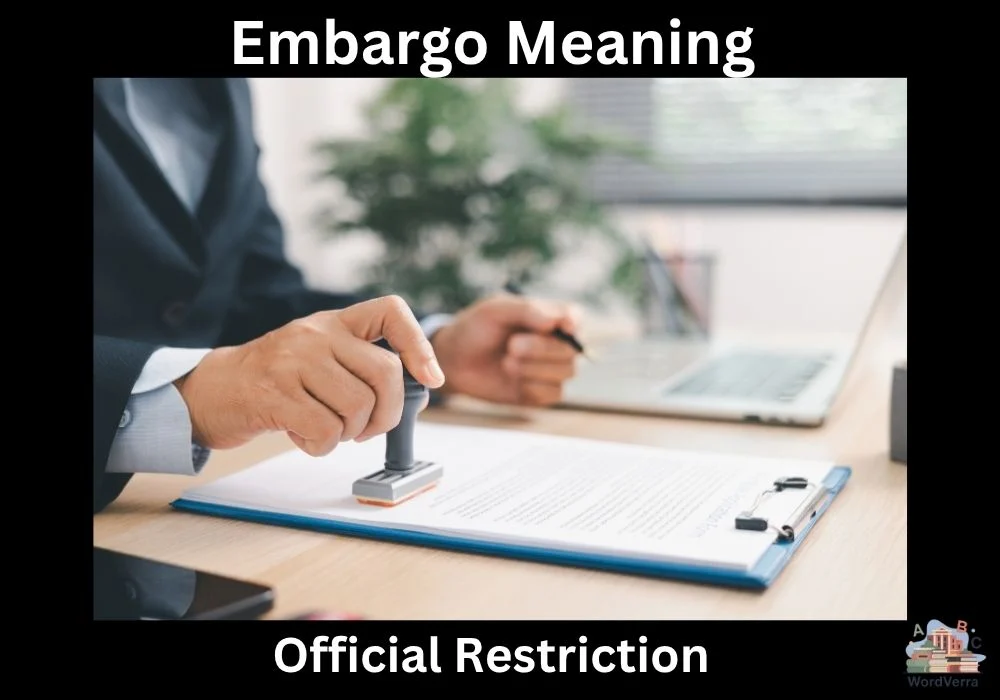
An official ban or restriction on trade, commerce, or communication with a particular country, company, or individual.
It is often used by governments to apply economic or political pressure.
Example:
“The country faced an embargo on oil imports, which affected its economy.”
Here, embargo means a legal restriction preventing trade or certain actions.
Embargo Meaning in Simple Words
In simple terms, embargo means:
- A ban or restriction
- Usually imposed by governments
- Often used to influence or punish another country or entity
Example:
“The embargo prevented companies from selling goods to the sanctioned nation.”
Origin of the Word Embargo
- The word comes from Spanish embargar, meaning to seize or obstruct
- It entered English in the 17th century, initially referring to legal restrictions on ships or goods
- Over time, it expanded to include trade, finance, and communication restrictions
Types of Embargoes
1. Trade Embargo
- Banning the import or export of goods to a specific country
- Example: “The trade embargo on sugar affected local businesses.”
2. Arms Embargo
- Restricting the sale or transfer of weapons
- Example: “An arms embargo was imposed to prevent escalation of conflict.”
3. Economic Embargo
- Limiting financial transactions, investments, or services
- Example: “The economic embargo caused a shortage of essential supplies.”
4. Media or Communication Embargo
- Restricting information release until a certain time
- Example: “The press embargo on the report lasted until Monday.”
How Embargo Works in Practice
- Governments, organizations, or institutions issue an embargo legally
- Embargoes can be partial or total, depending on the target and goals
- Violating an embargo can result in legal or economic consequences
Example:
“Companies ignored the embargo at their own risk, facing heavy fines.”
Embargo in Modern Context (2025)
In 2025, embargoes are relevant in:
- International trade: Countries restrict exports or imports to protect domestic industries
- Politics: Used as a diplomatic tool to influence policy or behavior
- Media and publishing: Press embargoes delay news release for accuracy or strategy
Example:
“The media embargo on vaccine trial results ensured accurate reporting worldwide.”
Common Misunderstandings About Embargo
Mistake 1: Thinking Embargo Only Affects Goods
- Embargoes can apply to financial transactions, communication, or services too.
Mistake 2: Confusing Embargo with Sanction
- Sanctions are broader penalties; embargoes specifically restrict trade or activity.
Mistake 3: Assuming Embargoes Are Always Permanent
- Many embargoes are temporary or conditional, depending on compliance or negotiations.
How to Use Embargo in Sentences
- “The government imposed an embargo on imported electronics.”
- “Due to the embargo, foreign investors halted business in the country.”
- “The press embargo lifted, and the news article was published immediately.”
Embargo Meaning: Quick Recap
Embargo means an official ban or restriction, typically on trade, finance, or communication, often imposed by governments to achieve political or economic goals.
Conclusion
To summarize:
- Embargo is a legal or official restriction on goods, services, or information
- It has historical roots from the Spanish word embargar
- Embargoes remain a vital tool in trade, diplomacy, and media management in 2025

Ghumman is a dedicated author at Wordverra, focused on delivering clear, accurate, and high-quality English grammar content for students and learners. With a strong commitment to language clarity and practical learning, Ghumman creates well-researched explanations and examples that make complex grammar rules easy to understand. The goal is to help readers build a solid foundation in English and use the language confidently in academic and everyday settings.