
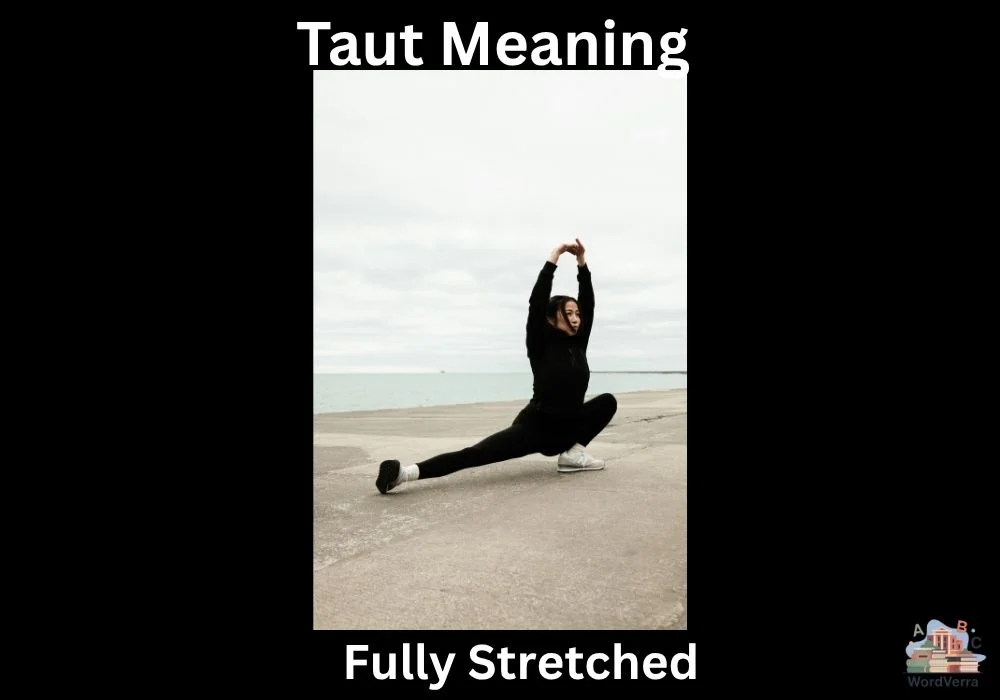
The word taut is a versatile English term often used in writing, speech, and descriptions. It can describe physical tension, emotional intensity, or even style and organization. Understanding taut meaning is essential to read texts accurately and express ideas clearly in both professional and everyday communication.
This article explores taut meaning, its origins, usage in different contexts, common mistakes, and examples updated for 2026.
What Does Taut Mean?
In simple terms, taut means:
Stretched tight, tense, or pulled firmly.
It can also describe something tense, well-organized, or highly controlled, depending on context.
Examples:
- “The rope was pulled taut across the tree.”
- “Her face was taut with worry.”
- “The novel is a taut, suspenseful thriller.”
Origin of the Word Taut
The word taut comes from Old English tōt, meaning tight or drawn. Over centuries, it evolved to include figurative uses, such as describing tension, control, or conciseness.
Taut Meaning in Physical Contexts
When describing physical objects, taut refers to something stretched tightly with no slack.
Examples:
- “The sails were taut in the strong wind.”
- “He pulled the canvas taut before stapling it.”
This is the most literal and traditional usage of the word.
Taut Meaning in Emotional or Psychological Contexts
Taut is often used figuratively to describe emotional tension or stress.
Examples:
- “She was taut with anxiety before the exam.”
- “The atmosphere in the meeting was taut with anticipation.”
Here, taut conveys a sense of intensity, stress, or nervous energy.
Taut Meaning in Writing, Art, or Design
Writers, artists, and critics use taut to describe concise, tight, and highly controlled work.
Examples:
- “The film is taut and gripping from start to finish.”
- “The essay is taut, leaving no unnecessary words.”
In this sense, taut is a compliment, emphasizing efficiency and precision.
How to Use Taut in Sentences
- Physical context: “Make sure the rope is taut before lifting the load.”
- Emotional context: “He kept his voice taut with anger.”
- Creative context: “The director’s taut storytelling kept the audience on edge.”
These examples show that taut can describe objects, feelings, and creative works.
Common Misunderstandings About Taut
Mistake 1: Confusing Taut with Tight
- Tight = physically secure, but not necessarily fully stretched
- Taut = stretched to its limit, often with tension
Example:
“The rope was tight” ≠ “The rope was taut”
Mistake 2: Using Taut for Loose or Relaxed Things
- Taut always implies tension or firmness.
Incorrect:
“The blanket was taut on the bed, so we could relax.” ❌
Correct:
“The blanket was taut on the bed, pulled tight over the mattress.” ✔️
Mistake 3: Overusing Taut Figuratively
- Use figurative taut only when describing real tension, stress, or tight structure.
Taut in Modern 2026 Contexts
In 2026, taut remains relevant in various areas:
- Describing sports equipment or physical objects
- Conveying emotional or mental tension
- Praising tight, focused writing, films, or design
- Enhancing clarity in technical or creative descriptions
Example:
“The game’s narrative is taut and immersive, keeping players fully engaged.”
Quick Summary of Taut Meaning
Taut means stretched tight, tense, or highly controlled.
It can describe physical objects, emotions, or creative works, and always implies firmness, intensity, or precision.
Conclusion
Understanding taut meaning allows you to describe situations, emotions, and creative works with precision. From ropes pulled tight to films that keep viewers on edge, taut adds clarity, intensity, and vividness to language. Using it correctly enhances both writing and speech.

Ghumman is a dedicated author at Wordverra, focused on delivering clear, accurate, and high-quality English grammar content for students and learners. With a strong commitment to language clarity and practical learning, Ghumman creates well-researched explanations and examples that make complex grammar rules easy to understand. The goal is to help readers build a solid foundation in English and use the language confidently in academic and everyday settings.