

Understanding your credit score is essential in today’s financial world. Whether you are applying for a loan, renting an apartment, or even opening a new credit card, knowing your credit score meaning helps you make informed financial decisions.
This article breaks down the credit score meaning, how it works, why it matters, and practical tips to maintain or improve it in 2026.
What Does Credit Score Mean?
A credit score is:
A numerical representation of a person’s creditworthiness, indicating how likely they are to repay borrowed money.
Credit scores typically range from 300 to 850. The higher the score, the more trustworthy you are perceived by lenders.
Example:
“Her credit score of 780 helped her secure a mortgage at a low interest rate.”
Credit Score Meaning in Simple Words
In simple terms, a credit score tells lenders:
- If you are reliable in repaying debts
- Your financial responsibility
- The risk level of lending to you
Example:
“Maintaining a good credit score ensures better loan offers and lower interest rates.”
How Credit Scores Are Calculated
Credit scores are based on several key factors:
- Payment History (35%) – Timely bill and loan payments
- Credit Utilization (30%) – Percentage of available credit used
- Length of Credit History (15%) – How long you have had credit accounts
- Types of Credit (10%) – Loans, credit cards, and mortgages
- New Credit Inquiries (10%) – Recent applications for credit
Understanding these factors helps you improve your score strategically.
Importance of Credit Scores

Your credit score impacts many aspects of life:
- Loan Approval: Banks use it to decide eligibility
- Interest Rates: Higher scores often get lower rates
- Renting Apartments: Landlords check scores to assess reliability
- Insurance Premiums: Some insurers use credit scores for pricing
Example:
“A higher credit score can save thousands on interest over a mortgage term.”
Credit Score Meaning in English
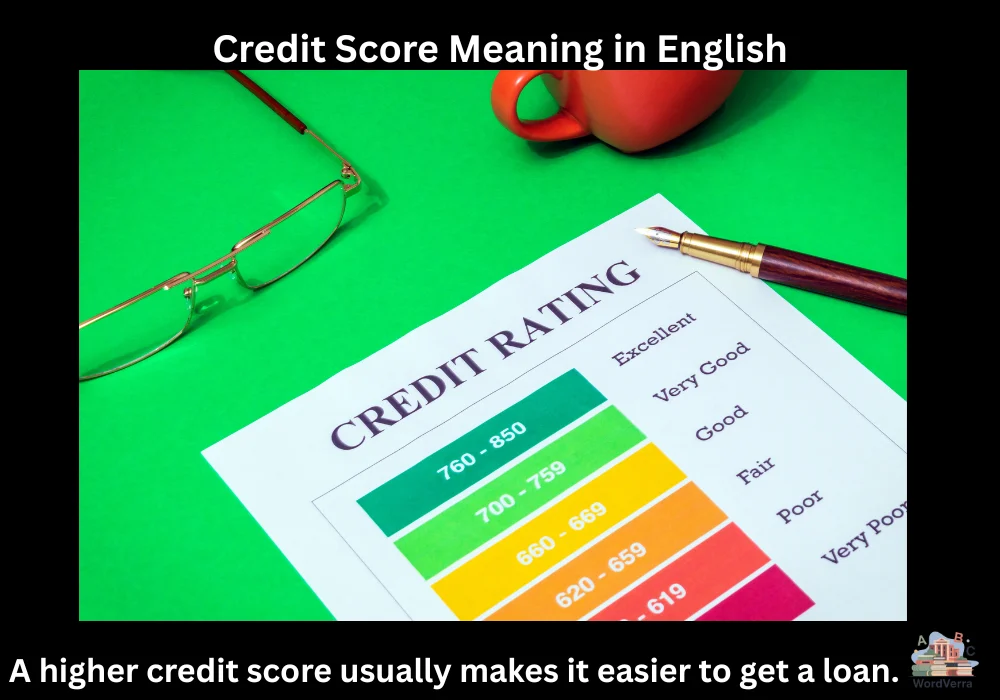
A credit score is:
👉 a number that shows how trustworthy a person is at borrowing and repaying money
Why It Matters:
- Banks use it when deciding whether to give loans 💳
- It can affect:
- Credit cards
- Personal loans
- Mortgages
Example:
- A higher credit score usually makes it easier to get a loan.
Credit Score Meaning in Education
In education, “credit score” is usually not a standard term.
People often mean academic credits instead.
Academic Credit:
👉 A unit that measures the amount of coursework a student has completed.
Example:
- A course may be worth 3 credits.
- Students need a certain number of credits to graduate 🎓.
Credit Score Ranges and What They Mean
| Range | Meaning |
|---|---|
| 800–850 | Excellent |
| 740–799 | Very Good |
| 670–739 | Good |
| 580–669 | Fair |
| 300–579 | Poor |
Knowing your range helps you understand financial options and strategies.
How to Check Your Credit Score
You can check your credit score through:
- Banks or credit card providers – Many provide free monthly scores
- Credit bureaus – Experian, Equifax, TransUnion
- Financial apps – Secure tools offering real-time credit updates
Example:
“Checking your credit score regularly helps you spot errors and improve it over time.”
Common Misunderstandings About Credit Scores
1: Thinking Checking Your Score Lowers It
- Soft inquiries (checking your score) do not affect your score
- Only hard inquiries (loan applications) may temporarily lower it
2: Believing a Score Alone Gets Loans
- Lenders also consider income, employment, and debt-to-income ratio
3: Assuming Credit Scores Are Permanent
- Scores change based on financial behavior
- Timely payments and lower debt can improve your score over time
Tips to Improve Your Credit Score in 2026
- Pay bills and loans on time
- Keep credit card balances low
- Avoid opening too many accounts at once
- Monitor your credit report for errors
- Maintain a long and healthy credit history
Example:
“By following these tips, she raised her credit score from 650 to 720 in one year.”
Credit Score Meaning in Everyday Life
Your credit score affects day-to-day financial decisions:
- Choosing a credit card
- Applying for loans or mortgages
- Negotiating interest rates
- Building long-term financial stability
Example:
“Even renting an apartment may require a good credit score in some cities.”
Credit Score Meaning: Quick Summary
A credit score is a number that measures your creditworthiness, helping lenders assess risk and decide on loans, credit, or financial agreements.
Maintaining a healthy credit score is key to achieving financial goals and securing better financial opportunities in 2026.

Ghumman is a dedicated author at Wordverra, focused on delivering clear, accurate, and high-quality English grammar content for students and learners. With a strong commitment to language clarity and practical learning, Ghumman creates well-researched explanations and examples that make complex grammar rules easy to understand. The goal is to help readers build a solid foundation in English and use the language confidently in academic and everyday settings.