
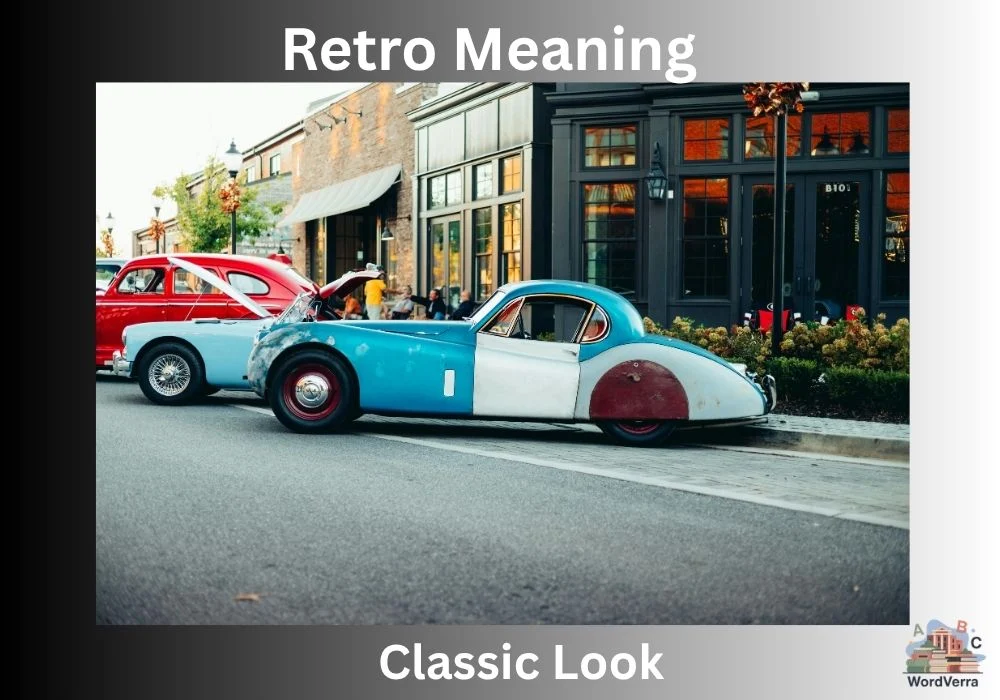
The word retro appears everywhere today — from fashion and home décor to music, gaming, and social media trends. You might hear someone say, “That outfit looks so retro,” or “This game has a retro vibe.” But what does retro actually mean, and why is it still so popular?
Understanding retro meaning helps you:
- Interpret modern trends and aesthetics
- Use the word correctly in conversation and writing
- Understand cultural references tied to past decades
This article explains retro meaning in simple, human language, explores how it’s used in different contexts, and shows why it continues to thrive in 2026.
What Does Retro Mean in Simple Words?
In the most straightforward sense, retro means:
Something that imitates or is inspired by styles from the past.
Retro is not just old — it is intentionally designed to look or feel old, usually in a stylish or nostalgic way.
Example:
- “That jacket has a retro look from the 80s.”
- “The café has a retro interior with neon signs.”
Origin and Background of the Word Retro
The word retro comes from Latin, where it means “backward” or “in past times.”
Over time, it evolved into a modern English term used to describe:
- Designs inspired by earlier decades
- Revived trends from the past
- Nostalgic styles recreated for modern audiences
By the late 20th century, retro became closely associated with pop culture and fashion.
Retro Meaning in Fashion and Style
One of the most common uses of retro is in fashion.
In clothing and accessories, retro often includes:
- Vintage-inspired colors
- Old-school patterns
- Classic silhouettes from past decades
Examples:
- Bell-bottom jeans
- Polka-dot dresses
- Chunky sneakers inspired by the 90s
Retro fashion blends old aesthetics with modern comfort.
Retro Meaning in Design and Décor
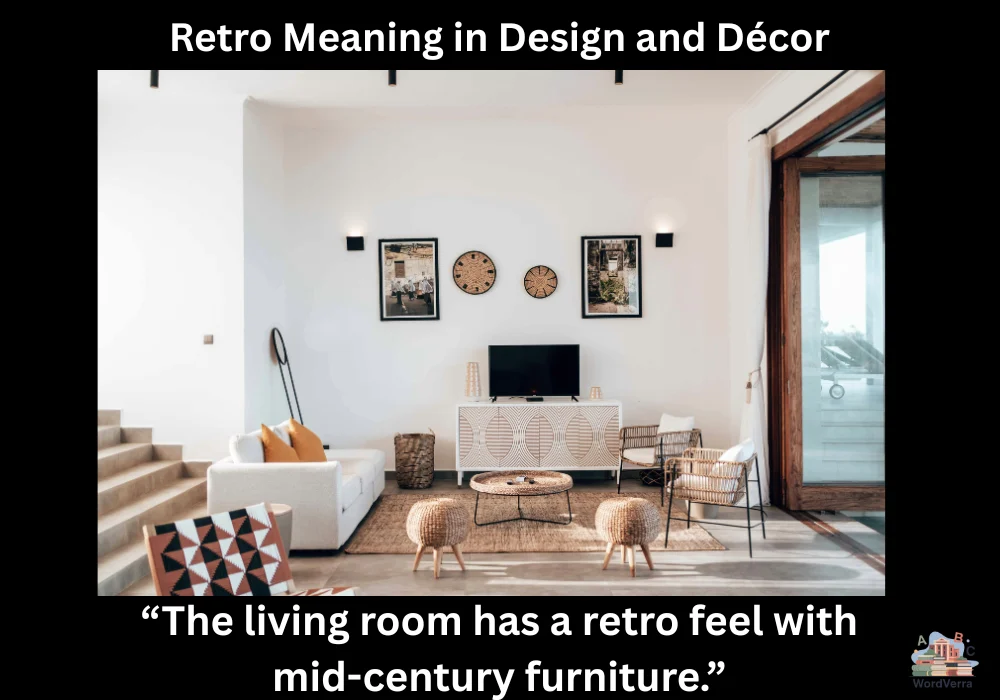
In interior design, retro refers to spaces that recreate the charm of earlier eras.
Common retro design elements include:
- Bold color schemes
- Geometric patterns
- Vintage furniture styles
Example:
“The living room has a retro feel with mid-century furniture.”
Retro décor often feels warm, playful, and expressive.
Retro Music Meaning
Retro music means:
👉 music that comes from or is inspired by older styles and past decades 🎵
Common Retro Eras:
- 70s disco
- 80s pop
- 90s rock
- Old-school hip hop
Style:
- Vintage sound
- Nostalgic feeling
- Classic instruments or fashion vibes
👉 Simple Meaning:
Retro music = old-style or nostalgic music
Retro Meaning in English
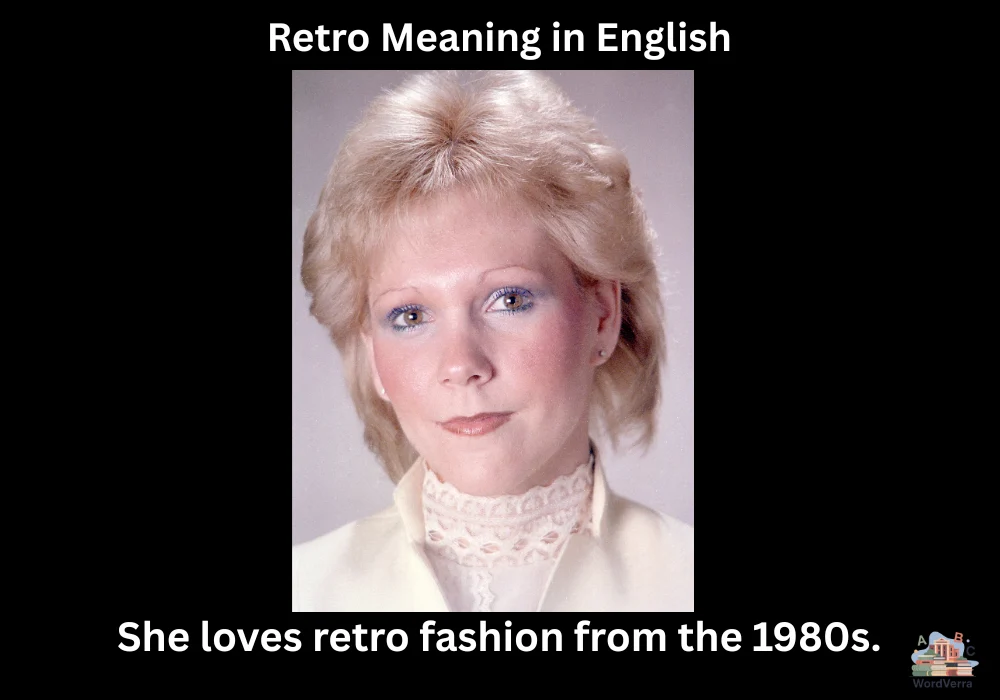
In English, “retro” means:
👉 related to styles, fashion, or ideas from the past
Common Uses:
- Retro clothes 👕
- Retro games 🎮
- Retro cars 🚗
- Retro design
Example:
- She loves retro fashion from the 1980s.
👉 Simple Meaning:
Retro = old-fashioned in a stylish or nostalgic way
Retro Meaning in French
In French, “retro” is written as:
👉 rétro
Meaning:
- Vintage
- Old-fashioned style
- Inspired by the past
Example:
- style rétro = retro style
Retro Meaning in Music and Entertainment
In music, film, and gaming, retro describes content that:
- Uses older styles or sounds
- Pays tribute to classic formats
- Revives nostalgia
Examples:
- Synth-heavy music inspired by the 80s
- Pixel-style video games
- Films with vintage visual effects
Retro entertainment connects modern audiences to cultural memories.
Retro vs Vintage: What’s the Difference?
This is a common point of confusion.
- Vintage:
- Original items from the past
- Actually old
- Retro:
- New items inspired by old styles
- Made recently but designed to look old
Example:
- A 1970s jacket = vintage
- A new jacket styled like the 1970s = retro
Retro Meaning in Everyday Conversation
In daily speech, retro is often used casually and positively.
Examples:
- “That phone design looks retro.”
- “I love the retro vibes of this playlist.”
- “The game has a cool retro feel.”
Here, retro usually suggests charm, uniqueness, or nostalgia.
Why Retro Is Popular in 2026
In 2026, retro continues to trend because:
- People feel nostalgic for simpler times
- Old styles feel fresh again when reintroduced
- Social media encourages aesthetic expression
Retro allows people to:
- Express individuality
- Blend past and present
- Enjoy familiarity with a modern twist
Retro Meaning in Marketing and Branding
Brands often use retro themes to:
- Trigger emotional connections
- Appeal to older and younger audiences
- Stand out visually
Examples:
- Retro logos
- Old-school packaging
- Throwback advertising styles
Retro branding often feels authentic and memorable.
Common Misunderstandings About Retro Meaning
Mistake 1: Thinking Retro Means Old or Outdated
Retro is intentional and stylish — not obsolete.
Mistake 2: Using Retro for Anything Old
Not all old things are retro. Retro must be deliberately inspired by the past.
Mistake 3: Confusing Retro With Antique
Antiques are historically old objects, while retro items are usually modern recreations.
How to Use Retro Correctly in a Sentence
Correct usage:
- “She decorated her room in a retro style.”
- “This game has retro graphics but modern gameplay.”
- “The ad campaign uses a retro theme.”
Incorrect usage:
- “My broken phone is retro.” ❌
(That describes old or damaged, not stylistically inspired.)
Retro Meaning in Simple Words (Quick Reminder)
Retro means modern things designed to look or feel like styles from the past.
Retro in Digital Culture
In online spaces, retro is often associated with:
- Aesthetic trends
- Filters and photo effects
- Throwback content
Examples:
- “Retro filters” on social media
- “Retro aesthetics” on design platforms
This keeps the word relevant in digital culture.
Why Knowing Retro Meaning Matters
Understanding retro meaning helps you:
- Interpret trends correctly
- Use descriptive language accurately
- Appreciate cultural references in media and design
It’s a small word with wide cultural impact.
Final Summary
To summarize:
- Retro refers to modern styles inspired by the past
- It is widely used in fashion, design, music, and entertainment
- Retro is intentional, nostalgic, and creative
- The word remains popular and relevant in 2026

Ghumman is a dedicated author at Wordverra, focused on delivering clear, accurate, and high-quality English grammar content for students and learners. With a strong commitment to language clarity and practical learning, Ghumman creates well-researched explanations and examples that make complex grammar rules easy to understand. The goal is to help readers build a solid foundation in English and use the language confidently in academic and everyday settings.