You’ve probably heard someone say, “He lives out in the boondocks,” or seen the word pop up in movies, memes, or casual conversations. But what does it really mean—and why is it still so commonly used today?
Understanding boondocks meaning matters because it helps you:
- Grasp informal English and regional slang
- Understand jokes, movies, and online comments
- Use the word naturally without sounding out of place
This article explains boondocks meaning in clear, everyday language, explores its origin, shows how it’s used today, and clears up common misunderstandings.
👉 Updated for 2026 with modern examples and real-life context.
What Does Boondocks Mean in Simple Words?
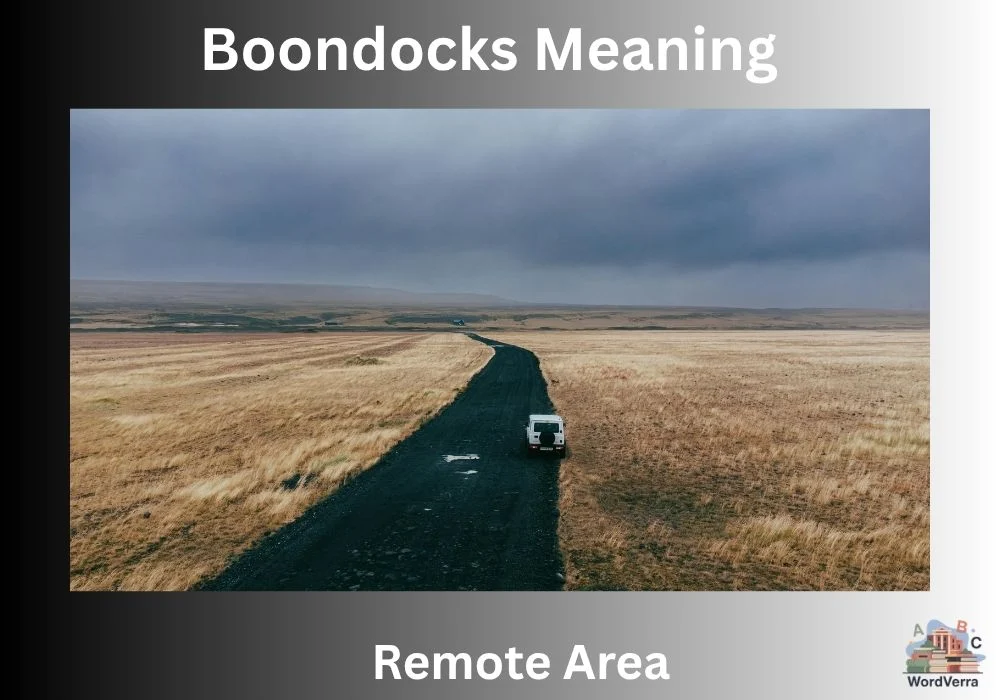
In everyday English, boondocks means:
A very remote, rural, or isolated place far from cities or towns.
When someone says “the boondocks,” they usually mean:
- The countryside
- A place far away from modern facilities
- Somewhere hard to reach or less developed
Example:
“They moved to the boondocks where the nearest store is miles away.”
Origin of the Word Boondocks
The word boondocks has a unique and interesting history.
It comes from the Tagalog word “bundok,” meaning mountain. American soldiers picked it up during the early 20th century while stationed in the Philippines. Over time, it evolved into boondocks in American English, referring to remote or rugged areas.
This background explains why the word strongly implies distance and isolation.
Boondocks Meaning in American Slang
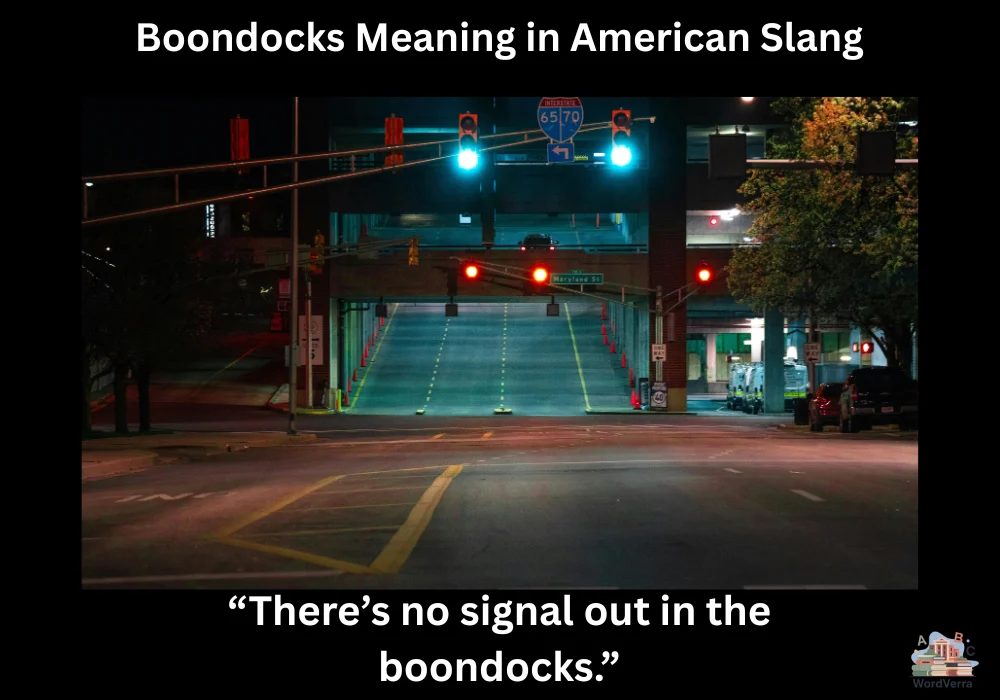
In American slang, boondocks is informal and often slightly humorous.
It usually suggests:
- Living far away from civilization
- Limited access to modern conveniences
- A quiet, rural lifestyle
Example:
“There’s no signal out in the boondocks.”
The tone can be:
- Neutral
- Playful
- Mildly critical, depending on context
Boondocks Pronunciation
Boondocks (BOON-doks)
👉 Stress on the first part: BOON
Boondocking Meaning
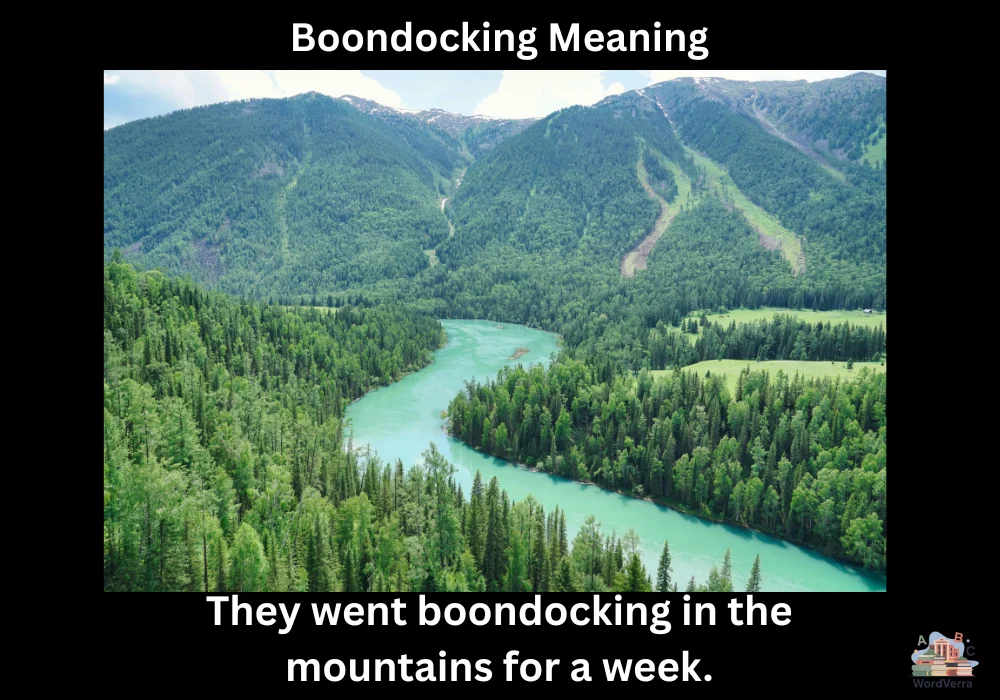
Boondocking means:
👉 camping or staying in a remote area without electricity, water, or hookups 🚐🏕️
Commonly Used For:
- RV camping
- Van life
- Off-grid travel
Features:
- No hotel or campground services
- Nature-focused experience
- Self-sufficient living
Example:
- They went boondocking in the mountains for a week.
Is Boondocks Always Negative?
No — not at all.
The word can be:
- Negative: implying inconvenience or isolation
- Neutral: simply describing a rural location
- Positive: suggesting peace, privacy, and nature
Positive example:
“I love the boondocks—no traffic, no noise.”
Negative example:
“The event was held in the boondocks with no parking nearby.”
Tone depends entirely on speaker intention.
Boondocks Meaning in Everyday Conversation
In daily speech, people often use boondocks casually to exaggerate distance.
Examples:
- “That café is in the boondocks.”
- “Why does every wedding venue have to be in the boondocks?”
- “She grew up in the boondocks but loves city life now.”
It doesn’t usually mean literally unreachable—just inconvenient or far.
Boondocks vs Countryside: What’s the Difference?
While similar, the meanings are not identical.
- Countryside: Neutral, descriptive, often peaceful
- Boondocks: Informal, emphasizes isolation or distance
Example comparison:
- “They bought a house in the countryside.”
- “They bought a house in the boondocks.”
The second feels more casual and expressive.
Boondocks Meaning in Media and Pop Culture
The word gained even more popularity through:
- Movies
- TV shows
- Comedy routines
- Animated series
It’s often used for humor, exaggeration, or social commentary.
Example:
“The setting was deep in the boondocks, far from city drama.”
Its slang appeal keeps it relevant in modern language.
How to Use Boondocks Correctly in a Sentence
Correct usage examples:
- “They live way out in the boondocks.”
- “There’s no internet in the boondocks.”
- “I don’t mind the boondocks—it’s peaceful.”
Incorrect usage:
- “The boondocks is very crowded.” ❌
(The word implies the opposite of crowded.)
Common Misunderstandings About Boondocks Meaning
Mistake 1: Thinking It’s a Specific Place
Boondocks is not a proper location. It’s a general expression.
Mistake 2: Assuming It’s Always Insulting
It can be affectionate or humorous, not necessarily disrespectful.
Mistake 3: Using It in Formal Writing
Boondocks is informal and better suited for casual speech or creative writing.
Why Boondocks Is Still Used in 2026
In 2026, the word remains popular because:
- People still contrast rural life with city life
- Slang expressions add personality to speech
- Online content favors expressive language
It’s especially common in:
- Social media posts
- Casual storytelling
- Entertainment content
Boondocks Meaning in Simple Terms (Quick Reminder)
Boondocks refers to a faraway, rural, or isolated place, often used casually or humorously.
Real-Life Situations Where You’ll Hear Boondocks
- Describing long-distance travel
- Complaining about remote venues
- Praising peaceful rural living
- Making jokes about isolation
It’s a flexible word that fits many informal situations.
Final Summary
To sum it up:
- Boondocks means a remote or rural area
- The term comes from a word meaning “mountain”
- It’s informal, expressive, and widely used in American English
- Tone can be positive, negative, or neutral

Ghumman is a dedicated author at Wordverra, focused on delivering clear, accurate, and high-quality English grammar content for students and learners. With a strong commitment to language clarity and practical learning, Ghumman creates well-researched explanations and examples that make complex grammar rules easy to understand. The goal is to help readers build a solid foundation in English and use the language confidently in academic and everyday settings.