The word veto is frequently used in politics, meetings, organizations, and even everyday conversations. You may hear it in news headlines, school discussions, or workplace decisions — but its meaning often feels formal or confusing.
Understanding veto meaning is important because it helps you:
- Follow political and legal news clearly
- Understand decision-making processes
- Use the word correctly in daily conversation
This article explains veto meaning in clear, simple language, including its origin, how it’s used in different contexts, common misunderstandings, and practical examples relevant in 2026.
What Does Veto Mean in Simple Words?
In the simplest terms, veto means:
The power to stop or reject a decision, proposal, or law.
When someone uses a veto, they are saying:
- “I do not approve”
- “This decision will not go forward”
A veto can be exercised by a person or authority who has the legal or official right to do so.
Origin and Background of the Word Veto
The word veto comes from Latin and originally means “I forbid.” It was used in ancient Rome when officials had the authority to block decisions they disagreed with.
Over time, the word entered English and became widely used in:
- Government systems
- Legal frameworks
- Formal decision-making
Today, veto is a globally recognized term.
Veto Meaning in Government and Politics
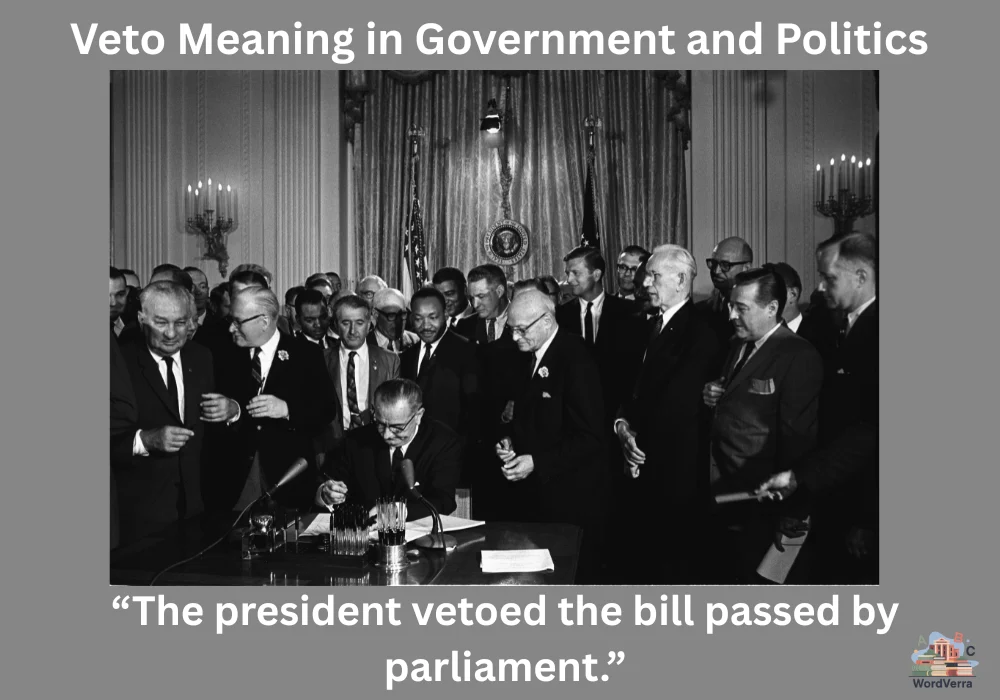
One of the most common uses of veto is in politics.
In many countries:
- A president or head of state can veto a law passed by lawmakers
- This prevents the law from taking effect
Example:
“The president vetoed the bill passed by parliament.”
A political veto acts as a check and balance within government systems.
Veto Meaning in Organizations and Groups
Outside politics, veto power may exist in:
- Boards
- Committees
- Corporate meetings
In these settings, a veto allows a member to:
- Stop a proposal
- Block a group decision
Example:
“The chairperson used their veto to reject the proposal.”
Veto Meaning in Everyday Conversation
In casual language, people use veto more loosely.
Common examples:
- “I veto that idea.”
- “She vetoed movie night.”
- “That plan was immediately vetoed.”
Here, veto simply means strong rejection, even without formal authority.
Veto Meaning in Family and Social Settings

People often joke about veto power at home or among friends.
Examples:
- “My parents vetoed the trip.”
- “He vetoed pineapple on pizza.”
Although informal, the word still conveys decisive refusal.
Veto Power Meaning
Veto power means:
👉 the authority to reject or stop a decision or proposal
How It Works:
- One person or group can block a decision even if others agree
- Common in politics and international organizations
Example:
- A president may use veto power to reject a law passed by parliament
👉 Simple Meaning:
Veto power = the right to say “no” and stop a decision
Veto Meaning in UN
In the United Nations, veto refers to:
👉 the special power held by the five permanent members of the United Nations Security Council:
- United States
- United Kingdom
- China
- Russia
- France
Meaning:
- Any one of these countries can block a Security Council resolution ❌
Example:
- Even if most countries agree, one veto vote can stop the proposal
👉 Simple Meaning:
UN veto = power of major countries to block UN decisions
Veto Meaning in English
In English, “veto” means:
👉 to officially reject or prevent a decision, proposal, or law
As a Noun:
- The president used his veto.
As a Verb:
- They vetoed the new rule.
How a Veto Works in Practice
A veto usually:
- Comes after a proposal is made
- Requires authority or influence
- Stops the action unless overridden
In some systems, vetoes can be overridden by:
- A majority vote
- Special procedures
In others, a veto is final.
Common Types of Veto
Depending on the context, veto power can include:
- Political authority
- Organizational authority
- Informal personal authority
Each type serves the same purpose: preventing approval.
Veto vs Reject: What’s the Difference?
Although similar, there is a key distinction:
- Reject can be done by anyone
- Veto usually implies special authority
Example:
- “The committee rejected the idea.”
- “The leader vetoed the idea.”
Common Misunderstandings About Veto Meaning
Mistake 1: Thinking Anyone Can Officially Veto
Only people with designated authority can veto in formal situations.
Mistake 2: Assuming Veto Means Delay
A veto usually means complete blockage, not just postponement.
Mistake 3: Believing a Veto Is Always Final
Some vetoes can be overridden, depending on the system.
How to Use Veto Correctly in a Sentence
Correct usage examples:
- “The proposal was vetoed by the director.”
- “He vetoed the decision immediately.”
- “The bill faced a veto threat.”
Incorrect usage:
- “She vetoed her homework.” ❌
(Veto applies to decisions or proposals, not tasks.)
Why the Word Veto Is Still Relevant in 2026
In 2026, veto remains a powerful word because:
- Governments still rely on veto power
- Organizations use it in decision-making
- People use it humorously in daily speech
Its meaning has stayed consistent while its usage has expanded.
Veto Meaning in Simple Words (Quick Reminder)
A veto is the power to say no and stop a decision from happening.
Real-Life Examples of Veto Usage
- A leader blocking a new policy
- A manager stopping a risky idea
- A friend rejecting a group plan
Each example shows how veto implies final authority or strong refusal.
Final Summary
To sum up:
- Veto means to reject or block a decision
- It originated from Latin meaning “I forbid”
- Commonly used in politics, organizations, and daily speech
- Usually implies authority or final control

Ghumman is a dedicated author at Wordverra, focused on delivering clear, accurate, and high-quality English grammar content for students and learners. With a strong commitment to language clarity and practical learning, Ghumman creates well-researched explanations and examples that make complex grammar rules easy to understand. The goal is to help readers build a solid foundation in English and use the language confidently in academic and everyday settings.