Have you ever been hanging out with a couple and felt awkward, left out, or extra? If so, you were likely acting as a third wheel. This term is widely used in texts, social media, and everyday conversation, but not everyone knows its exact meaning or origin.
Understanding third wheel meaning is useful because it helps you:
- Recognize social dynamics
- Use the term accurately in conversation and online
- Avoid misunderstandings or awkward moments
This article explains third wheel meaning, its origins, common scenarios, and how to use it naturally in 2026.
What Does Third Wheel Mean? (Simple Explanation)
In simple terms, third wheel means:
A person who feels extra, unwanted, or awkward when joining a couple or close pair.
It’s often used humorously, but can also reflect genuine feelings of exclusion.
Example:
- “I felt like a third wheel while they were holding hands at the movies.”
Origin of the Term Third Wheel
The phrase third wheel comes from the idea of a tricycle or cart, where a wheel is unnecessary:
- A bicycle has two wheels and functions perfectly
- Adding a third wheel can feel redundant or awkward
This metaphor transferred to social relationships to describe someone who feels out of place when a couple or close pair is together.
Third Wheel Meaning in Everyday Life
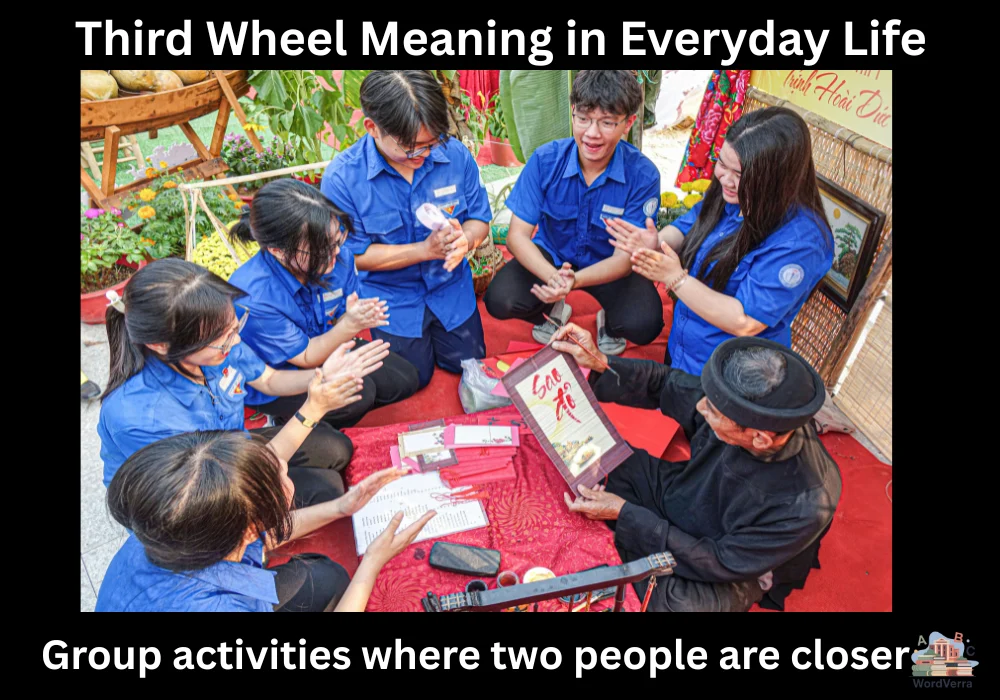
Being a third wheel can happen in many situations:
- Hanging out with a couple
- Group activities where two people are closer
- Online interactions where a friend is excluded
Example:
- “I didn’t want to go to the dinner; I would have been the third wheel.”
Third Wheel Meaning in Texts and Chat
In texting or online conversations, people often say:
- “Stop being a third wheel 😂”
- “I’m such a third wheel tonight”
- “Third wheeling is hard, send help 😅”
It’s usually self-deprecating or humorous.
Third Wheeling in a Sentence
👉 “Third wheeling” means being the extra person with a couple (often feeling left out).
Example Sentences:
- I felt awkward third wheeling on their date.
- He didn’t mind third wheeling because they were his best friends.
- She was third wheeling but still had fun with the couple.
Third Wheeling Captions
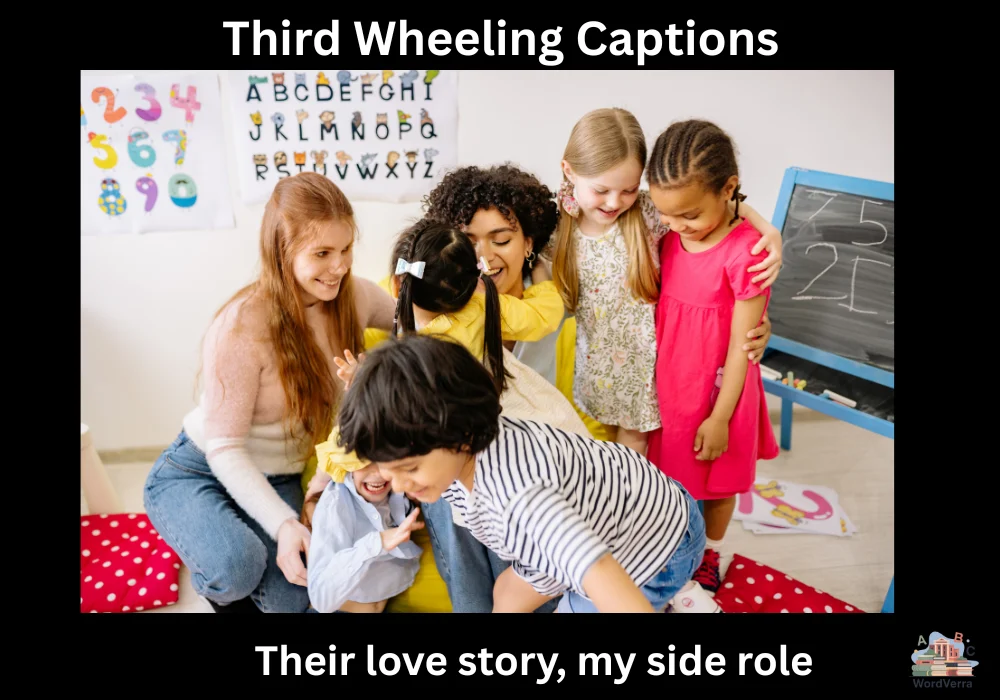
Here are some short, fun captions you can use 📱:
Funny Captions:
- Professional third wheel 🚲😂
- Love is in the air… and I’m just breathing it
- Third wheeling like a pro
- Their love story, my side role
Cute / Relatable:
- Just vibing as the third wheel
- Someone has to take the pictures 📸
- Third wheel but still chill
Savage / Witty:
- I deserve a medal for this 🏅
- Carrying the friendship while they carry love
- Single but entertained 😎
Common Scenarios Where People Feel Like a Third Wheel
- Watching a romantic movie with a couple
- Going out to dinner or a concert with a couple
- Being the extra person in group selfies
- Joining activities where two people are clearly closer
In all these scenarios, the feeling is usually temporary and playful.
Positive and Negative Use of Third Wheel
Positive Sense
- Can be used humorously among friends
- Shows closeness and comfort with the couple
- Highlights playful situations
Example:
“I’ll be the third wheel, but I’ll bring snacks!”
Negative Sense
- Feeling genuinely left out
- Social anxiety or discomfort
- Unwanted inclusion in couple-focused activities
Third Wheel Meaning in Popular Culture
Movies, TV shows, and memes often use third wheel situations for comedy. Common tropes include:
- The friend who tags along on every couple date
- Funny awkward moments during couple interactions
- Self-deprecating posts on social media
Example:
A meme caption: “When you go to the park with your couple friends… #ThirdWheelProblems”
Synonyms and Related Terms
Other ways to describe third wheel situations include:
- Extra person
- Odd one out
- Tagalong
- Awkward friend
These can be used depending on the tone and context.
Tips for Dealing With Third Wheel Situations
- Embrace the humor — being a third wheel can be fun
- Participate actively, but don’t force attention
- Suggest group activities to balance dynamics
- Recognize your feelings and communicate if uncomfortable
Third Wheel Meaning in Modern 2026 Culture
In 2026, third wheel remains relevant:
- Texts and memes use it widely
- Social media posts often highlight awkward moments
- Self-deprecating humor helps normalize the feeling
It reflects both humor and awareness of social dynamics in modern friendship and dating culture.
Quick Summary: Third Wheel Meaning
- Meaning: Someone who feels extra or awkward around a couple
- Tone: Often humorous, sometimes uncomfortable
- Usage: Texts, memes, social media, real-life situations
- Origin: Based on an unnecessary third wheel in a vehicle
Final Thoughts
Understanding third wheel meaning allows you to recognize social dynamics, use the term in texts and conversations accurately, and even laugh at your own awkward moments. Being a third wheel is a common experience, and learning to embrace it can make social situations more fun and less stressful.

Ghumman is a dedicated author at Wordverra, focused on delivering clear, accurate, and high-quality English grammar content for students and learners. With a strong commitment to language clarity and practical learning, Ghumman creates well-researched explanations and examples that make complex grammar rules easy to understand. The goal is to help readers build a solid foundation in English and use the language confidently in academic and everyday settings.