
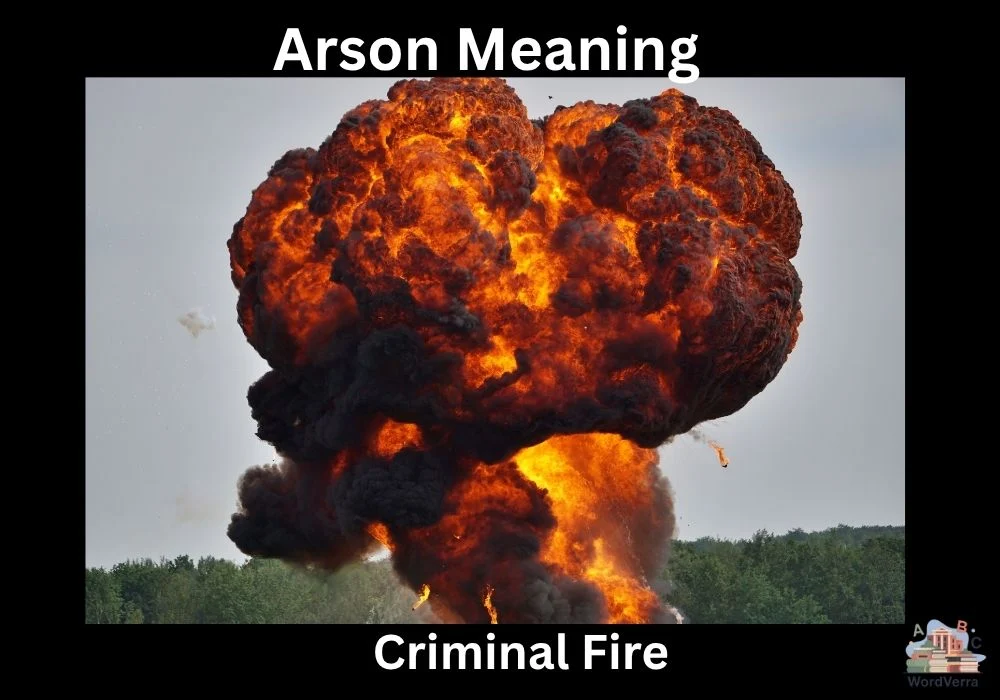
The term arson often appears in news reports, crime shows, legal discussions, and even casual conversation. If you’ve ever wondered what arson meaning is and how it differs from accidental fires, this article will clarify everything in simple, human-friendly language.
Understanding arson meaning is important because:
- It helps you interpret news and media reports accurately
- It provides clarity about legal consequences
- It distinguishes intentional fire-setting from accidental incidents
This article explains arson meaning, common causes, legal context, real-life examples, and how it is used in everyday conversation in 2026.
What Does Arson Mean? (Simple Definition)
In basic terms, arson means:
The criminal act of deliberately setting fire to property, buildings, or land.
Key points about arson:
- It is intentional, not accidental
- It often involves damage or destruction
- It is considered a serious crime in almost every legal system
Example:
“The abandoned warehouse was destroyed by arson.”
Origin of the Word Arson

The word arson comes from the Old French term arsion, meaning burning, and from the Latin arsio, which means to burn.
Historically, the term has been associated with:
- Criminal fires
- Property destruction
- Malicious intent
Today, it is a legal term as well as a common word in media reports.
Causes and Motivations Behind Arson
People commit arson for various reasons, including:
- Revenge or Anger – Burning someone’s property intentionally
- Insurance Fraud – Setting a fire to claim insurance money
- Vandalism or Mischief – Often linked to thrill-seeking or gang activity
- Covering Up Another Crime – Destroying evidence
- Terrorism or Political Statement – Intimidation or protest
Knowing the motivation helps law enforcement classify the crime and assign penalties.
Arson Meaning in English
Arson means:
👉 the act of deliberately setting fire to property
Simple Explanation:
- It is done on purpose, not by accident
- Usually involves buildings, vehicles, or land
Example:
- The police arrested him for arson after the fire.
👉 Simple Meaning:
Arson = intentionally starting a fire
Arson Meaning in Law
In legal terms, arson is a serious criminal offense.
👉 It refers to:
intentionally and unlawfully setting fire to property
Key Elements in Law:
- 🔥 Intentional act (done on purpose)
- 🏠 Property damage (home, building, etc.)
- ⚖️ Illegal action
Legal Consequences:
- Heavy fines
- Imprisonment
- More severe punishment if:
- People are harmed
- The fire is set in occupied buildings
Arson in Legal Context
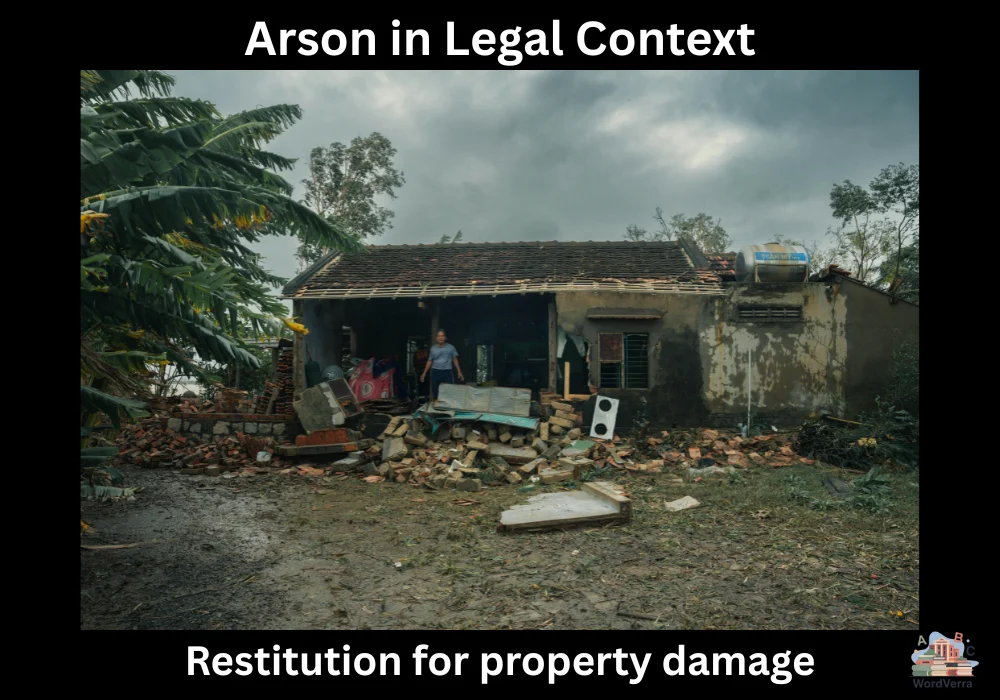
Arson is considered a serious criminal offense. Depending on jurisdiction, it may be classified as:
- Felony Arson: High-value property or human life at risk
- Misdemeanor Arson: Minor property damage without injury
Legal consequences can include:
- Prison sentences
- Heavy fines
- Restitution for property damage
Example:
“The suspect was charged with arson after setting fire to the abandoned building.”
Types of Arson
Arson can be categorized in different ways:
- Residential Arson – Setting fire to homes or living spaces
- Commercial Arson – Targeting businesses or offices
- Wildfire Arson – Starting forest or brush fires intentionally
- Vehicular Arson – Deliberately setting cars or vehicles on fire
Each type has different legal implications and investigation procedures.
How Arson Is Investigated
Investigators look for clues to determine if a fire was intentional:
- Fire patterns and burn marks
- Presence of accelerants (e.g., gasoline)
- Witness statements
- Surveillance footage
Fire investigators are trained to distinguish arson from accidental fires caused by electrical faults or negligence.
Arson Meaning in Everyday Conversation
Outside legal contexts, people sometimes use arson metaphorically to describe:
- Deliberate destruction in general
- Dramatic expressions of anger or rebellion
Example:
“The party was a disaster; it was like arson in the kitchen!”
While metaphorical use exists, the primary meaning remains criminal fire-setting.
Common Misunderstandings About Arson
Mistake 1: Thinking All Fires Are Arson
Not every fire is arson. Accidental fires caused by electrical faults or natural events are not considered arson.
Mistake 2: Assuming Arson Always Involves Buildings
Arson can target anything combustible, including vehicles, forests, or other property.
Mistake 3: Believing Arson Only Happens in Cities
Arson occurs in urban, suburban, and rural areas alike.
Examples of Arson in Real Life
- Burning an empty house to claim insurance
- Setting fire to a rival business’s store
- Deliberately starting a wildfire in a forest
- Vandalizing abandoned vehicles with fire
In all cases, intentionality is key.
Arson Meaning in Media and News
News outlets often report arson cases in headlines like:
- “Police Investigate Suspected Arson at Downtown Warehouse”
- “Forest Fire Determined to Be Arson by Authorities”
- “Man Charged with Arson After Car Fire”
Here, arson conveys criminal intent and public danger.
Safety and Awareness Regarding Arson
While arson is a crime, awareness helps protect property:
- Install fire alarms and sprinklers
- Report suspicious behavior
- Educate communities about fire safety
Understanding arson meaning can also help interpret emergency alerts accurately.
Quick Recap: Arson Meaning in 2026
- Arson = intentional setting of fire to property
- Motivations include revenge, fraud, vandalism, or terrorism
- Legal consequences are severe
- Investigators distinguish arson from accidental fires
- Awareness improves safety and interpretation of news
Final Thoughts
Understanding arson meaning is crucial for legal, media, and everyday contexts. It is a serious crime with significant consequences, but clear knowledge of the term can help you read news accurately, discuss legal matters, or simply expand your vocabulary.

Ghumman is a dedicated author at Wordverra, focused on delivering clear, accurate, and high-quality English grammar content for students and learners. With a strong commitment to language clarity and practical learning, Ghumman creates well-researched explanations and examples that make complex grammar rules easy to understand. The goal is to help readers build a solid foundation in English and use the language confidently in academic and everyday settings.